MBBS in Uzbekistan 2026: The Definitive Strategic Roadmap for Indian Medical Aspirants
1. Introduction: The Central Asian Renaissance in Medical Education
As we move into the 2026-27 academic session, the landscape for Indian medical students looking abroad has shifted permanently. The "Silk Road" is no longer just a historical trade route; it is the most rapidly developing corridor for high-quality, English-medium medical education. Uzbekistan, a nation of 36 million people with a culture deeply rooted in science and medicine—being the birthplace of Ibn Sina (Avicenna), whose "Canon of Medicine" was the standard medical text in Europe and the Islamic world for centuries—has made a multi-billion dollar bet on becoming the education hub of Eurasia.
For the Indian student, this isn't just about finding a "budget" seat. It's about data-driven decision-making. Is the university NMC-compliant? Will the clinical exposure prepare you for the NExT-2 practicals? Can you afford a quality of life that doesn't compromise your mental health during 6 years of intense study? This guide provides the most granular, factual, and fluff-free data available in 2026.
2. In-Depth University Profiles: Beyond the Brochure
2.1 Central Asian University (CAU), Tashkent: The Innovation Leader
CAU is a unique entity in Uzbekistan. It is a private, multi-disciplinary university that has established a "School of Medicine" designed specifically to compete with top private medical colleges in India (like KMC Manipal or CMC Vellore) but at a Central Asian price point.
- Campus Architecture & Facilities: The campus is a multi-million dollar facility that rivals private universities in the UK or Singapore. It features a centralized digital library with access to over 500,000 e-books and journals, high-speed campus-wide 6G connectivity, and energy-efficient climate control in all classrooms.
- Virtual Reality (VR) Anatomy Labs: CAU has invested in "Anatomage" tables—3D virtual dissection systems—that allow students to explore human anatomy with a level of detail that traditional cadavers cannot provide. These tables allow for "undoing" a cut, practicing surgical approaches, and viewing rare pathologies in 360 degrees.
- International Faculty Distribution: Over 40 faculty members are recruited from India, the UK, Germany, and the USA. This ensures that the English medium is not just a "label" but a lived reality in every lecture, viva, and clinical conference.
- Teaching Hospital (AKFA MedLine): This is Uzbekistan's premier private multi-disciplinary hospital. It is JCI (Joint Commission International) accredited, meaning it follows the highest global standards for patient safety and clinical care. Students at CAU have exclusive access to this 300-bed facility for their early clinical exposure (clerkships), featuring modular operating theaters and GE-equipped radiology suites.
2.2 Samarkand State Medical University (SSMU): The Academic Heritage
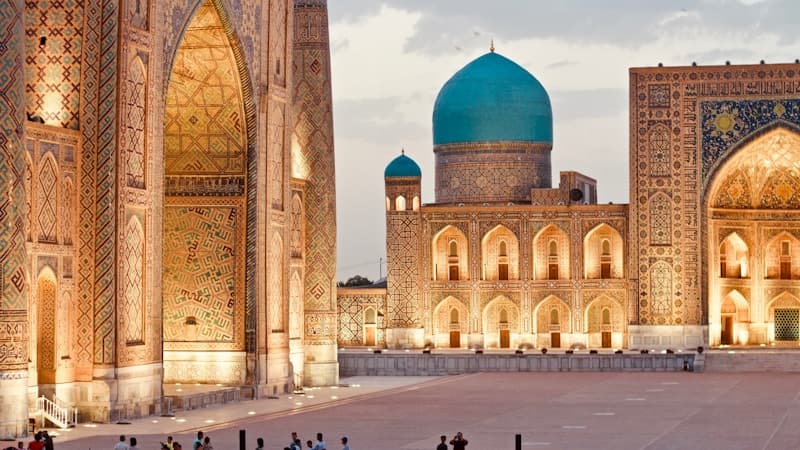
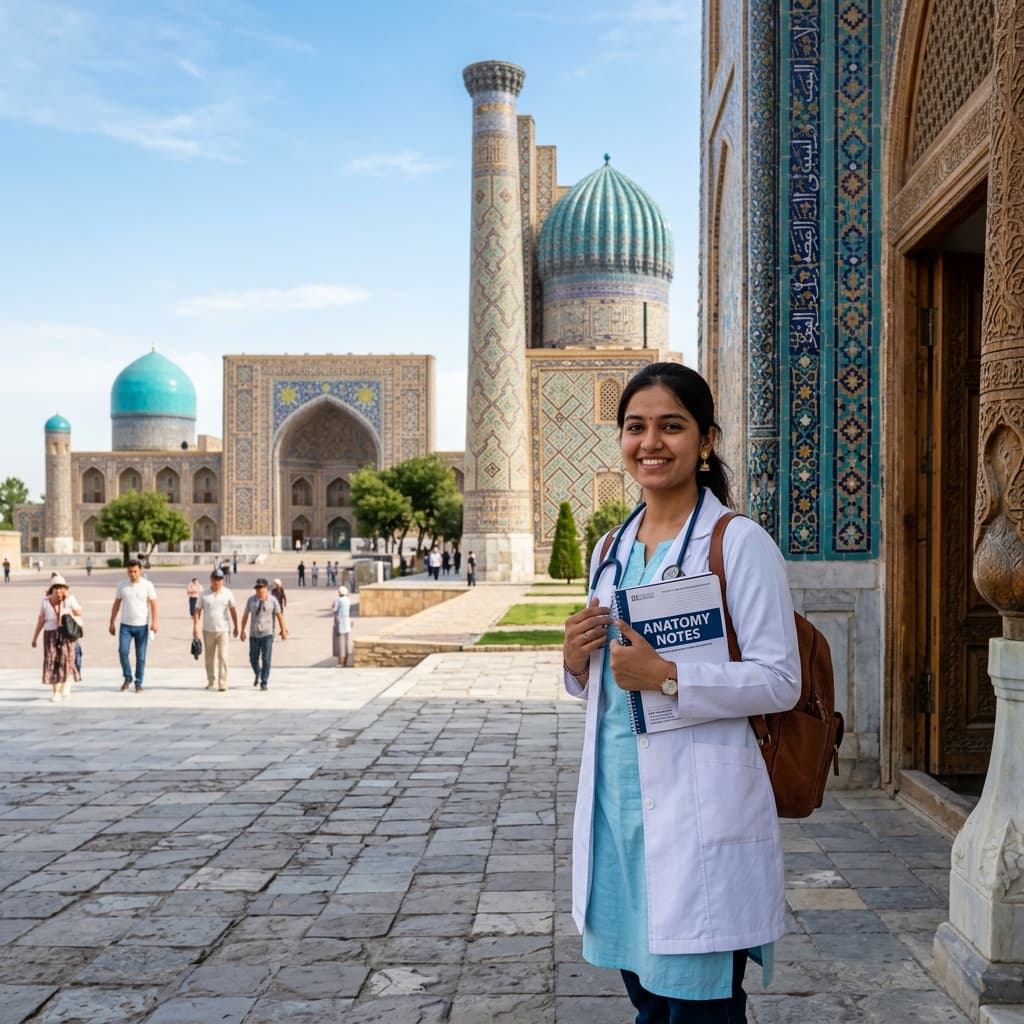
SSMU is not just a university; it is an institution that defined medical training in Central Asia. Founded in 1930, it has navigated the transition from the Soviet era to modern Uzbekistan with remarkable academic agility.
- Clinical Powerhouse: SSMU owns and operates 4 major specialized hospitals in Samarkand:
- The First Clinic: Focus on Internal Medicine, Cardiology, and Endocrinology (approx. 800 beds).
- The Second Clinic: A major surgical center with departments for Neurosurgery, Trauma, and Urology (approx. 700 beds).
- The Specialized Pediatric Clinic: One of the largest in Central Asia, providing unique pediatric clinical exposure (approx. 600 beds).
- The Oncology Institute: A regional center for cancer treatment, chemotherapy, and palliative care (approx. 500 beds).
- Research Integration: SSMU publishes the "Journal of Biomedical and Clinical Medicine" and encourages undergraduates to participate in Research Circles from the 3rd year.
- The Digital Transition: In 2024, the university launched its "Smart Campus" initiative, providing every student with a university-issued tablet pre-loaded with the entire 6-year curriculum and clinical logbooks.
3. The "NMC 2021" Deep Dive: Legal and Regulatory Compliance
The National Medical Commission's (NMC) "Foreign Medical Graduate Licentiate" (FMGL) Regulations of 2021 changed everything. A degree is worthless if it doesn't allow you to practice in India. Here is how Uzbekistan stands up to the 2021/2026 regulations:
3.1 The 54-Month Rule (Sec 4.1.a)
The NMC requires a minimum of 54 months (4.5 years) of academic studies.
- Uzbekistan Compliance: The MD program in Uzbekistan is 6 years long. The first 5 years (60 months) are purely academic and clinical rotations. This exceeds the NMC's minimum requirement by a safe margin of 6 months.
3.2 The Internship Rule (Sec 4.2.b)
The degree must include a mandatory 12-month internship in the same institution.
- Uzbekistan Compliance: The 6th year of the MD program in Uzbekistan is a "Clinical Internship Year." During this year, students are placed in university-affiliated hospitals full-time (minimum 35-40 hours per week). This is documented on the final transcript and the degree certificate as a completed internship, satisfying the NMC's requirement for a "continuous" 12-month period in the parent institution.
3.3 The Licensure Rule (Sec 4.3)
The graduate must be eligible to obtain a license to practice in the host country.
- Uzbekistan Compliance: Upon graduation, international students are eligible to sit for the Uzbekistan State Medical Licensing Examination. Passing this exam (conducted in English for international graduates) grants them the right to register as a "General Practitioner" in Uzbekistan. This eligibility fulfills the NMC's "equivalence" rule for foreign graduates.
4. Itemized Living Costs: The Economics of Studying in Uzbekistan (2026)
Budgeting is about more than just tuition. Here is a granular, item-by-item breakdown of the monthly expenses in Tashkent and Samarkand (2026 Estimates).
4.1 Housing and Utilities (Monthly)
- Shared 2-BHK Apartment (Metro-accessible, Tashkent): $350 - $450 (₹29,000 - ₹38,000). Split between 2 or 3 students.
- Standard University Hostel (Shared bath, 3-4 sharing): $40 - $70 (₹3,300 - ₹5,800).
- Premium University Hostel (En-suite bath, 2 sharing): $100 - $150 (₹8,400 - ₹12,600).
- Electricity & Water: $15 (₹1,260). (Note: Uzbekistan has massive domestic gas reserves, making heating very cheap).
- High-Speed Fiber Internet (100 Mbps): $12 (₹1,000).
- Mobile Plan (50GB Data + Unlimited local calls): $6 (₹500).
4.2 Food and Groceries (Monthly)
- Indian Mess Fee: $100 - $120 (₹8,400 - ₹10,000).
- 1L Milk (Full Cream): $0.90 (₹75).
- 1kg Rice (Basmati/Premium local): $1.20 (₹100).
- 1kg Potatoes: $0.40 (₹33).
- 1kg Beef/Mutton: $6.50 - $8.00 (₹540 - ₹670).
- 1 Dozen Eggs: $1.80 (₹150).
- Coffee/Tea at a Cafe: $1.50 - $2.50 (₹125 - ₹210).
4.3 Logistics and Miscellaneous
- Monthly Unified Transport Card (Metro + Bus): $15 (₹1,260).
- Taxi (Yandex Go, 5km ride): $1.50 - $2.50 (₹125 - ₹210).
- Winter Clothing (One-time, local buy): $250 - $400 (₹21,000 - ₹34,000).
5. The Step-by-Step Admission Roadmap (2026 Intake)
Phase 1: Application (May - June)
- NEET Scorecard: You must have qualified NEET in 2024, 2025, or 2026.
- 12th Academics: Physics, Chemistry, and Biology (PCB) aggregate of 50% (40% for SC/ST/OBC).
- Submit Transcripts: Through the official university portal or authorized regional office.
Phase 2: Documentation and Apostille (June - July)
- HRD/GAD Attestation: Verification by your state's education department.
- MEA Apostille: The "orange sticker" from the Ministry of External Affairs in Delhi or regional centers. This is required for international legal validity.
- Medical Clearance: HIV, Hepatitis B & C, and Chest X-ray.
Phase 3: Visa Processing (July - August)
- Visa Support (Telex): The university applies to the Ministry of Foreign Affairs (Uzbekistan). Usually takes 10-15 days.
- Embassy Submission: Submit your passport and invitation to the Uzbekistan Embassy in New Delhi or Consulate in Mumbai.
- Visa Issuance: Typically takes 3-7 working days.
Phase 4: Arrival & Orientation (September)
- Airport Pickup: Usually organized by the university's international office.
- OVIR Registration: Registration with the local police within 72 hours of arrival—this is a critical legal requirement handled by the university.
6. Detailed Semester-Wise Curriculum Breakdown (MD General Medicine)
Year 1: Anatomy & Foundations
- Semester 1: Medical Physics, Medical Biology (Genetics), Latin, Medical History, Anatomy Part 1 (Osteology, Arthrology), Medical Chemistry.
- Semester 2: Biochemistry Part 1, Anatomy Part 2 (Myology, Splanchnology), Histology I, Cytology, Embryology I.
Year 2: Physiology & Para-clinicals
- Semester 3: Anatomy Part 3 (Neurology, Angiology), Normal Physiology Part 1, Biochemistry Part 2, Microbiology I, Histology II.
- Semester 4: Normal Physiology Part 2, Microbiology II, Immunology, Pathological Anatomy (General Pathology), Public Health.
Year 3: Introduction to Pathology
- Semester 5: Pathological Anatomy (Special Pathology), Pathological Physiology (Pathophysiology), Pharmacology Part 1.
- Semester 6: Pharmacology Part 2, General Surgery (Surgical Skills), Internal Medicine (Propaedeutics).
Year 4-5: Clinical Modules
- Subjects: Internal Medicine, General Surgery, Pediatrics, Urology, Ophthalmology, ENT, Neurology, Psychiatry, Oncology, Obstetrics & Gynecology, Infectious Diseases, Radiology.
Year 6: The Integrated Internship
- Rotation: 48 weeks across Internal Medicine, Surgery, Pediatrics, and OB-GYN. High emphasis on clinical decision-making and emergency procedures.
7. Clinical Exposure: The High Volume Advantage
Uzbekistan's clinical training is robust due to a decentralized hospital system.
- Patient Inflow: The Tashkent Municipal Clinical Hospital #1 sees approx. 1,200 outpatients daily. Students are divided into groups of 8-10 for bedside teaching.
- The Language Factor: While the degree is in English, 90% of patients speak Uzbek or Russian. Universities provide 3 years of mandatory "Medical Uzbek/Russian." Learning basic conversational skills is the "secret" to getting hands-on experience in the 5th and 6th years.
8. Career Pathways Post-Uzbekistan
8.1 India (NExT Strategy)
Indian students typically:
- Years 1-3: Focus on university exams + NExT-1 basics (Marrow/Prepladder).
- Years 4-6: Focus on Clinical modules + mock NExT tests.
- Post-Graduation: Return, take NExT-1 (Theory), then 1 year internship in India, then NExT-2 (Practical).
8.2 USA & UK
Uzbek degrees are ECFMG listed. Students at CAU and SSMU are increasingly targeting USMLE (USA) and PLAB (UK) due to the globally aligned curriculum.
9. Comprehensive FAQ: The "Big 60" (Granular Details)
- Is Uzbekistan safe for girls? Ranked top 5 safest globally; no crime against students reported in years.
- What is the student visa duration? 1 year, renewed annually in-country.
- Can I practice in Uzbekistan? Yes, after passing the local state exam and residency.
- Are there Indian festivals? Yes, Diwali and Holi are huge campus events.
- Is winter clothing available? Yes, better and cheaper than India.
- Can I get an education loan? Yes, SBI and Bank of Baroda are major lenders for Uzbekistan.
- What if I fail a subject? You get 3 "retake" attempts before having to repeat the year.
- Is the ECTS system followed? Yes, 360 credits for 6 years.
- Are textbooks free? Provided by libraries; digital copies are standard.
- Internet speed in hostels? Fast (50-100 Mbps) and reliable.
- Do I need to carry Indian spices? Many available locally, but a starter kit is recommended.
- Cadaver ratio? 10-12 students per cadaver in the 1st year.
- Are surgeries live? Senior students assist in clinical rotations.
- Current voltage same as India? Yes, 220V with Euro plugs.
- How far is Uzbekistan? Only 3 hours by flight from Delhi.
- Are there Indian banks? No, but international debit cards work everywhere.
- Can I choose my roommate? Usually after the 2nd year.
- Self-cooking allowed? Yes, communal kitchens in hostels.
- SIM card process? Instant with Indian passport (Beeline/Ucell).
- Is there any entrance exam? Most have a basic screening test and interview.
- Are the faculty friendly? Professional, with a culture of hospitality.
- Cost of flight ticket? Range ₹20,000 - ₹30,000 one-way.
- Do I need NEET? Mandatory for Indian license.
- Libraries open 24/7? Reading halls usually until 10 PM.
- Is the degree in English? Bilingual diploma (Uzbek/English).
- Can parents visit? Yes, via tourist visa.
- Indian Students Association? Yes, active on all major campuses.
- Local currency? Som (UZS). $1 ≈ 12,500 Som.
- Direct flights from Mumbai? Yes, multiple times a week.
- Is the 6th year recognized in India? Yes, satisfying the NMC mandatory 12-month internship.
- What is the local food like? Plov (rice dish), bread, and meat-heavy; very tasty.
- Can I get Indian food outside mess? Yes, Indian restaurants in Tashkent/Samarkand.
- Is water safe to drink? Tap water is boiled; bottled water is standard.
- Are there heaters in hostels? Centralized heating is very effective.
- What is the SIM signal in metros? Excellent 4G/5G in most stations.
- Can I transfer fees directly? Highy recommended; avoid paying agents.
- Any hidden costs? Watch for annual visa and insurance costs (~$300 total).
- Is there a dress code? Formals + white coat in clinicals.
- What if I get sick? Student medical centers handle all primary care.
- Are libraries digital? Yes, massiverepositories at SSMU and TMA.
- What is the local time difference? 30 mins behind IST.
- Can I buy a laptop locally? Yes, prices comparable to India.
- Is religious freedom available? Yes, Uzbekistan is secular.
- Are there temples/mosques/churches? Yes, all present in Tashkent.
- What is the Cadaver ratio in first year? Approx 1:12.
- Is 6th year internship paid? No, it’s part of the academic program.
- Can I work part-time? Not on a student visa.
- Is NEET mandatory for private universities? Yes.
- How many semesters total? 12 semesters.
- Is an interview mandatory? For CAU and SSMU, yes.
- What is the minimum age? 17 years by Dec 31.
- Is there an upper age limit? Not for NMC, but some universities prefer under 25.
- Do I need to learn Uzbek to graduate? No, but you need it for clinicals.
- What is the pass percentage of FMGE? Uzbekistan (25-35%) is among the highest.
- Can I buy medical equipment locally? Yes, stethoscopes and BP kits are cheap.
- Are clinical exams OSCE based? Yes, exactly like NExT-2.
- How is the Indian community? Very large; you will feel at home.
- Do I need to carry winter clothes? Recommended to buy locally for extreme cold.
- Is the university degree world-ranked? Yes, SSMU and TMA are top-ranked in CIS.
- Final verdict? The best balance of quality, safety, and price for 2026.
10. Conclusion: Making the Right Choice
Choosing to study MBBS abroad is a data-driven lifestyle choice. In 2026, Uzbekistan provides the most robust Safety + Quality + Affordability equation for Indian medical students. It is for the student who wants a world-class education without taking a second mortgage on their family home.
For an unfiltered reality check, visit our Peer Connect portal and speak to a student today.