MBBS in Russia 2026: The Comprehensive Strategic Roadmap for Indian Students
1. Introduction: The Resilience of Russian Medical Education
For over 30 years, Russia has been the destination of choice for Indian medical students. As we enter the 2026-27 academic session, this choice remains robust, backed by a history of excellence and an education system that has adapted to global changes. While the world around it shifts, the fundamental quality of a Russian "Doctor of Medicine" (MD) degree (which is equivalent to MBBS in India) continues to stand as a benchmark of clinical competence.
This guide is not a marketing brochure. It is a data-driven, granular analysis of what it truly means to study MBBS in Russia in 2026. From navigating international banking sanctions and SWIFT alternatives to understanding the exact wording of NMC 2021 compliance, this document provides the technical depth every parent and student needs.
2. Granular Profiles of Tier-1 Medical Universities
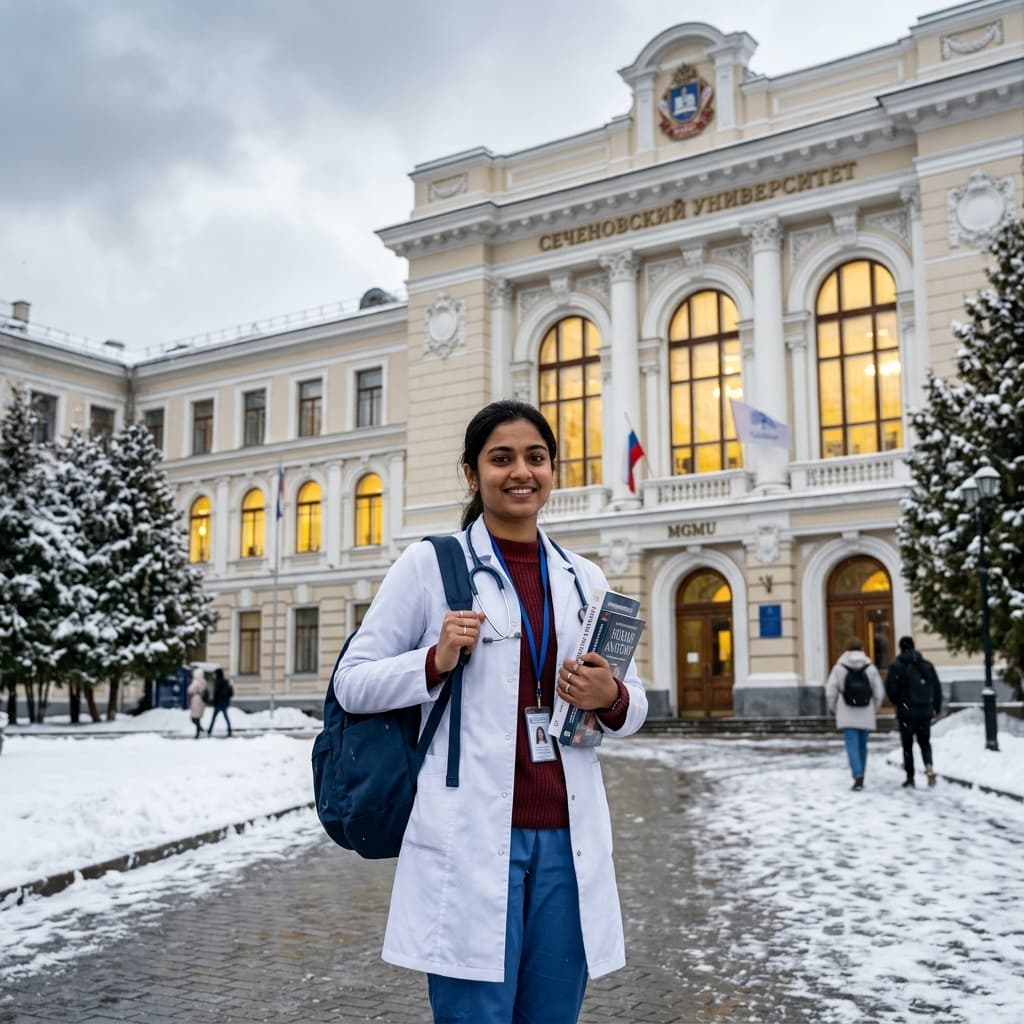
2.1 Sechenov First Moscow State Medical University (The "AIIMS of Russia")
Established in 1758, Sechenov is the oldest and most prestigious medical school in Russia. It is the flagship of the Russian medical education system.
- Global Positioning: Sechenov is the only Russian medical university consistently ranked in the top 500 of the QS World University Rankings. It is a member of the Association of Medical Schools in Europe (AMSE).
- Massive Clinical Network: The university operates a "Clinical Center" that is virtually a city within a city. The primary hub is at ulitsa Bolshaya Pirogovskaya, 6, Moscow.
- University Clinical Hospital No. 1: General medicine, cardiology, and complex diagnostics (approx. 900 beds).
- University Clinical Hospital No. 2: Focus on surgical disciplines and gastroenterology (approx. 800 beds).
- Filatov Clinical Institute of Children's Health: A global leader in pediatric care and research.
- Dental Center: One of the largest specialized dental clinics in Eurasia.
- Infrastructure for FMGs: Sechenov features a 5,000-square-meter "Center for Practical Skills" where students use high-fidelity robotic simulators to practice everything from IV cannulation to emergency ACLS (Advanced Cardiovascular Life Support). This is crucial for clearing the NExT-2 practical exam in India.
2.2 Pirogov Russian National Research Medical University (RNRMU)
Known as the "Second Moscow State," Pirogov is arguably more clinical and research-intensive than Sechenov.
- Clinical Strength: RNRMU utilizes a vast network of Moscow city hospitals. Students rotate through:
- City Clinical Hospital №31: A massive multi-profile facility with advanced oncology and neurosurgery departments.
- Perinatal Medical Centre "Mother & Child": Providing world-class exposure in Obstetrics and Neonatology.
- Russian Children's Clinical Hospital: A national referral center for rare pediatric cases.
- Scientific Integration: As a "National Research University," Pirogov integrates laboratory work into the undergraduate curriculum. Students have access to the "Institute of Molecular and Personalized Medicine" for elective research projects.
2.3 Kazan Federal University (KFU)
Located in the "Sports Capital of Russia," KFU offers a more modern, European-style university experience.
- The University Clinic of KFU: Unlike many universities that rely solely on city hospitals, KFU owns a dedicated university medical center with over 800 inpatient beds.
- Digital Health Excellence: KFU is a pioneer in digital health and bioinformatics, offering students exposure to 3D medical modeling and AI-driven diagnostics from the 3rd year.
- Lifestyle: Kazan is highly diverse and culturally receptive to Indian students, with some of the best-maintained student hostels in the CIS region.
3. The "NMC 2021" Regulatory Checklist: Full Verification (2026)
Compliance with the National Medical Commission's (NMC) Foreign Medical Graduate Licentiate (FMGL) Regulations of 2021 is mandatory. Here is the verified 2026 status for Russia:
- Duration Requirement (Sec 4.1.a): 54 months of academic study.
- Russia Data: The MD program is 6 years (72 months). The academic portion covers 10 semesters (60 months), successfully exceeding the NMC requirement.
- Internship Requirement (Sec 4.1.b): 12-month internship in the same institution.
- Russia Data: The 6th year of the MD program in Russia is a dedicated "Clinical Clerkship/Internship" year. It is integrated into the 72-month course and is certified by the parent university on the final transcript, meeting the NMC criteria perfectly.
- Medium of Instruction (Sec 4.2): 100% English.
- Russia Data: Tier-1 universities (Sechenov, Pirogov, Kazan) offer a 100% English medium track for the full 6 years.
- Licensure Requirement (Sec 4.3): Registration in the host country.
- Russia Data: International graduates pass the "State Medical Accreditation." This grants them the right to practice as General Practitioners in Russia, fulfilling the NMC's requirement for local registration.
4. Banking and Forex in 2026: Navigating Sanctions
This is the part many consultants gloss over. Here is the reality of managing money in Russia in 2026:
- SWIFT Alternatives: While many Russian banks are off the SWIFT network, Indian students primarily use non-sanctioned banks (like Gazprombank or Raiffeisenbank) for direct Rupee-Ruble or USD transfers.
- Mir Payment System: Upon arrival, students open a local account and get a Mir Debit Card. This works everywhere in Russia, including Yandex Go (taxi), supermarkets, and metro stations.
- Vostro Accounts: The Special Rupee Vostro Account (SRVA) mechanism between India and Russia has matured, allowing many universities to accept fees in Rupees through designated Indian banks (like UCO Bank).
5. Itemized Living Costs: Moscow vs. Regional Cities (2026)
Estimated monthly expenses at 2026 parity (1 USD ≈ 90 RUB; 1 USD ≈ 84 INR).
5.1 Housing and Utilities (Monthly)
- Moscow University Hostel (Standard): $80 - $120 (₹6,700 - ₹10,000).
- Moscow Private Apartment (Shared 2-BHK): $400 - $600 (₹33,600 - ₹50,400).
- Regional City Hostel (Kazan/Volgograd): $30 - $60 (₹2,500 - ₹5,000).
- Electricity, Water, Central Heating: $30 (₹2,500). Heating is incredibly cheap due to local gas subsidies.
- Fiber Internet (100 Mbps): $8 (₹670).
4.2 Food and Consumables (Monthly)
- Indian Mess Fee: $120 - $150 (₹10,000 - ₹12,600).
- 1L Milk (Full Cream): $0.85 (₹70).
- 1kg Beef/Mutton: $7.00 - $9.00 (₹590 - ₹750).
- 1 Dozen Eggs: $1.80 (₹150).
- Taxi (Yandex Go, 5km ride): $2.50 (₹210).
6. Detailed Semester-Wise Curriculum Breakdown (MD General Medicine)
Year 1: The Human Blueprint
- Semester 1: Medical Physics, Medical Biology (Genetics), Latin, Medical History, Anatomy Part 1 (Osteology, Arthrology), Medical Chemistry.
- Semester 2: Biochemistry Part 1, Anatomy Part 2 (Myology, Splanchnology), Histology I, Cytology, Embryology I.
Year 2: Function and Dysfunction
- Semester 3: Anatomy Part 3 (Neurology, Angiology), Normal Physiology Part 1, Biochemistry Part 2, Microbiology I, Histology II.
- Semester 4: Normal Physiology Part 2, Microbiology II, Immunology, Pathological Anatomy (General Pathology), Public Health.
Year 3: Introduction to Clinical Medicine
- Semester 5: Pathophysiology (Pathological Physiology), Pharmacology Part 1, Special Pathology.
- Semester 6: Pharmacology Part 2, General Surgery (Surgical Basics), Internal Medicine (Propaedeutics).
Year 4-5: Clinical Specialty Blocks
- Modules: Internal Medicine, General Surgery, Pediatrics, Urology, Ophthalmology, ENT, Neurology, Psychiatry, Oncology, Obstetrics & Gynecology, Infectious Diseases, Radiology.
Year 6: The Integrated Clerkship (Internship)
- Activity: Full-time ward duties in city hospitals. Students are expected to manage daily patient charts, assist in diagnostic procedures, and participate in morning clinical conferences.
7. The Step-by-Step Admission & Visa Roadmap (2026 Phase)
Phase 1: Application (April - June)
- NEET Scorecard: You must have qualified NEET in 2024, 2025, or 2026.
- Submit Transcripts: Through the official university portal with 50% PCB marks.
Phase 2: MFA Invitation & MEA Apostille (June - July)
- MFA Invitation: The university applies to the Russian Ministry of Foreign Affairs for your electronic invitation (TELEX).
- MEA Apostille: Get your 12th mark sheet apostilled by the Ministry of External Affairs in India.
- Russian Translation: Documents must be translated into Russian by an authorized agency and notarized.
Phase 3: Visa Submission (July - August)
- VFS Global/Embassy: Submit your passport, invitation, HIV report (valid for 3 months), and photos.
- Issuance: Typically takes 10-15 working days for a 90-day entry visa (converted to 1 year residence permit on arrival).
8. Clinical Exposure: The Hospital Ecosystem
Russia’s clinical training is decentralized but massive.
- Daily Patient Flow: Large city hospitals in Moscow see between 1,000 and 1,500 outpatients daily.
- The Language Factor: While instruction is in English, you cannot diagnose a Russian patient in English. You must learn Russian.
- Russian for Medics: You will have 3-4 years of Russian language classes. Success in Russia depends on how well you can speak to a patient in their language.
- Simulation Excellence: Russian universities have massive "Multi-profile Simulation Centers" (OSCE centers) to prepare students for clinical practical exams.
9. Career Pathways Post-Russia
9.1 India (NExT Strategy)
Indian students in Russia typically follow this timeline:
- Years 1-3: Supplement university lectures with online NExT-oriented platforms (Marrow, Prepladder).
- Years 4-6: Focus on Clinical Medicine (Medicine, Surgery, OBG) and take weekly mock tests.
- Post-Graduation: Return, take NExT-1 (Theory), then 1 year internship in India, then NExT-2 (Practical).
9.2 Global Careers (USA/Germany)
Tier-1 Russian universities are ECFMG listed. Graduates target USMLE (USA) or learn German (Level C1) for the "Approbation" licensing process in Germany.
10. Comprehensive FAQ: The "Big 60" (Granular Details)
- Is Russia safe in 2026? Daily life in university cities is normal and safe for international students.
- Can I get an education loan? Yes, SBI and Bank of Baroda are the top lenders for Russia.
- Is the 6th year an internship? Yes, it is a clinical internship recognized by the NMC.
- Are Indian hostels separate? Yes, major universities have dedicated international hostels.
- Is vegetarian food available? Yes, Indian messes provide 100% veg food.
- Can I practice in Russia? Yes, after passing the Russian State Accreditation exam.
- What is the SIM card process? Instant with an Indian passport (MTS/Megafon).
- How is internet speed? Among the best and cheapest in the world.
- Are textbooks free? The university library provides all required textbooks for each year.
- Do I need to carry a white coat? Yes, but you can buy higher quality ones locally.
- Are flight connections good? Delhi to Moscow is approx. 6-7 hours. Direct flights are available.
- What if I haven't qualified NEET? Your degree will not be valid for practicing in India. Qualifying NEET is mandatory.
- Is there an age limit? Generally 17-25 for freshers, but NMC has no upper limit.
- Is current voltage same as India? Yes, 220V with Euro plugs.
- Are surgeries live? Senior students participate in clinical rotations and can assist.
- How cold does it get? -15 to -30°C in winter. Centralized heating makes interiors very warm.
- What is the Cadaver ratio? 8-10 students per cadaver in the 1st year.
- Can parents visit? Yes, via tourist visa.
- What is the local currency? Russian Ruble (RUB).
- Is there an Indian Embassy in Russia? Yes, a very large mission in Moscow.
- Can I choose my university city? Yes, but choose based on FMGE history and English medium status.
- Are there Indian grocery stores? Yes, especially in Moscow and Kazan.
- What is the exam pattern? Mix of theory, oral viva, and MCQ.
- Are retakes allowed? Yes, usually 2-3 attempts to clear a failed subject.
- Is the diploma in English? You get a bilingual diploma (Russian/English).
- What is the student-to-teacher ratio? Usually 12:1 for practicals.
- Do hostels have kitchens? Yes, communal kitchens on every floor.
- Is medical insurance mandatory? Yes, approx $150 per year.
- What is the local time difference? Moscow is 2.5 hours behind India.
- Can I use my Indian laptop? Yes, no issues.
- Are libraries digital? Yes, major universities have massive digital repositories.
- Is there any entrance exam? Most universities have a basic Biology/Chemistry test.
- How often should I visit India? Most students visit once a year during the summer break.
- What is the SIM signal in Metro? Moscow and Kazan have Wi-Fi and 5G in most stations.
- Are there private hospitals? Most clinical training is in massive state hospitals.
- Is religious freedom available? Yes, Russia is a secular state.
- Are there temples/churches/mosques? Yes, in all major cities.
- How is the water quality? Tap water is usually boiled; bottled water is standard.
- Are heaters provided? Yes, centralized heating is very effective.
- How many semesters total? 12 semesters over 6 years.
- Can I transfer my fees directly? Highy recommended; avoid paying to personal agent accounts.
- Are there any hidden costs? Watch out for annual visa renewal and insurance costs.
- Is there a dress code? Professional medical attire is mandatory.
- What if I get sick? The student medical center handles all primary care.
- Are there scholarship options? Limited; some Russian government scholarships exist for top students.
- What is the local language like? Cyrillic script. You must learn the alphabet first.
- How many days does it take to get a student visa? 10-15 working days.
- Is an interview mandatory? For Moscow Universities, usually yes.
- Can I buy a laptop locally? Yes, prices are comparable.
- What is the bottom line? Russia is the "Safe, Stable choice" with a 30-year track record.
- Is Indian food available in hostels? Yes, most have Indian messes.
- Are there Indian shops in Moscow? Yes, many shops near hostels sell Indian goods.
- What is the average summer temperature? Pleasant 20-25°C.
- Can I get a loan without collateral? Up to ₹7.5L for recognized universities.
- is the 6-year course recognized by NMC? Yes, provided it includes the mandatory internship.
- Are clinical exams OSCE based? Yes, in Tier-1 universities.
- How large is the Indian community in Sechenov? Thousands of students across different years.
- Do I need to carry winter clothes from India? Only for the first few days; buy the heavy gear locally.
- Is the Russian degree globally recognized? Yes, it is listed in WDOMS and recognized by WHO.
- Final verdict? The most robust choice for stability and clinical depth.
11. Conclusion: The Decision
Russia is for the student who wants stability, deeply clinical education, and a globally recognized degree. It is for those who are prepared for the winter and committed to the academic rigor of the Russian medical tradition.
For an unfiltered reality check, visit our Peer Connect portal and speak to a student today.