MBBS in Vietnam 2026: Universities, Fees & What Indian Students Need to Know
Vietnam — a long, narrow country stretching along the eastern edge of the Indochina Peninsula — is best known internationally for its stunning landscapes, rich history, and rapidly growing economy. But in recent years, it has also been quietly building a presence on the map of MBBS-abroad destinations for Indian students.
With several NMC-listed medical universities, very affordable tuition fees, English-medium programs, a tropical climate similar to southern India, and one of the most vibrant student cities in Asia (Ho Chi Minh City), Vietnam offers a genuinely distinctive MBBS experience. This guide covers the essentials for Indian students considering MBBS in Vietnam in 2026.
Why Consider MBBS in Vietnam?
Vietnam is not yet as well-known as Russia, China, or Georgia in the Indian MBBS-abroad market — and that relative obscurity is actually one of its advantages. Here is why:
1. Very Affordable Tuition Fees
Vietnam offers some of the lowest medical education tuition fees in Asia. Annual fees at Vietnamese medical universities range from approximately ₹2 to ₹4.5 lakhs — making Vietnam one of the most cost-effective MBBS destinations in the world.
2. NMC-Listed Universities
Several Vietnamese medical universities are listed in the World Directory of Medical Schools (WDOMS). Indian graduates from NMC-recognised Vietnamese universities are eligible to appear for the FMGE and register with NMC.
Important note for Indian students: Before enrolling, verify the current NMC recognition status of your chosen Vietnamese university directly with the NMC or through a verified counsellor. NMC recognition requirements and the status of individual institutions can change, and Vietnamese universities are a newer addition to the approved list compared to established destinations like Russia.
3. English-Medium Programs
Leading Vietnamese medical universities offer their programs in English, particularly for international students. Vietnamese language courses are included in the curriculum to assist with clinical communication — similar to Russian in Russia or Kyrgyz in Kyrgyzstan.
4. Tropical Climate
Vietnam's climate is tropical to subtropical — warm and humid year-round, particularly in the south. Indian students from southern states (Tamil Nadu, Kerala, Andhra Pradesh, Karnataka) will find the climate very familiar and comfortable. Even students from northern India adapt within a few months.
5. Low Cost of Living
Vietnam has one of the lowest costs of living in Southeast Asia. Food, transport, accommodation, and everyday expenses are all significantly cheaper than in India's major cities. Students can live comfortably on a very modest monthly budget.
6. Fascinating Country to Live In
Vietnam is a country of extraordinary natural beauty — Ha Long Bay, the Mekong Delta, the central highlands, ancient towns like Hoi An, and the energy of Hanoi and Ho Chi Minh City. For students who value lifestyle and experience alongside academics, Vietnam is hard to beat.
Understanding Vietnamese Medical Education
Vietnamese medical education has some important structural differences from other MBBS destinations that Indian students need to understand before applying.
Duration
MBBS/MD programs in Vietnam are 6 years in total, following a structure similar to Russia and other countries:
- Year 1–3: Preclinical and para-clinical sciences
- Year 4–6: Clinical rotations
Language of Instruction
Historically, Vietnamese medical education was conducted entirely in Vietnamese. Many universities have now developed English-medium tracks specifically for international students. In these programs, academic teaching is in English while basic Vietnamese language is taught for clinical communication.
When choosing a Vietnamese university, confirm specifically that the international English-medium medical program is the program you are enrolling in — and that this program is the one listed in WDOMS.
Degree Awarded
Graduates receive a Bachelor of Medicine (equivalent to MBBS) or Doctor of Medicine (MD) depending on the institution. Ensure the degree awarded is what is listed in WDOMS under the university name.
Top NMC-Listed Universities for MBBS in Vietnam (2026)
Vietnam has a large number of medical universities listed in WDOMS. The following are among the most established and relevant for Indian students:
1. Hanoi Medical University (HMU)
Location: Hanoi (capital city, northern Vietnam) Annual Fees: Approximately ₹3–4.5 lakhs (international program) Established: 1902 Medium: English-medium international program available
Hanoi Medical University is the oldest and most prestigious medical university in Vietnam. Established in 1902 during the French colonial period, HMU has a long tradition of producing Vietnam's top medical professionals. The university is affiliated with major Hanoi hospitals — Bach Mai Hospital, Saint Paul Hospital, and others — which are large, modern facilities with a very high patient volume.
HMU's international medical program is taught in English and attracts students from across Asia. The university has modern infrastructure, a well-stocked medical library, and a strong academic faculty. For Indian students who want the prestige of studying at Vietnam's top medical institution, HMU is the clear choice.
Hanoi is Vietnam's capital — a city of French colonial architecture, beautiful lakes, ancient temples, and a vibrant street food culture. The city has a significant international student and expat community, and living costs are reasonable.
2. University of Medicine and Pharmacy of Ho Chi Minh City (UMP HCMC)
Location: Ho Chi Minh City (southern Vietnam) Annual Fees: Approximately ₹3–4.5 lakhs (international program) Established: 1947 Medium: English-medium international program available
UMP Ho Chi Minh City is the premier medical university in southern Vietnam and one of the most respected in the country. Located in Vietnam's largest and most economically dynamic city, UMP HCMC benefits from affiliation with major hospitals in Ho Chi Minh City — including Cho Ray Hospital and the University Medical Center — which are among the largest and most modern hospitals in Southeast Asia.
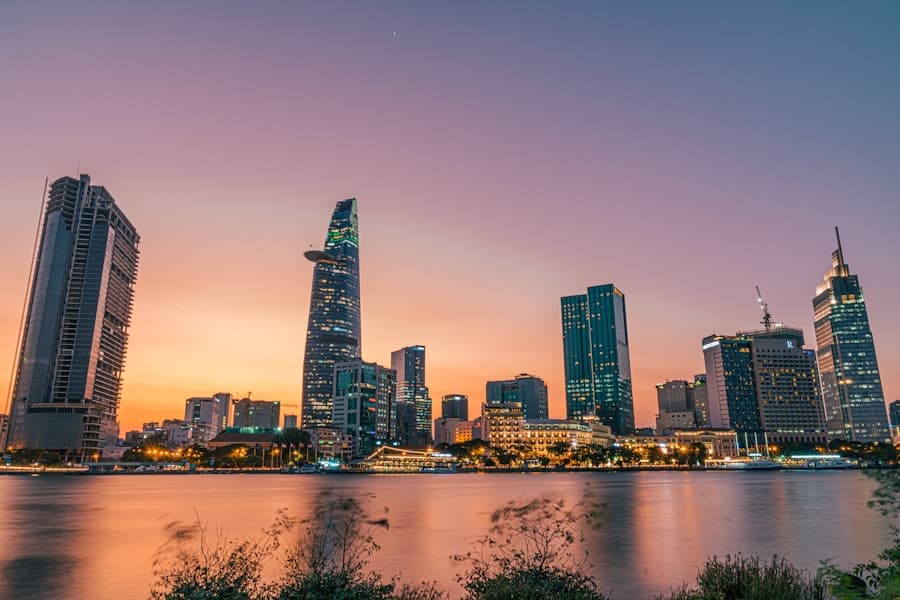
Ho Chi Minh City (formerly Saigon) is a metropolis of energy, opportunity, and diversity. The city has an enormous international community, excellent transport links, vibrant nightlife, world-class food, and a very high standard of infrastructure for a developing country. Indian students in Ho Chi Minh City have access to Indian restaurants, grocery stores, and a growing South Asian community.
3. Hue University of Medicine and Pharmacy
Location: Hue (central Vietnam) Annual Fees: Approximately ₹2.5–3.5 lakhs Established: 1957 Medium: English-medium international track
Hue University of Medicine and Pharmacy is located in Hue — the former imperial capital of Vietnam, a UNESCO World Heritage city of palaces, royal tombs, and pagodas along the Perfume River. Hue is smaller and quieter than Hanoi or Ho Chi Minh City, offering a more peaceful and focused study environment with significantly lower living costs.
The university has a strong academic tradition and its affiliated Hue Central Hospital is one of the largest in central Vietnam. For students who prefer a calmer city with rich cultural surroundings, Hue is an excellent choice.
4. Hai Phong University of Medicine and Pharmacy
Location: Hai Phong (northern Vietnam, near Ha Long Bay) Annual Fees: Approximately ₹2.5–3.5 lakhs Established: 1979
Located in Hai Phong — Vietnam's third-largest city and a major port — this university offers an affordable MBBS option in a city known for its French colonial architecture and proximity to the spectacular Ha Long Bay World Heritage Site. The university has been developing its international student program and offers English-medium instruction for foreign students.
5. Thai Binh University of Medicine and Pharmacy
Location: Thai Binh province (northern Vietnam) Annual Fees: Approximately ₹2–3 lakhs Established: 1968
Thai Binh is one of the more affordable NMC-listed medical universities in Vietnam. Located in the Red River Delta region of northern Vietnam, the university offers a traditional Vietnamese medical curriculum with English-medium instruction for international students. The lower cost of living in Thai Binh (a smaller provincial city compared to Hanoi) makes this one of the lowest total-cost MBBS options available in any NMC-listed country.
Other Notable Universities
Vietnam has numerous other medical universities listed in WDOMS, including:
- Duy Tan University Faculty of Medicine (Da Nang)
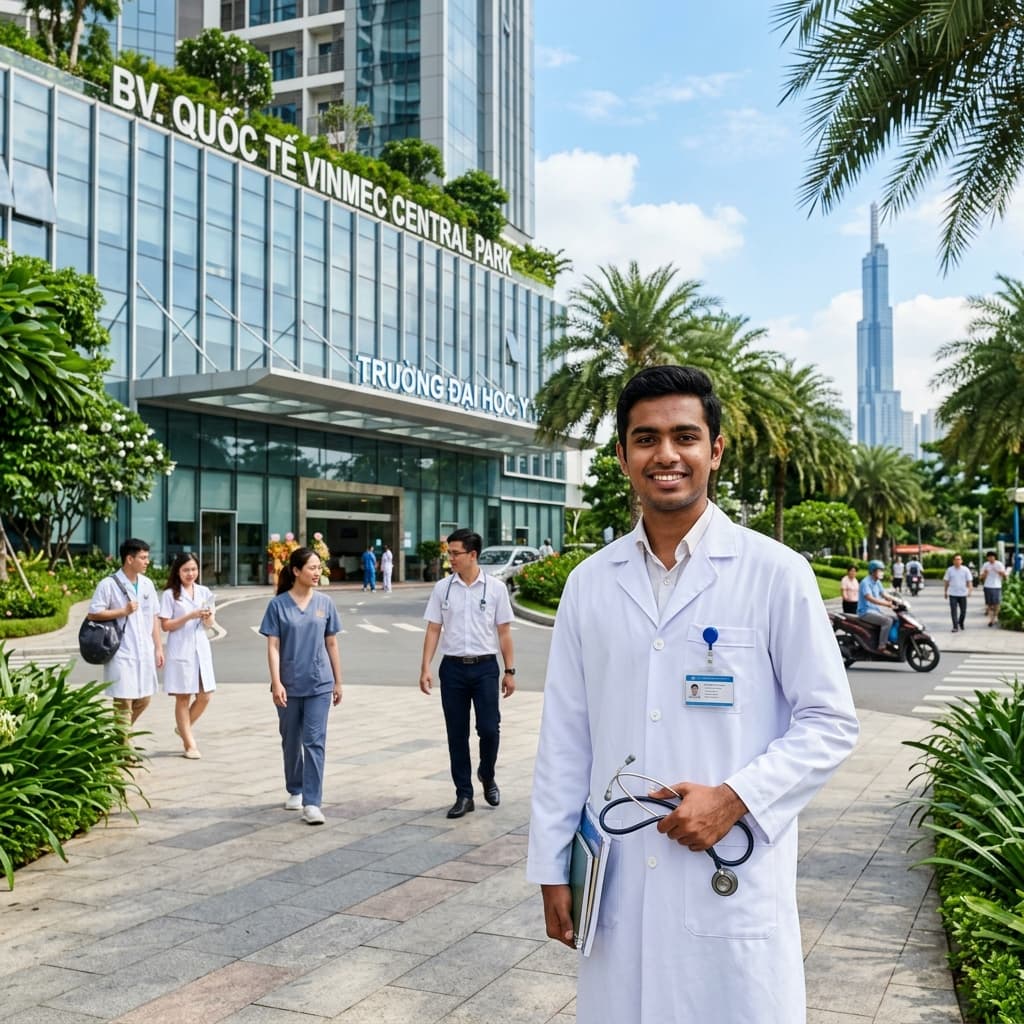
- VinUniversity College of Health Sciences (Hanoi) — affiliated with Vinmec Healthcare System, Vietnam's most modern private hospital network
- Can Tho University of Medicine and Pharmacy (Can Tho, Mekong Delta)
- Pham Ngoc Thach University of Medicine (Ho Chi Minh City)
When evaluating any Vietnamese university, confirm WDOMS listing, NMC recognition status, the availability of an English-medium international program, and affiliated clinical training hospitals.
Fees and Total Cost of MBBS in Vietnam
| Expense | Annual Cost (Approx.) |
|---|---|
| Tuition Fees | ₹2 – 4.5 lakhs |
| Hostel / Accommodation | ₹60,000 – 1.2 lakhs |
| Food & Groceries | ₹40,000 – 80,000 |
| Travel (India–Vietnam, annual) | ₹25,000 – 50,000 |
| Health Insurance | ₹10,000 – 20,000 |
| Books & Miscellaneous | ₹15,000 – 25,000 |
| Total per year | ₹3.5 – 7 lakhs |
Total 6-year cost: approximately ₹21 – 42 lakhs — among the lowest of any NMC-listed destination. Vietnam is particularly attractive when you consider the direct flight connectivity from India, which reduces annual travel costs.
Eligibility Criteria for MBBS in Vietnam 2026
Academic Requirements
- Class 12 (10+2) with Physics, Chemistry, and Biology
- Minimum 50% aggregate in PCB (40% for SC/ST/OBC)
NEET Requirement
Mandatory. All Indian students must have a valid NEET qualification before enrolling.
Age
- Minimum 17 years at time of admission
- No upper age limit
Documents Required
- Class 10 and 12 mark sheets and certificates
- Valid Indian passport
- NEET scorecard
- Medical fitness certificate
- HIV test certificate
- Passport-size photographs
- Birth certificate
Admission Process for MBBS in Vietnam 2026
Step 1: Research and Apply
Identify the Vietnamese universities with confirmed WDOMS listing and English-medium international programs. Apply with academic documents and NEET scorecard.
Step 2: Receive Admission Letter
The university will issue an acceptance/admission letter once your application is approved.
Step 3: Apply for Vietnam Student Visa
Indian students require a Vietnamese student visa. Required documents:
- Valid passport
- Admission letter from the Vietnamese university
- Visa application form
- Bank statement / proof of funds
- Medical certificate and insurance
- Photographs
Vietnam also offers an e-visa (90 days, extendable) which some students use initially before converting to a student/long-term visa after arrival.
Step 4: Travel to Vietnam
Vietnam has excellent flight connectivity from India. Indigo, Air India, Vietnam Airlines, and several other carriers offer direct or one-stop flights from Delhi, Mumbai, Kolkata, Chennai, Kochi, and other major cities to Hanoi (Noi Bai International Airport) and Ho Chi Minh City (Tan Son Nhat International Airport). Total travel time is approximately 4–7 hours.
Step 5: Enrol
Complete enrollment formalities on arrival. The Vietnamese academic year typically begins in September–October.
Life as an Indian Student in Vietnam
Climate
Northern Vietnam (Hanoi, Hai Phong) has a subtropical monsoon climate with cool winters (15–20°C) and hot, humid summers. Central Vietnam (Hue, Da Nang) is tropical. Southern Vietnam (Ho Chi Minh City) is hot and tropical year-round (28–35°C) with a wet season from May to November. Indian students — particularly from Tamil Nadu, Kerala, and other southern states — find Vietnam's climate very comfortable.
Food
Vietnamese cuisine is one of the most celebrated in the world — and much of it is naturally vegetarian-friendly. Pho (noodle soup), banh mi, fresh spring rolls, and rice-based dishes are dietary staples. Indian restaurants and South Asian grocery stores are available in both Hanoi and Ho Chi Minh City. Most students also cook Indian food in their apartments; Indian spices are accessible in Asian supermarkets.
Safety
Vietnam is one of the safest countries in Southeast Asia for international students. The crime rate is low, locals are generally friendly and helpful to foreigners, and the country has a stable political environment. Indian students consistently report positive safety experiences.
Indian Community
The Indian community in Vietnam is concentrated in Hanoi and Ho Chi Minh City. While smaller than Indian communities in Russia or Kyrgyzstan, it is warm and supportive. As more Indian students choose Vietnam for MBBS, this community is growing rapidly.
Travel and Exploration
Living in Vietnam for 6 years gives students access to one of the most naturally and culturally diverse countries in the world. From the mountains of Sapa to the limestone karsts of Ha Long Bay, the ancient temples of Hue to the beach towns of Da Nang and Phu Quoc — Vietnam is a country made for exploration. Weekend and holiday travel within Vietnam is affordable and easy.
FMGE Preparation for Vietnamese Medical Graduates
Vietnamese medical graduates face the same FMGE challenge as graduates from any country with a non-Indian curriculum. The Vietnamese curriculum is comprehensive but not specifically structured around Indian medical education standards.
Strategy for Vietnamese Graduates
- Indian textbooks from Day 1: Park's Textbook for Community Medicine is non-negotiable. Use KD Tripathi for Pharmacology, BD Chaurasia for Anatomy, Harsh Mohan or Robbins for Pathology
- Clinical subjects: Harrison's (reference) and Davidson's (exam preparation) for Medicine; DC Dutta for OBG; OP Ghai for Paediatrics
- Online coaching: Enrol in a structured FMGE program on Marrow or PrepLadder from Year 2 onwards
- Study groups: Form dedicated FMGE preparation groups with Indian batchmates — collaborative preparation is particularly effective for covering the breadth of 19 subjects
- Mock tests: Attempt full-length mock tests at least monthly from Year 4 onwards
Vietnam's proximity to India and good flight connectivity means students can attend FMGE coaching camps in India during semester breaks more easily than students in Russia or Kyrgyzstan.
Is Vietnam the Right Choice for You?
Vietnam is best suited for Indian students who:
- Want the lowest possible total MBBS cost while maintaining NMC recognition
- Prefer a warm, tropical climate
- Want to live in a dynamic, culturally rich country with easy access to India
- Are comfortable in an emerging medical education environment and are willing to supplement university teaching with self-directed FMGE preparation
- Are interested in eventually exploring opportunities in Southeast Asia or building a practice that serves the Vietnamese diaspora
Vietnam may be a less familiar name than Russia or Georgia in the MBBS-abroad space, but its combination of affordability, accessibility, and lifestyle quality makes it worth serious consideration.
Frequently Asked Questions
Q: Is MBBS from Vietnam recognised in India? Yes, graduates from WDOMS-listed Vietnamese universities that are NMC-approved can appear for FMGE and register with NMC. Always verify NMC recognition status before enrolling.
Q: Do I need to learn Vietnamese for MBBS in Vietnam? Academic instruction is in English for the international program. Basic Vietnamese is taught as part of the curriculum for clinical communication. You do not need to be proficient in Vietnamese to complete your studies.
Q: Are there direct flights from India to Vietnam? Yes. IndiGo, Air India, Vietnam Airlines, and other carriers offer direct and one-stop connections from Delhi, Mumbai, Chennai, Kochi, and Kolkata to Hanoi and Ho Chi Minh City.
Q: Is Vietnam safe for Indian students? Yes. Vietnam has a low crime rate and is generally safe for international students. Both Hanoi and Ho Chi Minh City have significant expat and international student communities.
Q: What is the food like in Vietnam for Indian vegetarians? Vietnamese cuisine has many vegetarian options. Indian grocery stores and restaurants are available in major cities. Most students cook their own Indian food in their apartments.
Q: When does the academic year begin in Vietnam? Typically September–October. Applications for 2026 intake should be submitted by June–August.
Conclusion
Vietnam in 2026 is a genuinely compelling option for Indian students seeking an affordable, NMC-listed MBBS program in a safe, warm, and culturally extraordinary country. With tuition fees starting at ₹2 lakhs per year, direct flight connections from India, a tropical climate, and world-class universities in Hanoi and Ho Chi Minh City, Vietnam offers a combination of practicality and lifestyle that few other destinations can match.
As with any MBBS-abroad destination, the key to success is choosing the right university, verifying NMC recognition, and beginning FMGE preparation early.
Students Traffic's counsellors can help you navigate the Vietnamese university landscape, verify NMC recognition for specific institutions, and create a step-by-step plan for your MBBS journey. Our guidance is always free — reach out today.