Academic structure, teaching phases, and curriculum for Master's Environmental Engineering at Beijing University of Civil Engineering and Architecture.
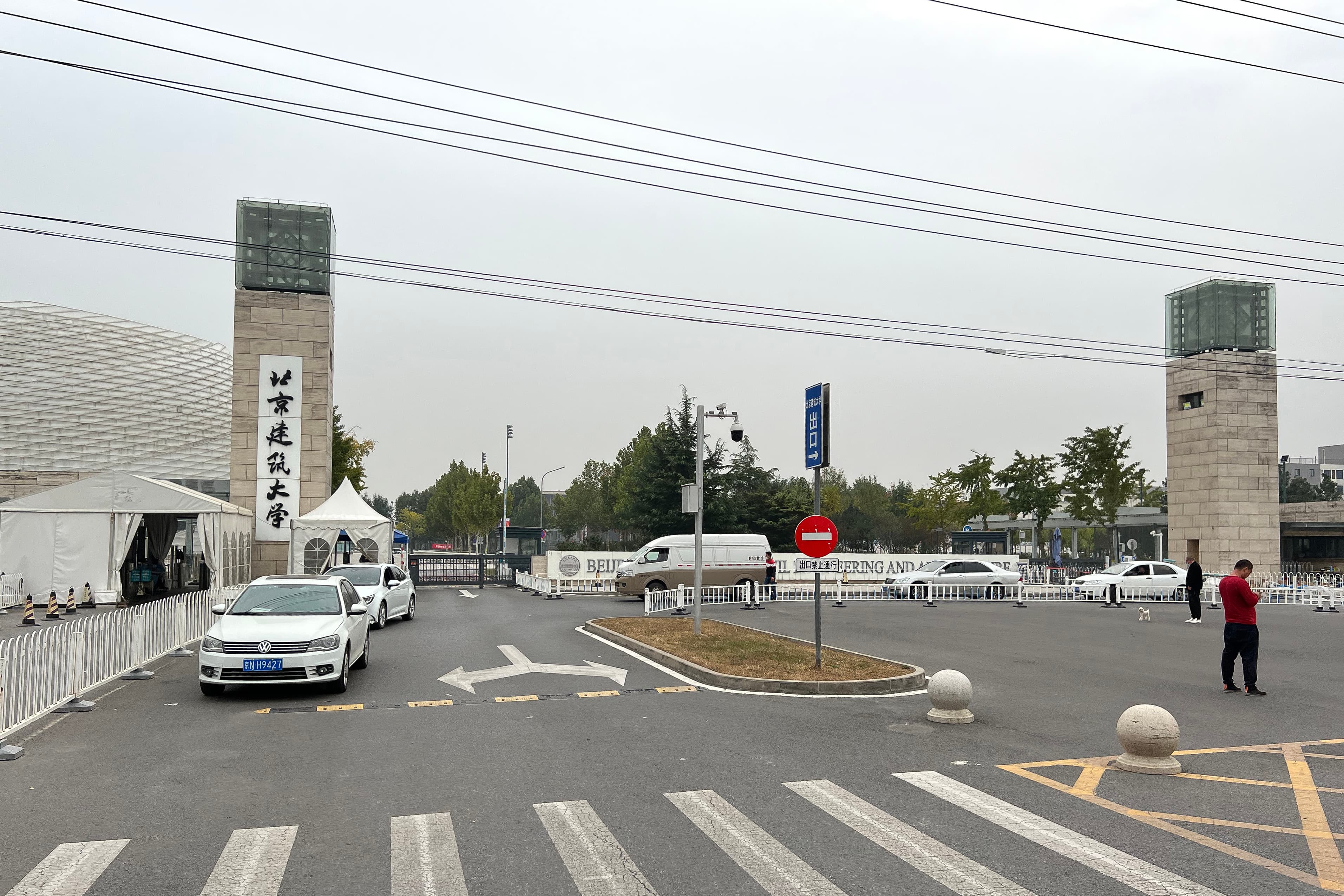
Environmental Engineering
Applying to Beijing University of Civil Engineering and Architecture?
Students Traffic verifies seat availability, checks current recognition status, and prepares your complete application for Beijing University of Civil Engineering and Architecture. The consultation is free.
The current 2026 standard master’s table explicitly lists this programme as English-taught. The separate trilingual MGSU joint enquiry routes are not included in this offering.
Fees
CN¥30,000 / year
Estimated hostel fee with food
Check with university
Teaching phases
Three-year full-time master’s study in Beijing
Three-year full-time standard master’s programme, maximum completion period five years including suspension or leave. BUCEA awards a Master’s Graduation Certificate and Master’s Degree Certificate after credits, thesis defence and university criteria. Exact Xicheng/Daxing teaching allocation requires confirmation; Beijing campus cover does not allocate the programme.
Tuition fee and hostel estimate
Year-wise cost data is not currently published for this program.
Training & support
Practical training & industry exposure
Master’s study requires curriculum credits, a thesis and successful defence. Architecture applicants bring an architecture-related degree and a design portfolio or relevant published academic papers. The current English brochure keeps the degree-conferral requirement at BUCEA Master’s Graduation Certificate and Master’s Degree Certificate; it does not establish a foreign professional equivalence. Civil Engineering, Environmental Engineering, Control Science and Engineering, Mechanical Engineering, and Surveying and Mapping Science and Technology have separate affiliated schools. The exact research project, laboratory access, modules and supervisor arrangement should be checked for the selected programme. Control and Mechanical Engineering have specific Computer Science, Automation, Electronic Engineering or related bachelor’s-background requirements. BUCEA’s university profile describes specialist work in architectural heritage, urban infrastructure, sponge-city development, surveying, solid-waste recycling, green buildings and smart construction. These institutional areas do not guarantee a particular project or employer placement for each student. The Moscow joint programmes are separate enquiry-only, trilingual routes. Their 0.5-year BUCEA, 1.5-year Moscow and one-year BUCEA sequence is not the teaching structure of the standard English routes. Independent internships and paid employment are prohibited unless BUCEA officially requires them for academic purposes.
