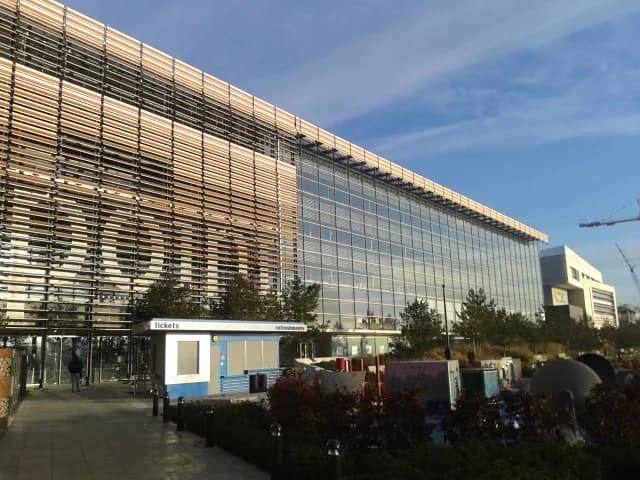
B.E./B.Tech AI & ML at Birmingham City University — 13 questions answered
These are the most common questions Indian students and families ask before applying for B.E./B.Tech AI & ML at Birmingham City University, Birmingham. Covering admissions, fees, recognition, eligibility, hostel, career outcomes, and the India-return pathway — everything you need before making your decision.
Is Birmingham City University a public or private institution?
It is a public university, tracing its origins to the Birmingham College of Art founded in 1843, becoming Birmingham Polytechnic in 1971 and gaining full university status in 1992. It is funded through UK government support, tuition fees and research income, and is a separate institution from the older, larger University of Birmingham.
What is the medium of instruction, and is there any transition to another language?
All degree programmes are taught entirely in English, with no transition to another language. International applicants who do not hold a recognised English-medium qualification typically need IELTS 6.0-6.5 overall, with higher component minimums on some professionally regulated courses such as Nursing.
Can I get direct admission straight after my qualifying exam, or is a bridge year required?
Direct admission to most bachelor's courses is available for students with a typical UCAS Tariff-equivalent entry of around 112 points from up to four qualifications; students who fall short, or whose school system does not align with UK Year 13, can take one of BCU's Foundation Year routes (offered for several subjects including Computer Science, Business, Art and Design and Engineering) before progressing to Year 1 of the main degree.
What does the total cost of studying at BCU actually include?
International tuition for 2026/27 runs from GBP 18,570/year for most bachelor's degrees up to GBP 20,370/year for the International MBA and International Law LLM, and GBP 18,570-18,970/year for most postgraduate taught master's. On top of tuition, UK Visas and Immigration required proof of at least GBP 10,224 in personal savings for the Student Visa application as of the 2026/27 cycle, and university-managed accommodation runs roughly GBP 115-210 per week depending on hall and room type.
How do I apply, and through which portal?
Undergraduate applications go through UCAS using the course-specific UCAS code shown on each BCU course page; postgraduate taught and most direct-entry undergraduate routes (such as the International Business Top-up) apply directly through Birmingham City University's own online application portal, linked from each course page's 'Fees & How to Apply' tab.
What are BCU's English-language requirements for international applicants?
Most undergraduate and postgraduate courses require IELTS 6.0-6.5 overall with no component below 5.5-6.0, though some professionally regulated courses (such as Nursing, where it is offered to international students) and Conservatoire performance courses set stricter or additional component requirements. BCU accepts a range of equivalent English tests and its own pre-sessional English programmes for applicants who are close to but below the required score.
Are there any admissions interviews or entrance exams beyond standard grades?
Portfolio-based courses in the School of Art, Fashion, Jewellery and Game Art typically require a submitted or interview-based portfolio, and Royal Birmingham Conservatoire and Birmingham School of Acting courses require a live or recorded audition alongside academic entry requirements. Most other bachelor's and master's courses are assessed on academic qualifications and personal statement alone.
Can international students work part-time or take a placement year while studying?
International students on a Student Visa can generally work part-time during term time (subject to UK Visas and Immigration rules current at enrolment), and many BCU degrees, including Accounting and Finance, Business Management and Computer Science, offer an optional sandwich placement year charged at a reduced flat fee rather than the full annual tuition rate; BCU's Careers Service and micro-placement scheme also support shorter local-business placements.
When does the academic year start, and is there more than one intake?
The main intake for the great majority of BCU's undergraduate and postgraduate taught courses, including all programmes listed here, is September, with course-specific application deadlines shown on each course's own page; some professionally regulated health courses run additional January or other intakes, but these are largely UK/home-fee-status only.
Do BCU's professional accreditations (ACCA, BCS, RIBA, SQE-alignment) mean automatic recognition in my home country?
UK professional-body accreditation (ACCA/ICAEW/CIMA/IFA for accounting, BCS for computer science, RIBA/ARB for architecture) confers standing with those specific UK/international bodies and exam exemptions, but does not by itself guarantee recognition by a different country's own regulator; students planning to practise outside the UK should confirm their home country's specific recognition or licensing requirements for a UK degree before applying.
What accommodation options are available and what do they cost?
BCU guarantees first-year accommodation for eligible students through named private-hall partners rather than university-owned halls alone. 2026/27 weekly rates run from about GBP 115 (Hamstead Campus) to GBP 210 (the Old Fire Station), with most halls including bills in the price on 43-51 week contracts; halls closest to City South Campus (Beech Gardens, Queen's Hospital Close) tend to be cheaper than those nearest the City Centre Campus.
Why choose Birmingham City University over the University of Birmingham or other West Midlands universities?
BCU is a practice-based, post-1992 university with named professional accreditations across its core subjects (ACCA/ICAEW/CIMA/IFA in accounting, BCS in computing, RIBA/ARB in architecture, SQE-alignment in law) and specialist institutions not replicated elsewhere in the city, including the Royal Birmingham Conservatoire and the historic Birmingham School of Jewellery; the University of Birmingham is a larger, older, more research-intensive Russell Group institution with a different fee and course profile, so the right choice depends on whether a student prioritises practice-based professional training or a traditional research-university structure.
Is the International Business degree a full three-year bachelor's?
No — at BCU, International Business BA (Hons) is offered as a one-year Top-up degree for students who already hold a relevant Level 5 qualification such as a Higher National Diploma (HND) in a business-related subject; students without a qualifying Level 5 award should instead consider the three-year Business Management BA (Hons), which BCU offers as its standard entry-level business bachelor's.
Applying to Birmingham City University?
Students Traffic verifies seat availability, checks current recognition status, and prepares your complete application for Birmingham City University. The consultation is free.