De Montfort UniversityLeicester, United KingdomB.E./B.Tech AI & ML · Public£17,300/yrNCSC (National Cyber Security Centre) -- Academic Centre of Excellence in Cyber Security Research (ACE-CSR), plus an NCSC-certified MSc Cyber Security
B.E./B.Tech AI & ML at De Montfort University — 12 questions answered
These are the most common questions Indian students and families ask before applying for B.E./B.Tech AI & ML at De Montfort University, Leicester. Covering admissions, fees, recognition, eligibility, hostel, career outcomes, and the India-return pathway — everything you need before making your decision.
Is De Montfort University public or private?
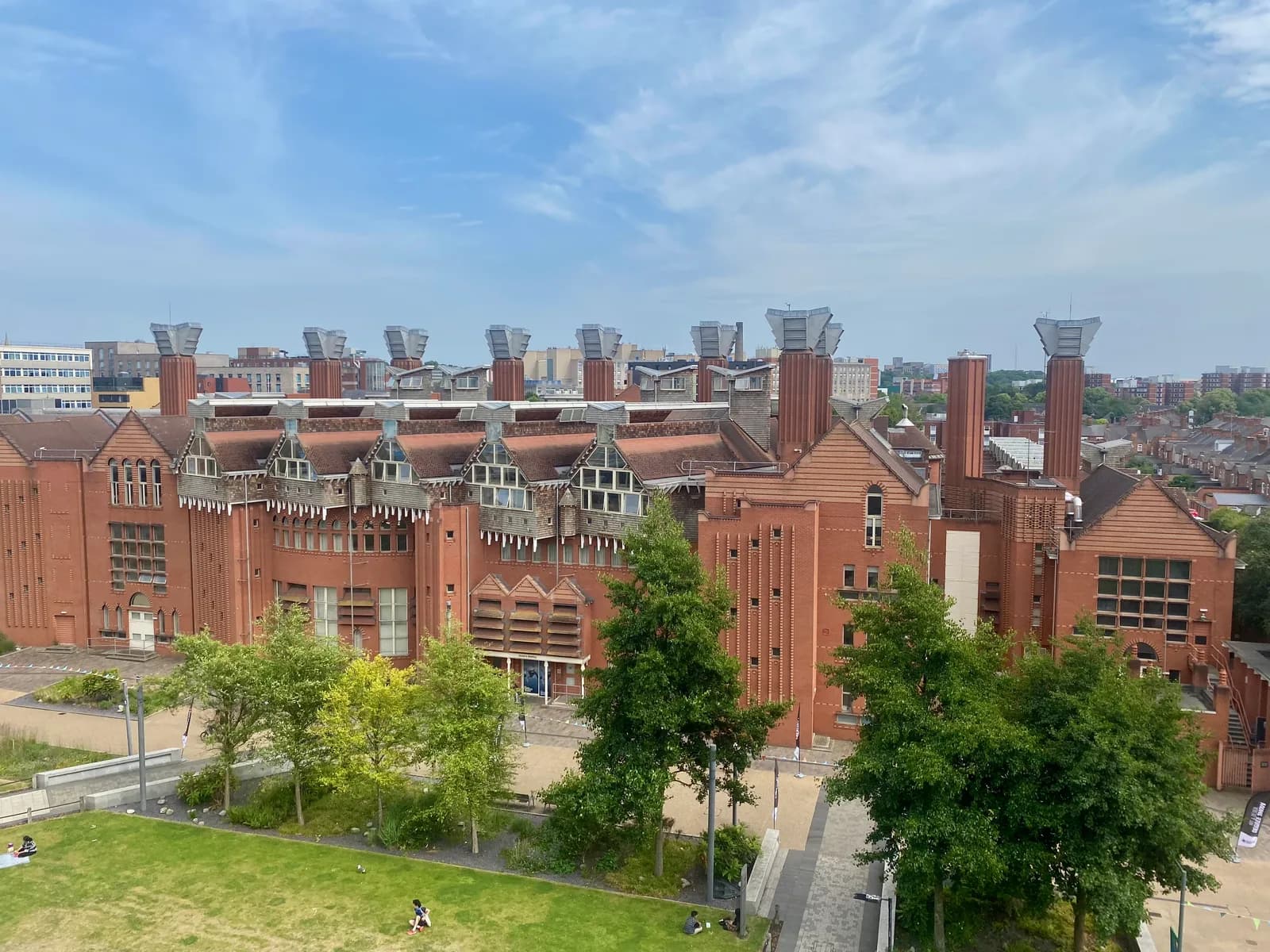
De Montfort University (DMU) is a public university in Leicester, England, tracing its origins to the 1870 Leicester School of Art and formally created as De Montfort University in 1992, when Leicester Polytechnic was granted university status.
Is De Montfort University the same as the University of Leicester?
No. DMU and the University of Leicester are two separate institutions in the same city. DMU is based at The Gateway campus near the city centre, while the University of Leicester's main campus sits south of the centre near Victoria Park. Confirm which university a course belongs to before applying, since both are commonly referred to simply as 'Leicester'.
Are DMU's programmes taught in English?
Yes. English is the language of instruction for every programme covered here, including Law, Business, Computing, Cyber Security, Games, Art and Design, Pharmacy and Nursing.
Can international students get direct admission straight after high school or a first degree?
Yes for most bachelor's programmes, subject to DMU's published UCAS points requirement (typically 112 points, 120 for Pharmacy) and an IELTS or equivalent score; many undergraduate courses also offer a 4-year sandwich route with an optional paid placement year. Postgraduate applicants need a relevant undergraduate degree, and Pharmacy and Nursing carry additional professional entry criteria.
What does international tuition actually cost?
2026/27 international Year 1 fees range from GBP 16,800 to GBP 17,800 for the undergraduate courses covered here (GBP 17,300 for Pharmacy MPharm, GBP 17,800 for Adult Nursing), and from GBP 16,800 to GBP 25,700 for the postgraduate courses (GBP 25,700 for MPH Public Health, at the top of the range). PhD and DBA research-degree fees are GBP 16,000 per year for international students based in the UK. Fees generally rise after Year 1, and DMU does not publish a fixed multi-year total for most courses.
How do I apply to DMU?
International undergraduate applicants apply through UCAS using DMU's institution code D26 and the specific course's UCAS code. Postgraduate applicants apply directly through DMU's own online application portal for the relevant course.
What English-test scores are required?
IELTS requirements vary by subject: undergraduate courses need IELTS 6.0 for Art and Design, Business, Computing and Engineering, IELTS 6.5 for Law, and IELTS 6.5-7.5 for Science and health courses. Postgraduate courses need IELTS 6.0 for Business and Computing, 6.0-6.5 for Art, Design and Engineering, and 6.5 for Humanities, Media, Law and Science.
Can students earn money or gain paid experience while studying?
Several undergraduate courses, including Game Art, Games Production, Computer Science and Accounting and Finance, offer an optional paid placement year that extends the standard 3-year degree to 4 years; recent Game Art placements have been at EA Games, Rare Limited and BMW. Standard UK Student visa work-hour limits apply to any part-time work taken alongside study.
When do these programmes start, and is there more than one intake?
Most undergraduate and postgraduate programmes covered here start in September; DMU also runs a smaller January intake for a subset of courses (confirm on the individual course page), and the MSc Artificial Intelligence specifically offers both a 12-month September start and an 18-month January start.
Is a special certificate or pre-approval needed before applying, like Germany's APS?
The UK has no APS-style pre-approval certificate. The main requirement is a UK Student visa after receiving an offer and a Confirmation of Acceptance for Studies (CAS); deposit rules vary sharply by nationality -- applicants from Nepal, Sri Lanka, Nigeria and some Indian states must pay the full first-year net tuition fee before a CAS is issued, while most other applicants pay a minimum 50% deposit.
What does NCSC, GPhC and NMC accreditation actually mean for students?
NCSC certification of DMU's Cyber Technology Institute and its MSc Cyber Security confirms UK government-recognised teaching quality in cyber security. GPhC accreditation of the MPharm is what allows Pharmacy graduates to register as UK pharmacists, and NMC approval of the Adult Nursing degree is what allows graduates to register as UK nurses -- both are legal prerequisites to practise in the respective profession, not just quality marks.
What are the accommodation options and costs?
DMU guarantees a room to first-year students across roughly 1,000 university-managed beds, with standard, en-suite and studio options for 2026/27 running GBP 95 to GBP 180 per week on 41- to 48-week contracts, most bills included except laundry. Off-campus private housing nearby is often cheaper but needs separate bills and independent searching.
Applying to De Montfort University?
Students Traffic verifies seat availability, checks current recognition status, and prepares your complete application for De Montfort University. The consultation is free.