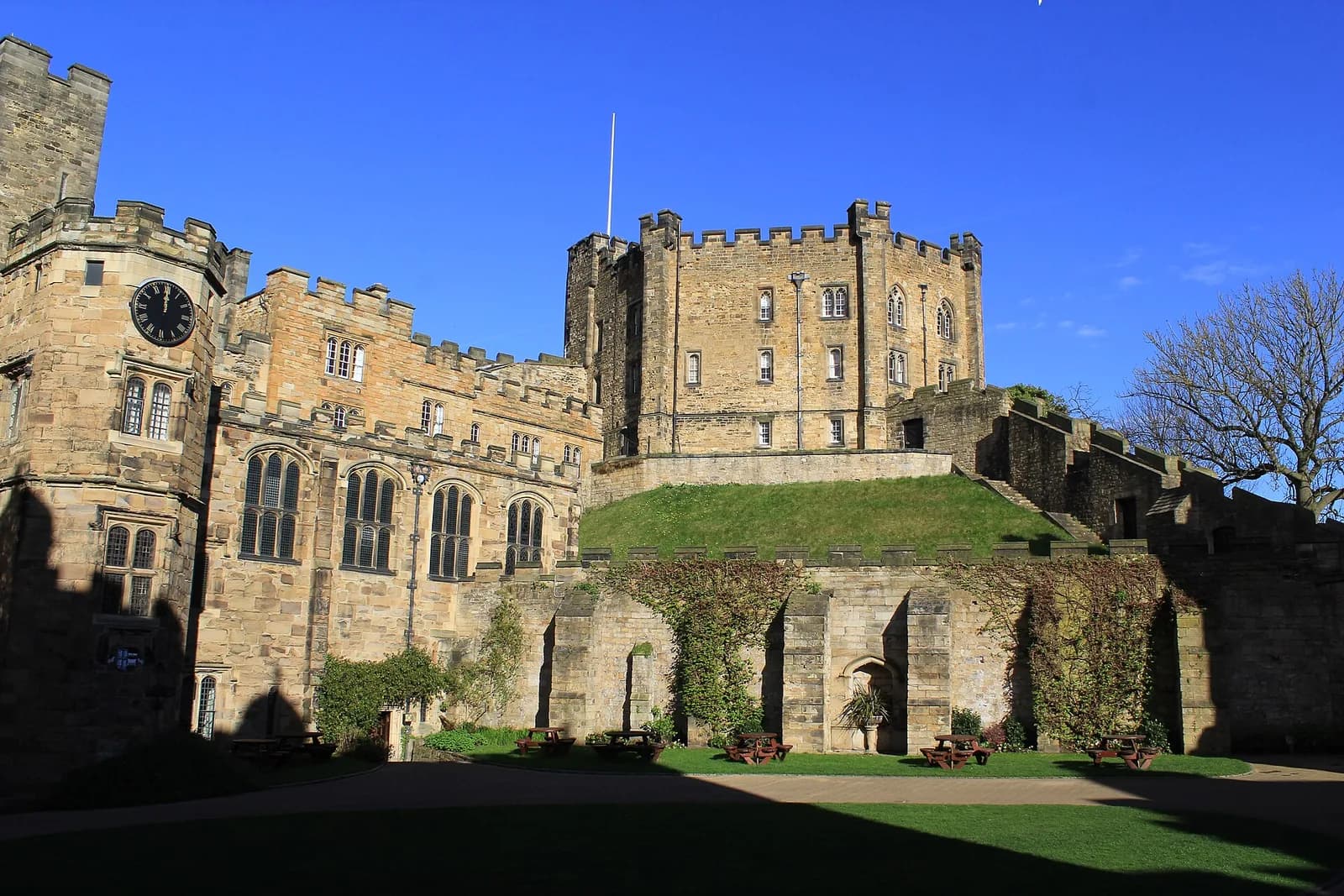
M.Sc. Finance at Durham University — 13 questions answered
These are the most common questions Indian students and families ask before applying for M.Sc. Finance at Durham University, Durham. Covering admissions, fees, recognition, eligibility, hostel, career outcomes, and the India-return pathway — everything you need before making your decision.
Is Durham University public or private?
Durham is a public UK research university established by Act of Parliament in 1832. It receives public funding and regulatory oversight like other UK universities, alongside tuition income from home and international students.
What language is teaching delivered in?
All taught programmes covered here — Computer Science, Law and Durham University Business School courses — are delivered entirely in English. There is no transition to a local-language phase at any level.
Can Indian students get direct undergraduate admission after Class 12, or is a bridge year required?
Direct entry is available only from CBSE and CISCE boards, typically requiring an 80-90% average across the best four Class 12 subjects depending on the course; most State Board qualifications are reviewed case-by-case and may require a foundation year (such as the Durham University International Study Centre route) before starting the main degree.
What is the total cost of studying at Durham, not just tuition?
International tuition runs from £29,250 (LLB) to £41,000 (MBA) a year depending on the programme, confirmed on each official course page. On top of that, self-catered college accommodation is £7,217 and catered accommodation £10,431-£11,687 for a 39-week contract, plus daily living, books and personal costs; postgraduate students should also budget for Business School programme-specific extras.
How do I apply?
Undergraduate applicants apply through UCAS using Durham's institution code and the specific course UCAS code (for example G400 for Computer Science, M101 for Law, NN43 for Accounting and Finance). Postgraduate taught applicants, including MSc and MBA routes, apply directly through Durham's online postgraduate application portal, not UCAS.
What English test score do I need?
Requirements vary by level: IELTS 6.5 overall with 6.0 in each band for most undergraduate and standard postgraduate-taught courses, rising to 7.0 overall with 6.5 in each band for Business School postgraduate programmes and the MBA. Durham does not waive this requirement based on Class 12 English marks; TOEFL iBT and PTE Academic are accepted alternatives at course-specific score levels.
Does the LLB let me practise law immediately after graduating?
No. The LLB is recognised by the Solicitors Regulation Authority and Bar Standards Board as the academic stage of legal training, but graduates must complete further professional training — the SQE route for solicitors or the Bar course and pupillage for barristers — before they can practise in England and Wales.
Is there a stipend or paid work option while studying?
Durham does not offer a general study stipend. Student visa holders can normally work part-time during term (subject to current UK Home Office limits) and full-time during vacations, and MBA and postgraduate Business School students can apply for the paid Strategic Consulting Project route with partner organisations.
When do programmes start and when should I apply?
Nearly all programmes covered here start in September. UCAS undergraduate applications typically close in mid-January for equal consideration; postgraduate applications are reviewed on a rolling basis, but popular programmes and scholarships close earlier, so applying in the preceding autumn or winter is advisable.
Do I need any special pre-approval certificate, like an APS, to study in the UK?
No APS-equivalent certificate is required for the UK. Once you hold a Confirmation of Acceptance for Studies (CAS) from Durham, you apply directly for the UK Student visa through GOV.UK, which requires financial evidence, a valid passport and, for some Computer Science postgraduate research routes, ATAS clearance.
What accreditation or recognition should I know about?
Durham is a Russell Group member; Durham University Business School holds the AACSB/EQUIS/AMBA triple accreditation shared by about 1% of business schools worldwide; Computer Science is accredited by BCS with the Euro-Inf Bachelor Quality Label; and the LLB is an SRA/BSB-recognised qualifying law degree. Each recognition transfers differently depending on your home country's professional bodies, so check the relevant regulator if you plan to practise outside the UK.
What accommodation options are there and what do they cost?
All first-year undergraduates are normally offered a place in one of the 17 colleges; nine are catered, six self-catered and two offer both options. For 2026/27, self-catered rooms are £7,217 and catered rooms £10,431-£11,687 for a 39-week contract. Many students move to private off-campus housing from second year, particularly around Viaduct, Gilesgate and Claypath.
How does Durham compare with other Russell Group universities already on Students Traffic, like Manchester or Edinburgh?
Durham is smaller and more collegiate than city-based Russell Group universities such as Manchester or Edinburgh, with teaching concentrated in a compact cathedral city rather than a large metropolitan campus. It suits students who want strong subject-specific reputations (Business School triple accreditation, BCS-accredited Computer Science, SRA/BSB-recognised Law) inside a close-knit college community, rather than the scale and city-life options of a big-city university.
Applying to Durham University?
Students Traffic verifies seat availability, checks current recognition status, and prepares your complete application for Durham University. The consultation is free.