Far Eastern Federal University (FEFU, est. 1899, reorganised 2011) in Vladivostok is Russia's premier federal university in the Pacific Far East.
Location
Vladivostok, Russia
Programme focus
MBBS
Indicative annual tuition
$5,400
Next intake
Guidance available

$5,400
6 years
English
Guidance available
Vladivostok, Russia
Public/Federal
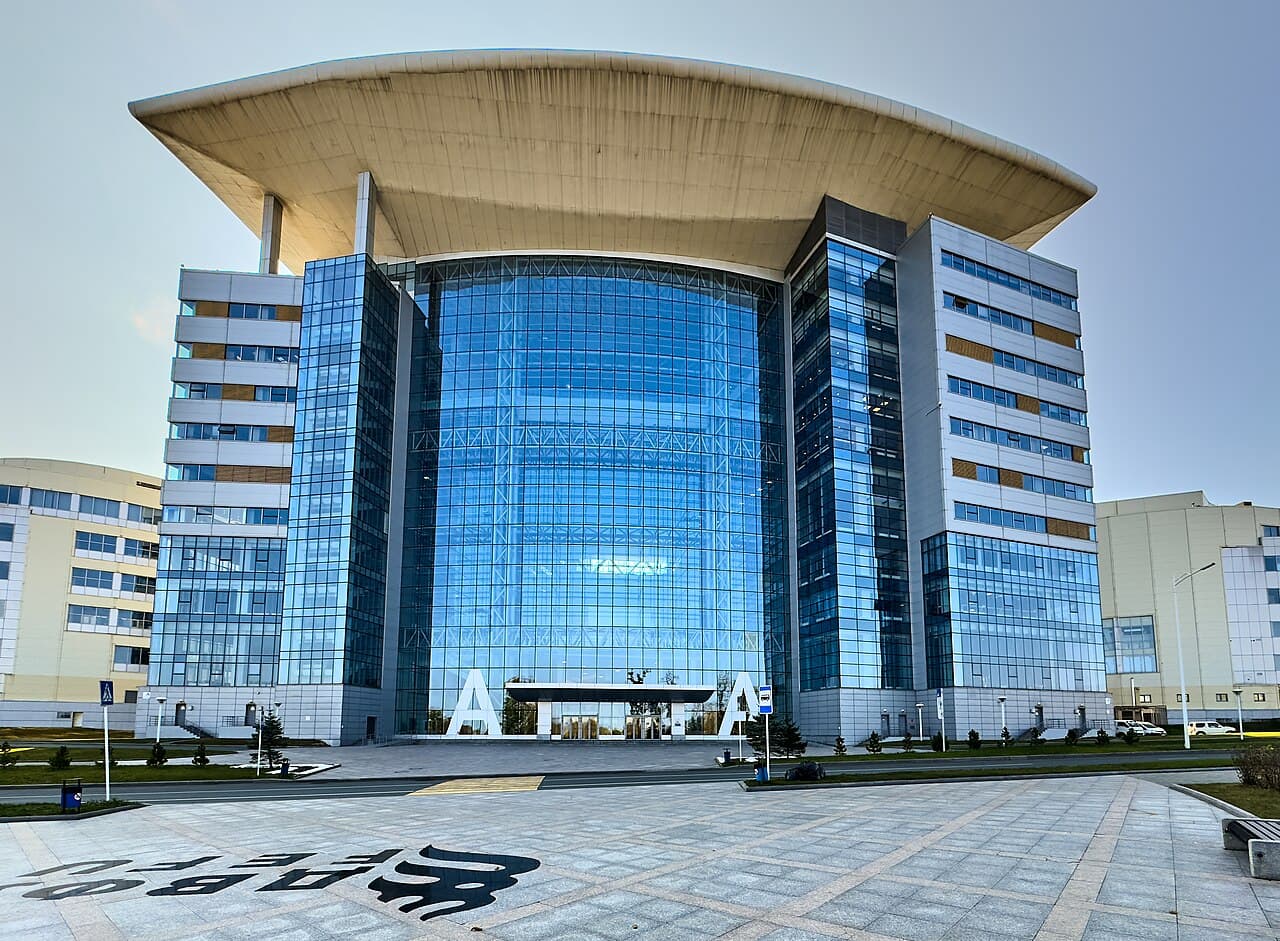
Far Eastern Federal University (FEFU, est. 1899, reorganised 2011) in Vladivostok is Russia's premier federal university in the Pacific Far East. Its School of Medicine operates on the state-of-the-art Russky Island campus — connected to mainland Vladivostok by the Russky Bridge, one of the world's longest cable-stayed bridges. FEFU's School of Medicine is listed in the World Directory of Medical Schools (WDOMS). Annual tuition: approximately 440,000-495,000 rubles (~$5,000 / INR 4.3 lakh/year, reported range varies by source). Hostel on Russky Island campus: reported around 40,000 rubles/year for a shared suite (figures vary by source). FEFU's Pacific island campus, proximity to Japan and South Korea, and modern purpose-built infrastructure make it one of Russia's most internationally distinctive medical school environments.

FEFU's School of Medicine (originally founded as the School of Biomedicine in 2011, with English-medium instruction added in 2016) operates on the university's purpose-built Russky Island campus, constructed for the 2012 APEC summit and connected to mainland Vladivostok by the Russky Bridge, one of the world's longest cable-stayed bridges. Campus facilities include anatomy/dissection labs, pathology and pharmacology labs, simulation centres with high-fidelity mannequins, a digital-resourced medical library, sports facilities, and cafeterias reported to include Indian-food options. The English-medium programme enrols roughly 600 students. Vladivostok's maritime Pacific climate is milder than Siberian interior cities (roughly -10 degC to -15 degC winters), with cultural influence from nearby Japan and South Korea via ferry links.
Open a programme profile for eligibility, tuition, curriculum and application planning.
Practical information about day-to-day life while pursuing this program at Far Eastern Federal University in Vladivostok, the country. This covers the campus environment, accommodation, daily living and available safety and student-support services.
FEFU's School of Medicine (originally founded as the School of Biomedicine in 2011, with English-medium instruction added in 2016) operates on the university's purpose-built Russky Island campus, constructed for the 2012 APEC summit and connected to mainland Vladivostok by the Russky Bridge, one of the world's longest cable-stayed bridges. Campus facilities include anatomy/dissection labs, pathology and pharmacology labs, simulation centres with high-fidelity mannequins, a digital-resourced medical library, sports facilities, and cafeterias reported to include Indian-food options. The English-medium programme enrols roughly 600 students. Vladivostok's maritime Pacific climate is milder than Siberian interior cities (roughly -10 degC to -15 degC winters), with cultural influence from nearby Japan and South Korea via ferry links.
Student accommodation on Russky Island consists of two-room suites (typically shared by 3-4 students), each with its own kitchen equipment for self-cooking. Campus infrastructure built for APEC 2012 includes a gym, fitness centre, internal campus transit, ATM, small shopping centre, and banking facilities, making the self-contained island campus relatively self-sufficient. Reported hostel costs vary by source, from roughly RUB 40,000/year to a broader USD 500-800/year range; families should request the current official rate from FEFU's international office given the spread across aggregator estimates.
Campus cafeterias are reported to include Indian-food options alongside other cuisines, and hostel suites' individual kitchens allow self-cooking. The Indian student community on Russky Island is described as growing but still developing relative to larger, longer-established Indian cohorts at cities like Simferopol (Crimea) or Orenburg. Vladivostok's Asian-market access (rice, vegetables, regional condiments) is strong given the city's proximity to China, Japan, and South Korea, though Indian-specific spices still typically require independent sourcing or stocking up during India visits.
Russky Island's campus was built to international-summit security standards for APEC 2012 and is a self-contained, well-secured environment by design, which the university markets as one of Russia's safest university settings. Vladivostok city itself is broadly reported as safe for international students. As with any overseas placement, families should independently check the current Indian Embassy Moscow travel advisory before enrolling. FEFU's international student office has experience supporting students from across Asia and the Pacific, given the university's regional orientation. FMGE coaching sessions are reported as part of the university's academic support offering, alongside the campus's simulation labs and academic support centres. Given FEFU's relatively younger international medical programme (English-medium instruction only since 2016), families should ask specifically about the current scale and track record of FMGE/NExT preparation support rather than assume parity with longer-established Russian medical universities.
Admissions support
Get focused help with your application, documents and visa process. We will turn the information on this page into a practical next-step plan.
Far Eastern Federal University (FEFU, est. 1899, reorganised 2011) in Vladivostok is Russia's premier federal university in the Pacific Far East.
Location
Vladivostok, Russia
Programme focus
MBBS
Indicative annual tuition
$5,400
Next intake
Guidance available

$5,400
6 years
English
Guidance available
Vladivostok, Russia
Public/Federal
Far Eastern Federal University (FEFU, est. 1899, reorganised 2011) in Vladivostok is Russia's premier federal university in the Pacific Far East. Its School of Medicine operates on the state-of-the-art Russky Island campus — connected to mainland Vladivostok by the Russky Bridge, one of the world's longest cable-stayed bridges. FEFU's School of Medicine is listed in the World Directory of Medical Schools (WDOMS). Annual tuition: approximately 440,000-495,000 rubles (~$5,000 / INR 4.3 lakh/year, reported range varies by source). Hostel on Russky Island campus: reported around 40,000 rubles/year for a shared suite (figures vary by source). FEFU's Pacific island campus, proximity to Japan and South Korea, and modern purpose-built infrastructure make it one of Russia's most internationally distinctive medical school environments.
FEFU's School of Medicine (originally founded as the School of Biomedicine in 2011, with English-medium instruction added in 2016) operates on the university's purpose-built Russky Island campus, constructed for the 2012 APEC summit and connected to mainland Vladivostok by the Russky Bridge, one of the world's longest cable-stayed bridges. Campus facilities include anatomy/dissection labs, pathology and pharmacology labs, simulation centres with high-fidelity mannequins, a digital-resourced medical library, sports facilities, and cafeterias reported to include Indian-food options. The English-medium programme enrols roughly 600 students. Vladivostok's maritime Pacific climate is milder than Siberian interior cities (roughly -10 degC to -15 degC winters), with cultural influence from nearby Japan and South Korea via ferry links.
Open a programme profile for eligibility, tuition, curriculum and application planning.
Practical information about day-to-day life while pursuing this program at Far Eastern Federal University in Vladivostok, the country. This covers the campus environment, accommodation, daily living and available safety and student-support services.
FEFU's School of Medicine (originally founded as the School of Biomedicine in 2011, with English-medium instruction added in 2016) operates on the university's purpose-built Russky Island campus, constructed for the 2012 APEC summit and connected to mainland Vladivostok by the Russky Bridge, one of the world's longest cable-stayed bridges. Campus facilities include anatomy/dissection labs, pathology and pharmacology labs, simulation centres with high-fidelity mannequins, a digital-resourced medical library, sports facilities, and cafeterias reported to include Indian-food options. The English-medium programme enrols roughly 600 students. Vladivostok's maritime Pacific climate is milder than Siberian interior cities (roughly -10 degC to -15 degC winters), with cultural influence from nearby Japan and South Korea via ferry links.
Student accommodation on Russky Island consists of two-room suites (typically shared by 3-4 students), each with its own kitchen equipment for self-cooking. Campus infrastructure built for APEC 2012 includes a gym, fitness centre, internal campus transit, ATM, small shopping centre, and banking facilities, making the self-contained island campus relatively self-sufficient. Reported hostel costs vary by source, from roughly RUB 40,000/year to a broader USD 500-800/year range; families should request the current official rate from FEFU's international office given the spread across aggregator estimates.
Campus cafeterias are reported to include Indian-food options alongside other cuisines, and hostel suites' individual kitchens allow self-cooking. The Indian student community on Russky Island is described as growing but still developing relative to larger, longer-established Indian cohorts at cities like Simferopol (Crimea) or Orenburg. Vladivostok's Asian-market access (rice, vegetables, regional condiments) is strong given the city's proximity to China, Japan, and South Korea, though Indian-specific spices still typically require independent sourcing or stocking up during India visits.
Russky Island's campus was built to international-summit security standards for APEC 2012 and is a self-contained, well-secured environment by design, which the university markets as one of Russia's safest university settings. Vladivostok city itself is broadly reported as safe for international students. As with any overseas placement, families should independently check the current Indian Embassy Moscow travel advisory before enrolling. FEFU's international student office has experience supporting students from across Asia and the Pacific, given the university's regional orientation. FMGE coaching sessions are reported as part of the university's academic support offering, alongside the campus's simulation labs and academic support centres. Given FEFU's relatively younger international medical programme (English-medium instruction only since 2016), families should ask specifically about the current scale and track record of FMGE/NExT preparation support rather than assume parity with longer-established Russian medical universities.
Admissions support
Get focused help with your application, documents and visa process. We will turn the information on this page into a practical next-step plan.
Talk to a student
These students studied here and can answer your real questions about academics, hostel life, and daily experience.
No student contacts listed yet for this university.
Request a student conversation
Share your details and we'll match you with a registered student who can answer your questions directly.
No reviews yet.
Be the first to share your experience at Far Eastern Federal University.
Other universities in Russia
If you are planning MBBS admission in Russia, the real decision is not whether admission is possible. It is whether you are choosing the right university, preparing the right documents, and entering on a pathway that still makes sense for India-return goals later.
If you are comparing Russia seriously, the duration question is really about structure, internship, and planning. The useful answer is not a brochure number. It is understanding how the six-year pathway works and what that means for your long-term medical journey.
If your first question is cost, Russia belongs on the shortlist. But the smartest budget decision is not the cheapest seat on paper. It is the cheapest Russia option that still makes sense for the student's full six-year journey.
The best Russia shortlist is not a generic top-10 table. It is a fit-based decision across brand, public-university value, city comfort, cost, and long-term pathway sense. This page is built to help families shortlist wisely, not just scroll names.
Scholarship traffic around Russia is real, but so is the misinformation. If you want MBBS in Russia with scholarship, the goal is not finding the loudest claim. It is finding a genuine scholarship route that still leads to the right university and the right long-term outcome.
Families searching Russia fees in rupees are trying to answer a practical question: can we really afford this path across six years? This page is built to answer that question better than the generic fee pages in the current SERP.
Talk to a student
These students studied here and can answer your real questions about academics, hostel life, and daily experience.
No student contacts listed yet for this university.
Request a student conversation
Share your details and we'll match you with a registered student who can answer your questions directly.
No reviews yet.
Be the first to share your experience at Far Eastern Federal University.
Other universities in Russia
If you are planning MBBS admission in Russia, the real decision is not whether admission is possible. It is whether you are choosing the right university, preparing the right documents, and entering on a pathway that still makes sense for India-return goals later.
If you are comparing Russia seriously, the duration question is really about structure, internship, and planning. The useful answer is not a brochure number. It is understanding how the six-year pathway works and what that means for your long-term medical journey.
If your first question is cost, Russia belongs on the shortlist. But the smartest budget decision is not the cheapest seat on paper. It is the cheapest Russia option that still makes sense for the student's full six-year journey.
The best Russia shortlist is not a generic top-10 table. It is a fit-based decision across brand, public-university value, city comfort, cost, and long-term pathway sense. This page is built to help families shortlist wisely, not just scroll names.
Scholarship traffic around Russia is real, but so is the misinformation. If you want MBBS in Russia with scholarship, the goal is not finding the loudest claim. It is finding a genuine scholarship route that still leads to the right university and the right long-term outcome.
Families searching Russia fees in rupees are trying to answer a practical question: can we really afford this path across six years? This page is built to answer that question better than the generic fee pages in the current SERP.