MBBS at Kabardino-Balkarian State University — 13 questions answered
These are the most common questions Indian students and families ask before applying for MBBS at Kabardino-Balkarian State University, Nalchik. Covering admissions, fees, recognition, eligibility, hostel, career outcomes, and the India-return pathway — everything you need before making your decision.
Is Kabardino-Balkarian State University a public or private institution?
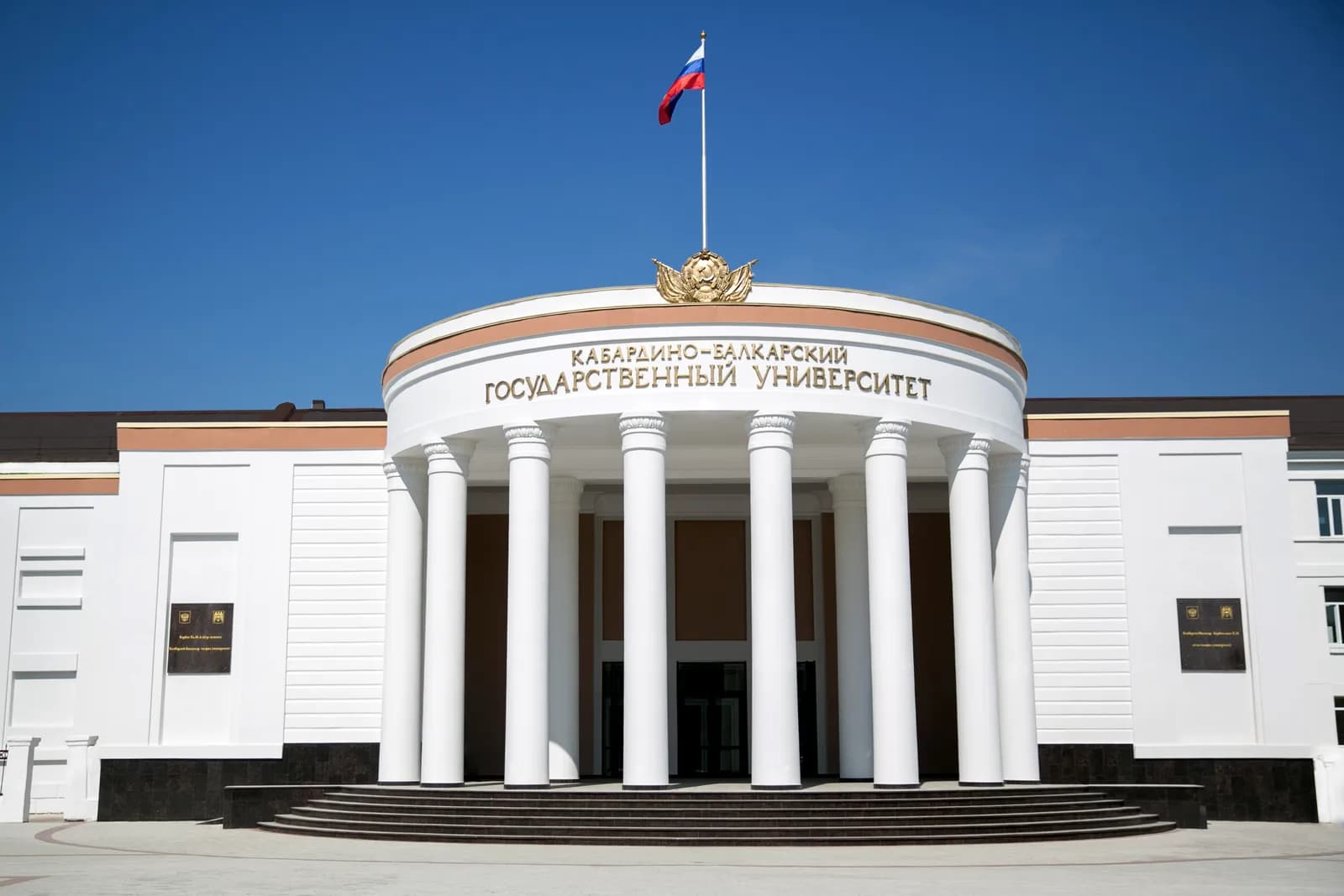
It is a public, federal institution under the Ministry of Education and Science of the Russian Federation (Minobrnauki) — note this differs from the dedicated medical academies in this comparison set, most of which report to the Ministry of Health. KBSU is a general multi-faculty university with a Faculty of Medicine.
What language is the medical programme taught in?
The full 6-year MBBS-equivalent course is offered in English for international students, with Russian language instruction alongside it since clinical years require functional Russian for hospital communication.
Can Indian students get direct admission after Class 12?
Yes, following the standard route for NMC-recognised Russian medical universities: direct admission after Class 12 with Physics, Chemistry, and Biology and a qualifying NEET score.
What is the total cost at Kabardino-Balkarian State University's medical faculty?
Annual tuition is approximately $3,500-4,500 USD (roughly ₹3-3.8 lakh/year), giving a 6-year tuition total of approximately ₹20-23 lakh. campus logistics adds around ₹16,000/year, and Nalchik's low cost of living keeps overall monthly expenses around $100-220. All-in 6-year cost is commonly estimated at ₹24-31 lakh — one of the more affordable NMC-recognised options in this comparison set.
How do I apply to Kabardino-Balkarian State University?
Applications typically go through the university's international admissions office or an authorised recruitment partner, with an invitation letter issued ahead of the Russian student visa process.
Is IELTS or another English test required?
Most Russian universities offering English-medium medical programmes, including KBSU, do not require IELTS/TOEFL, relying instead on internal assessment. This should be reconfirmed for the current admission cycle.
Is NEET compulsory for admission?
Yes — a valid, qualifying NEET score is required for Indian nationals to enrol, in order to remain eligible for NMC's NExT licensing exam after graduation.
Are there stipend or paid-work opportunities during the programme?
No structured paid stipend or work-study programme for international students is documented at KBSU. Budget on the assumption that costs are fully self-funded.
When does the academic year start?
The primary intake is September, following the standard Russian academic calendar.
What is the FMGE/NExT pass-rate history at KBSU, and should I be concerned?
Indian Embassy data from 2015-2018 shows a very small cohort — 15 KBSU graduates appeared for FMGE with 0 passing. This is not a statistically meaningful sample and likely reflects an early period of Indian enrollment with minimal FMGE-specific preparation infrastructure rather than a permanent structural issue, but it is a real data point applicants should weigh. Request current 2022-2024 FMGE/NExT outcome data directly from the university before enrolling, since more recent performance is not independently published in the sources reviewed.
Do I need an eligibility certificate or pre-approval from India?
Indian students are generally expected to secure the relevant NMC eligibility certificate before starting the course. NMC rules can change, so applicants should verify current requirements directly with the National Medical Commission.
Is Kabardino-Balkarian State University recognised for practicing in India after graduation?
KBSU's Faculty of Medicine is listed in the World Directory of Medical Schools (WDOMS) and the university is a federal institution under Russia's Ministry of Education and Science. Graduates must separately clear NMC's NExT exam to practice in India; given the thin historical FMGE data noted above, applicants should verify current recognition and outcome status particularly carefully before enrolling.
How does KBSU compare to the dedicated medical academies in this region?
KBSU's main advantages are cost (one of the lowest all-in totals in this comparison set), climate (milder North Caucasus winters versus Siberian extremes), and halal daily living availability. Its main trade-off is a smaller, newer Indian student community and thinner historical FMGE outcome data than dedicated medical academies like Ivanovo or Kirov — a genuine consideration for risk-averse applicants.
Applying to Kabardino-Balkarian State University?
Students Traffic verifies seat availability, checks current recognition status, and prepares your complete application for Kabardino-Balkarian State University. The consultation is free.