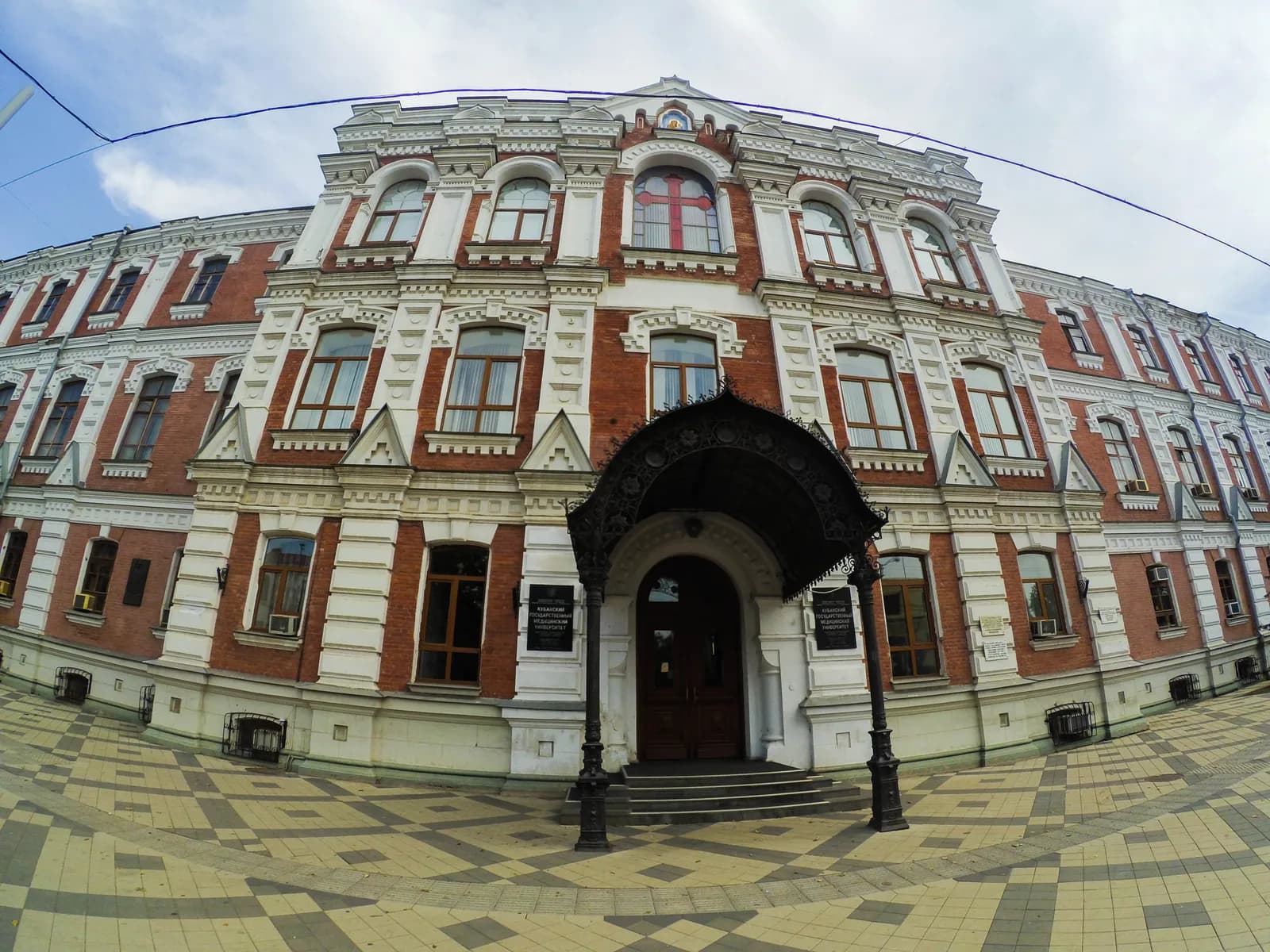
MBBS at Kuban State Medical University — 13 questions answered
These are the most common questions Indian students and families ask before applying for MBBS at Kuban State Medical University, Krasnodar. Covering admissions, fees, recognition, eligibility, hostel, career outcomes, and the India-return pathway — everything you need before making your decision.
Is Kuban State Medical University a public or private university?
KubSMU is a public state medical university, founded in 1920 and operating under Russia's Ministry of Health/Ministry of Science and Higher Education, holding Rosobrnadzor License No. 2407 (issued 26 September 2016, indefinite validity).
What language is the program taught in?
KubSMU offers a 6-year MD/MBBS-equivalent program with English-medium instruction available for the international cohort alongside Russian-medium instruction for domestic students; Russian-language study is still required for clinical-ward communication during hospital rotations.
Can Indian students get direct admission right after Class 12/NEET?
Yes — NEET-qualifying Class 12 science students are generally eligible for direct admission into the 6-year program without a separate bridge year, subject to KubSMU's standard document verification process.
What is the total cost of studying at KubSMU, including living expenses?
Reported tuition figures vary by source between roughly 280,000–500,000 rubles/year; applicants should treat this range as indicative and confirm the exact current-year figure directly with KubSMU, since third-party agent sites disagree materially. campus logistics fees are reported around 13,000–18,000 rubles/year, and monthly living costs in Krasnodar are estimated at ₹10,000–15,000.
How do Indian students apply?
Applications go through KubSMU's international admissions office directly, or via NMC-listed education consultants, requiring Class 12 marksheets, NEET scorecard, passport copy, and a medical fitness certificate. There is no centralized government portal specific to this university.
Are English-language test scores (IELTS/TOEFL) required?
Since KubSMU offers an English-medium track for international students, IELTS/TOEFL is not typically a mandatory admission requirement, though applicants should confirm current-year policy directly with the admissions office.
Is there a program-specific entrance exam or interview?
Admission for the international-student track is generally document-based rather than requiring a separate written entrance exam, but this should be reconfirmed each cycle with KubSMU admissions directly.
Are there stipend or earn-while-you-study provisions?
No documented stipend or paid-work program exists for international fee-paying medical students; Russian state stipends apply only to Russian-citizen, state-funded seats.
When does the academic year start and what is the application window?
The Russian academic year for medical programs conventionally starts in September; exact application deadlines should be confirmed directly with KubSMU's international office for the target intake year, as this is not centrally published.
Do Indian students need a special pre-approval certificate?
Indian students are generally expected to hold a valid NEET qualification per India's regulatory framework for studying medicine abroad; applicants should independently verify current NMC eligibility rules before enrolling, since these change periodically.
What is KubSMU's recognition status and what does it mean for Indian students?
KubSMU is listed in the World Directory of Medical Schools (WDOMS, FAIMER School ID F0001025) with an active ECFMG-eligible graduation window from 1953–present, and holds Russian state accreditation (License No. 2407). WDOMS listing satisfies the NMC's baseline eligibility requirement for FMGE/NExT, but families should weigh this against the historical 2015–2018 FMGE pass-rate data (3.78% from 238 appearing candidates) and request current outcome figures before enrolling — WDOMS listing alone does not guarantee individual exam success.
What accommodation options exist beyond the university campus logistics?
Most international students use the university's dedicated campus logistics blocks; private apartment rental in Krasnodar is possible but not the norm for the international cohort and would need to be independently arranged with local landlords.
How does KubSMU compare to other southern/warm-climate Russian medical universities?
KubSMU's main comparative advantage is Krasnodar's mild climate and strong produce markets versus colder Russian university towns — a genuine quality-of-life factor. However, its historically low FMGE pass rate (3.78%, 2015–2018 data) is a significant risk factor that students should weigh against comparably-priced alternatives with stronger published outcomes, such as Mordovia State University's more recent 36.11% pass rate.
Applying to Kuban State Medical University?
Students Traffic verifies seat availability, checks current recognition status, and prepares your complete application for Kuban State Medical University. The consultation is free.