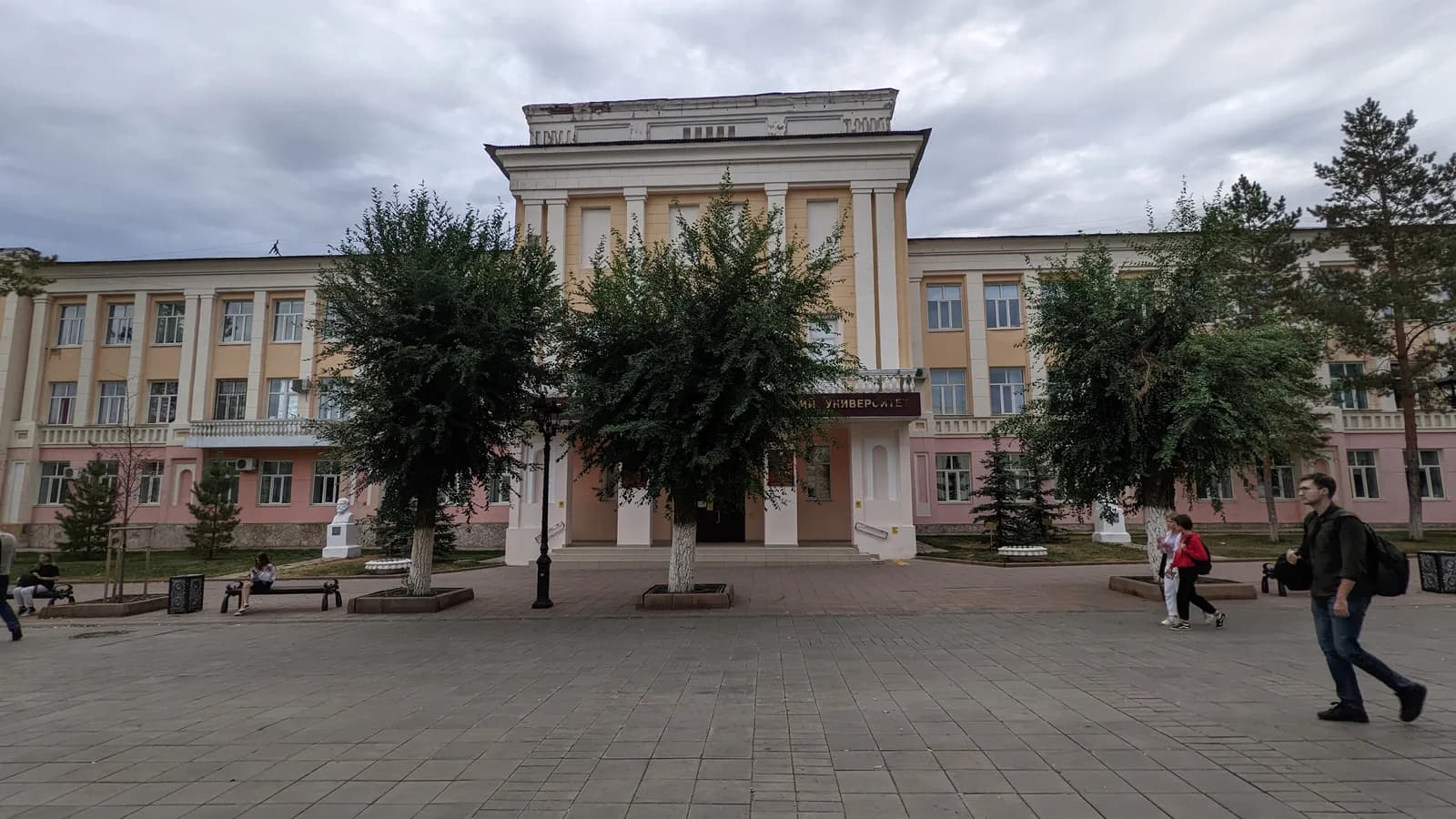
MBBS at Orenburg State Medical University — 13 questions answered
These are the most common questions Indian students and families ask before applying for MBBS at Orenburg State Medical University, Orenburg. Covering admissions, fees, recognition, eligibility, hostel, career outcomes, and the India-return pathway — everything you need before making your decision.
Is Orenburg State Medical University a public or private institution?
OrSMU is a public Russian state medical university under the Ministry of Health of the Russian Federation, established in 1944 as Chkalov Medical Institute before later renaming. It is not a private for-profit institution.
What language is the programme taught in?
OrSMU offers an English-medium track for the General Medicine programme, with mandatory Russian-language instruction from Year 1 that becomes essential for effective clinical-rotation communication from Year 3 onward.
Can Indian students get direct admission after Class 12/NEET?
Yes — NEET-qualifying Class 12 science students are generally eligible for direct admission into the 6-year programme without a bridge year, subject to OrSMU's standard document verification.
How many Indian students are at Orenburg State Medical University?
Over 1,200 Indian students are currently enrolled at Orenburg State Medical University across all six years — one of the largest Indian student communities at any Russian medical institution outside Moscow. This community size has a direct practical benefit: well-organised peer groups for FMGE study, an active Indian Student Association that monitors meal arrangements quality and welfare, established day-to-day support supply chains in local markets, and senior-year mentors who have navigated the Russian clinical system before you.
What is the actual FMGE pass rate at Orenburg State Medical University?
Orenburg State Medical University had a 43.40% FMGE pass rate in 2024 — the highest among the major Russian medical universities most commonly chosen by Indian students. The Russia-wide FMGE average for 2024 was 29.54%. In 2022, Orenburg's pass rate was 39.3%, showing consistent above-average performance. This does not mean 43.40% of students pass without preparation — it reflects the portion of graduates who appeared for FMGE after completing their degree. Students who invest in dedicated India-specific coaching from Year 3 or 4 account for the bulk of those passing. Students who rely solely on the Russian curriculum without separate FMGE preparation typically do not pass.
How do Indian students apply to Orenburg State Medical University?
Applications are submitted through OrSMU's international admissions office, requiring Class 12 marksheets, NEET scorecard, passport, and a medical fitness certificate, followed by document verification and an invitation letter for the student visa.
Are English-language test scores (IELTS/TOEFL) required?
Since the programme is offered in an English-medium track for international students, IELTS/TOEFL is not typically a mandatory admission requirement — confirm the current-year policy directly with OrSMU admissions.
Are there stipend or earn-while-you-study provisions?
No documented stipend or paid-work programme exists for international fee-paying medical students; Russian state stipends apply only to Russian-citizen, state-funded seats.
When does the academic year start and what is the application window?
The academic year conventionally begins in September; exact document-submission deadlines for a target intake year should be confirmed directly with OrSMU's international office.
Do Indian students need a special pre-approval certificate?
Indian students are expected to hold a valid NEET qualification per India's regulatory framework for studying medicine abroad; applicants should independently verify current NMC eligibility rules before enrolling.
What is Orenburg State Medical University's recognition/accreditation status?
OrSMU is listed in the World Directory of Medical Schools (WDOMS, FAIMER School ID F0001553) with an ECFMG-eligible graduation window active continuously since 1953 — satisfying the WDOMS-listing baseline NMC's FMGL 2021 Regulations require for NExT/FMGE eligibility. It is also listed in the Webometrics Ranking of World Universities, though not separately ranked in QS or Times subject tables. NMC no longer maintains a standing approved-institution list, so Indian applicants must independently verify current eligibility on the NMC India portal before enrolling.
Is daily living expensive in Orenburg?
No — Orenburg is one of the more affordable Russian cities for groceries and daily living. Monthly Indian meal arrangements costs run $100–120, and the local market has expanded its Indian staple offerings (basmati rice, masalas, lentils) in response to sustained student demand.
How does Orenburg compare to other affordable Russian medical universities?
Orenburg's combination of the highest published FMGE pass rate (43.4%) among commonly chosen Russian medical universities, a very large established Indian cohort (1,200+), and competitive tuition ($4,200–4,500/year) makes it a strong choice for students prioritising licensing-exam outcomes. Its main trade-offs are a smaller, quieter city with limited entertainment options and a real language barrier during early clinical rotations that requires proactive Russian-language study to overcome.
Applying to Orenburg State Medical University?
Students Traffic verifies seat availability, checks current recognition status, and prepares your complete application for Orenburg State Medical University. The consultation is free.