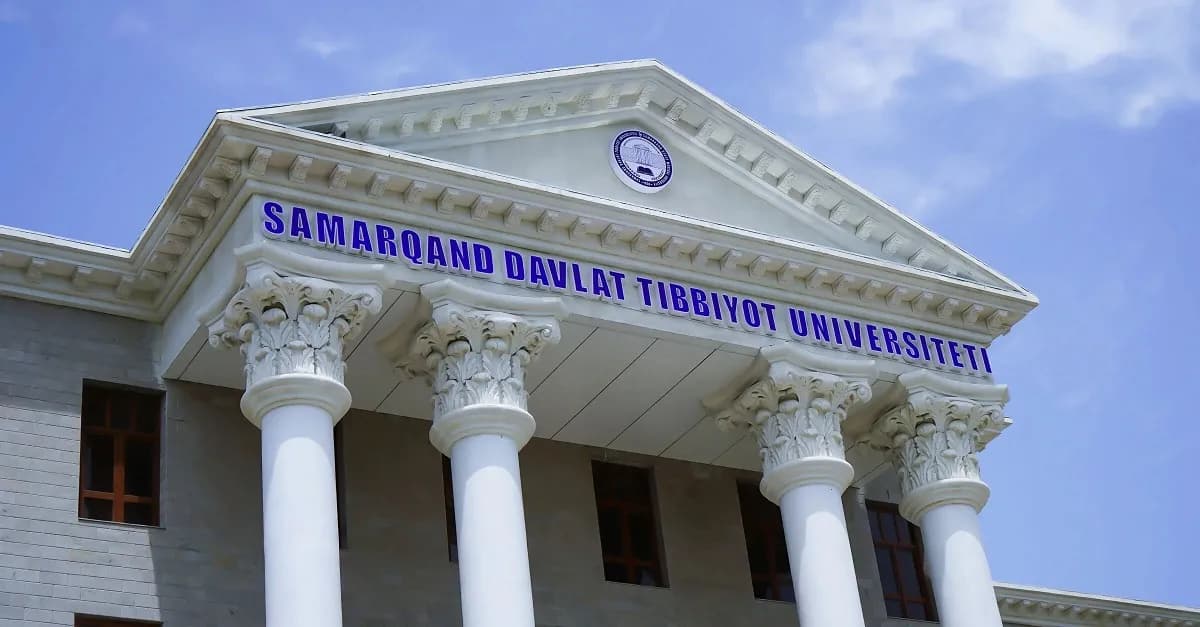
MBBS at Samarkand State Medical University — 13 questions answered
These are the most common questions Indian students and families ask before applying for MBBS at Samarkand State Medical University, Samarkand. Covering admissions, fees, recognition, eligibility, hostel, career outcomes, and the India-return pathway — everything you need before making your decision.
Is Samarkand State Medical University a public or private institution?
SSMU is a public state medical university, founded in 1930 and operating under Uzbekistan's Ministry of Health and Ministry of Higher Education, Science and Innovations framework. It holds state accreditation from the State Inspectorate for Quality Control in Education under the Cabinet of Ministers of the Republic of Uzbekistan.
What language is the MBBS-equivalent programme taught in?
The Doctor of Medicine programme (the MBBS equivalent) is taught in English for international students. Day-to-day life in Samarkand involves Uzbek and Russian, so most students pick up conversational basics over time, but coursework, exams, and clinical teaching for the English-medium track are delivered in English.
Can Indian students get direct admission without an entrance exam?
Admission is generally document-based for the English-medium international track: NEET-UG qualification, Class 10 and 12 mark sheets, and a valid passport are the core requirements, without a separate university entrance exam for most applicants. Exact eligibility thresholds (minimum PCB percentage) and any changes to the admission process should be confirmed directly with SSMU's international admissions office or NMC-recognised counselling channels before applying, since requirements are reviewed periodically.
What is the total cost of studying MBBS at Samarkand State Medical University?
Published figures (verified against SSMU's own fee notes) put annual tuition at approximately $3,500, with campus logistics fees of roughly $350-800/year and a compulsory first-year Indian meal arrangements charge of about $1,200/year. Visa extension and incidental administrative fees add a further $500-800/year. Across 6 years, this places the realistic all-in cost in the ₹27-32 lakh range, though third-party consultant estimates vary and applicants should request a current, itemised fee schedule directly from the university before committing.
How do I apply to Samarkand State Medical University?
Applications are typically routed through SSMU's international admissions office (accessible via sammu.uz) or an NMC-recognised education consultant, by submitting scanned copies of the passport, Class 10/12 mark sheets, NEET-UG scorecard, and passport photographs. The university issues an admission/invitation letter on document review, which is then used to apply for the Uzbekistan student visa. Applicants should independently verify the current application portal and document checklist directly with SSMU, since procedures are updated periodically.
Is an English-language test like IELTS or TOEFL required?
No separate IELTS/TOEFL score is generally required for admission to the English-medium MBBS-equivalent track, since English proficiency is typically assessed through prior schooling and the university's own document review rather than a standardised test. Applicants should confirm this directly with SSMU's admissions office, as English-proficiency requirements can be tightened over time.
What NEET score or percentage is needed for admission?
SSMU's international track generally follows the same baseline NMC framework applied across recognised MBBS-abroad destinations: a qualifying NEET-UG score and a minimum of 50% aggregate in Physics, Chemistry, and Biology at Class 12 for general-category applicants (40% for reserved categories), plus a minimum age of 17 by December 31 of the admission year. Because these thresholds are set by NMC policy rather than the university alone, applicants should reconfirm current criteria with NMC or a recognised counselling source before applying.
Is there a stipend or work option while studying?
No formal stipend or paid work-study programme for international medical students has been identified in SSMU's published materials. Uzbekistan's international student visa framework is generally structured around full-time study rather than part-time employment, so students should plan their budget around tuition, campus logistics, meal arrangements, and living costs without assuming supplementary income.
When does the academic year start, and when should I apply?
Like most Uzbekistan medical universities, SSMU's main international intake is centred around the September academic-year start, with document submission and visa processing typically needing to begin several months in advance. Applicants should confirm the current year's exact intake and application-deadline dates directly with the university, since these can shift slightly year to year.
Do I need any special certificate or pre-approval before applying, such as an APS certificate?
No APS-style pre-approval certificate is required for Uzbekistan (unlike Germany, for example). The core pre-application requirement specific to Indian applicants is a valid NEET-UG qualification, which functions as the regulatory gatekeeper for studying medicine abroad under NMC rules.
What does SSMU's recognition status mean for practicing medicine in India after graduation?
SSMU is listed in the World Directory of Medical Schools (WDOMS, FAIMER School ID F0001564), which is the baseline directory NMC references when assessing foreign medical qualifications, and it holds ECAQA international institutional accreditation valid to 2030. Being WDOMS-listed is necessary but not by itself sufficient — graduates must still clear India's licensing exam (FMGE/NExT) to practise in India. Recognition frameworks are reviewed periodically by both WDOMS and NMC, so students should reconfirm current status directly with NMC before enrolling and again before graduating.
What accommodation options are available, and what do they cost?
First-year students are generally required to live in university campus logistics accommodation, with annual fees reported in the $350-800 range depending on room type. From the second year onward, some students move to private shared apartments near campus, though pricing for these varies with the local rental market and should be checked with current students or the international office rather than assumed from older listings.
How does Samarkand State Medical University compare to other Uzbekistan medical universities for Indian students?
Compared to Uzbekistan's newer private medical universities, SSMU offers a longer institutional track record (founded 1930), a larger affiliated hospital network, and a more established Indian student community with dedicated meal arrangements facilities — at the cost of more competitive admission and a colder winter climate than some western Uzbekistan cities. Students weighing SSMU against Tashkent-based or newer private options should compare total 6-year cost, campus logistics/meal arrangements arrangements, and current WDOMS/accreditation status side by side rather than relying on tuition price alone.
Applying to Samarkand State Medical University?
Students Traffic verifies seat availability, checks current recognition status, and prepares your complete application for Samarkand State Medical University. The consultation is free.