University of HullKingston upon Hull, United KingdomB.E./B.Tech AI & ML · Public£20,600/yrAACSB International — Accredited Business School (Hull University Business School, verified against AACSB's own accredited-schools directory)
B.E./B.Tech AI & ML at University of Hull — 11 questions answered
These are the most common questions Indian students and families ask before applying for B.E./B.Tech AI & ML at University of Hull, Kingston upon Hull. Covering admissions, fees, recognition, eligibility, hostel, career outcomes, and the India-return pathway — everything you need before making your decision.
Is the University of Hull public or private?
Hull is a public UK university, founded as University College Hull in 1927 and granted its Royal Charter in 1954, and is regulated by the Office for Students as an England-registered higher education provider.
Where is the University of Hull located?
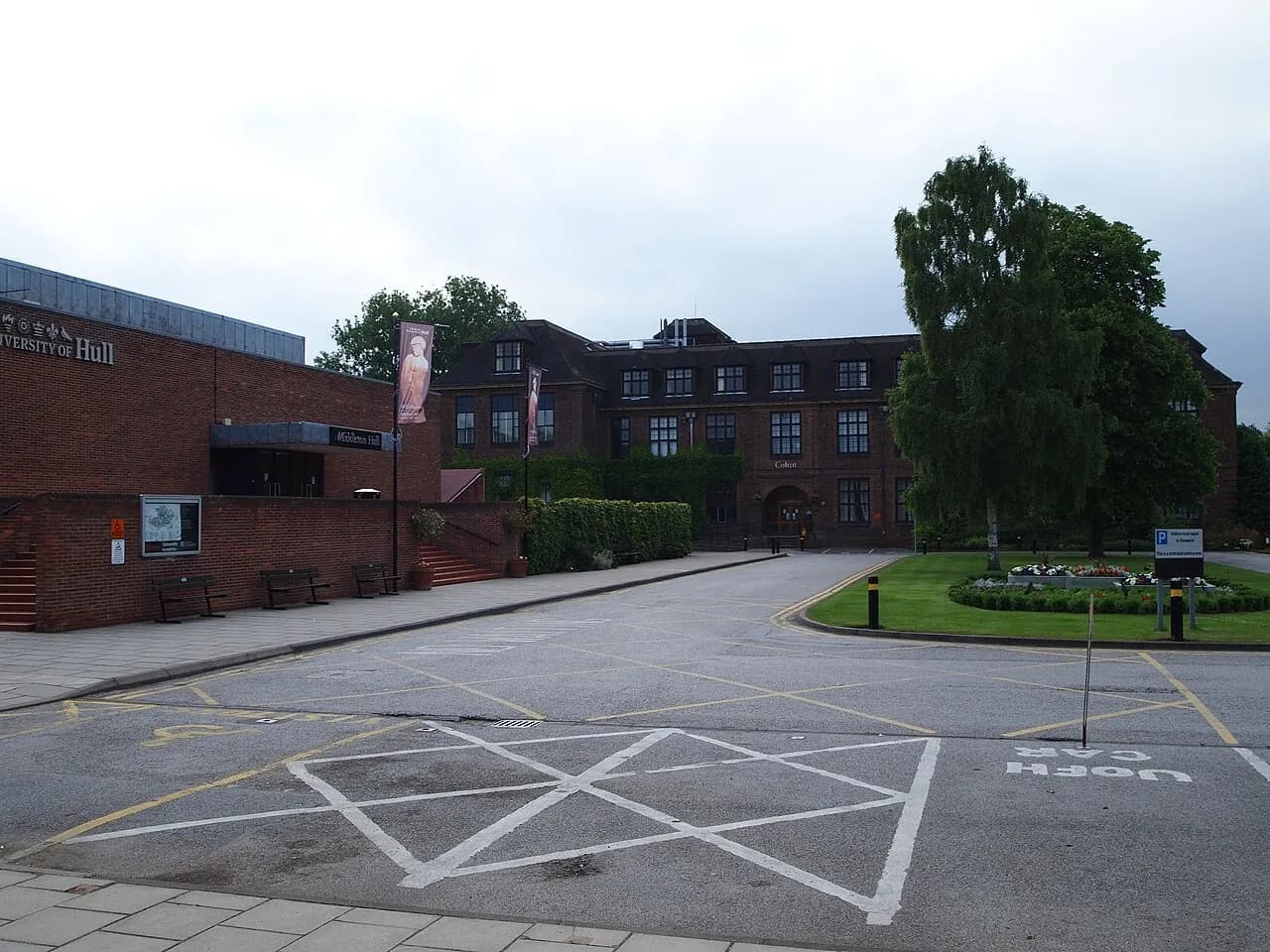
The single-site Cottingham Road campus sits in North Hull, Kingston upon Hull, a port city on the Humber estuary in East Yorkshire, with a compact, walkable layout and 24/7 campus security.
Is Hull University Business School independently accredited?
Yes. Hull University Business School holds AACSB International accreditation, verified directly against AACSB's own accredited-schools directory, and is also accredited by AMBA (Association of MBAs) -- accreditations held by fewer than 2% of business schools worldwide.
Does the University of Hull offer medicine (MBBS)?
Hull York Medical School (HYMS) is a joint medical school run with the University of York and is not included in this University of Hull catalogue listing, to avoid double-counting the same MBBS programme; check HYMS or the University of York's listing directly.
What language are courses taught in, and what English score is required?
Courses researched here are taught in English. Undergraduate applicants typically need IELTS (Academic) 6.0 overall with no less than 5.5 in each skill; postgraduate taught and research applicants typically need IELTS 6.5 overall with 6.0 in each skill, or an approved equivalent. Pre-sessional English courses are available for applicants who narrowly miss the requirement.
Can international students apply directly after school-leaving qualifications?
Yes. Undergraduate routes in this listing typically ask for UCAS Tariff points in the 112-120 range (broadly BBC-BBB at A-Level or equivalent), rising to around 128 points for some MEng/MPhys integrated-masters and Physics routes, with International Baccalaureate and other equivalents accepted; check the specific course page for the exact grade profile.
What is the fee structure for international students?
Hull bands 2026/27 international tuition by subject rather than a single flat rate: £18,100/year for classroom-based subjects (e.g. Law, Business, History) and £20,600/year for STEM/laboratory subjects (e.g. Engineering, Computer Science, Nursing). Postgraduate-taught fees are £18,500/year for Business/Engineering/Computing MSc routes and £17,000/year for Law/Politics/History MA and LLM routes; postgraduate-research (PhD) fees are £18,000/year for Law, Business and Arts and Humanities, and £20,600/year for Engineering, Computer Science and Natural Sciences.
How do international students apply?
Undergraduate applicants apply through UCAS using the course's UCAS code. Postgraduate taught applicants apply through Hull's own online postgraduate application system; postgraduate research (PhD) applicants submit a research proposal, transcripts, references and a personal statement and are matched with academic supervisors.
How is Nursing structured, and does it lead to UK professional registration?
BSc (Hons) Nursing (Adult) and BSc (Hons) Nursing (Mental Health) are three-year, NMC-accredited pre-registration degrees combining university study with supervised clinical placements at regional NHS partners across Yorkshire and the Humber, leading to eligibility to register with the Nursing and Midwifery Council (NMC).
What is the Wilberforce Institute?
The Wilberforce Institute for the Study of Slavery and Emancipation, founded in 2006 and named after Hull-born abolitionist William Wilberforce, is a Hull research institute studying historical and contemporary slavery, trafficking and exploitation; it provides a named research base for Politics, History and International Relations postgraduates and researchers.
When do courses start, and are there multiple intakes?
Most undergraduate courses in this listing start in September. Many postgraduate-taught MSc/MA/LLM routes offer both September and January intakes (accounting-related and history routes are September-only); postgraduate-research (PhD) admission is more flexible, with September, January and February start points seen across departments. Confirm the live intake on the specific official course page.
Applying to University of Hull?
Students Traffic verifies seat availability, checks current recognition status, and prepares your complete application for University of Hull. The consultation is free.