B.E./B.Tech Civil at University of Plymouth — 12 questions answered
These are the most common questions Indian students and families ask before applying for B.E./B.Tech Civil at University of Plymouth, Plymouth. Covering admissions, fees, recognition, eligibility, hostel, career outcomes, and the India-return pathway — everything you need before making your decision.
Is the University of Plymouth public or private?
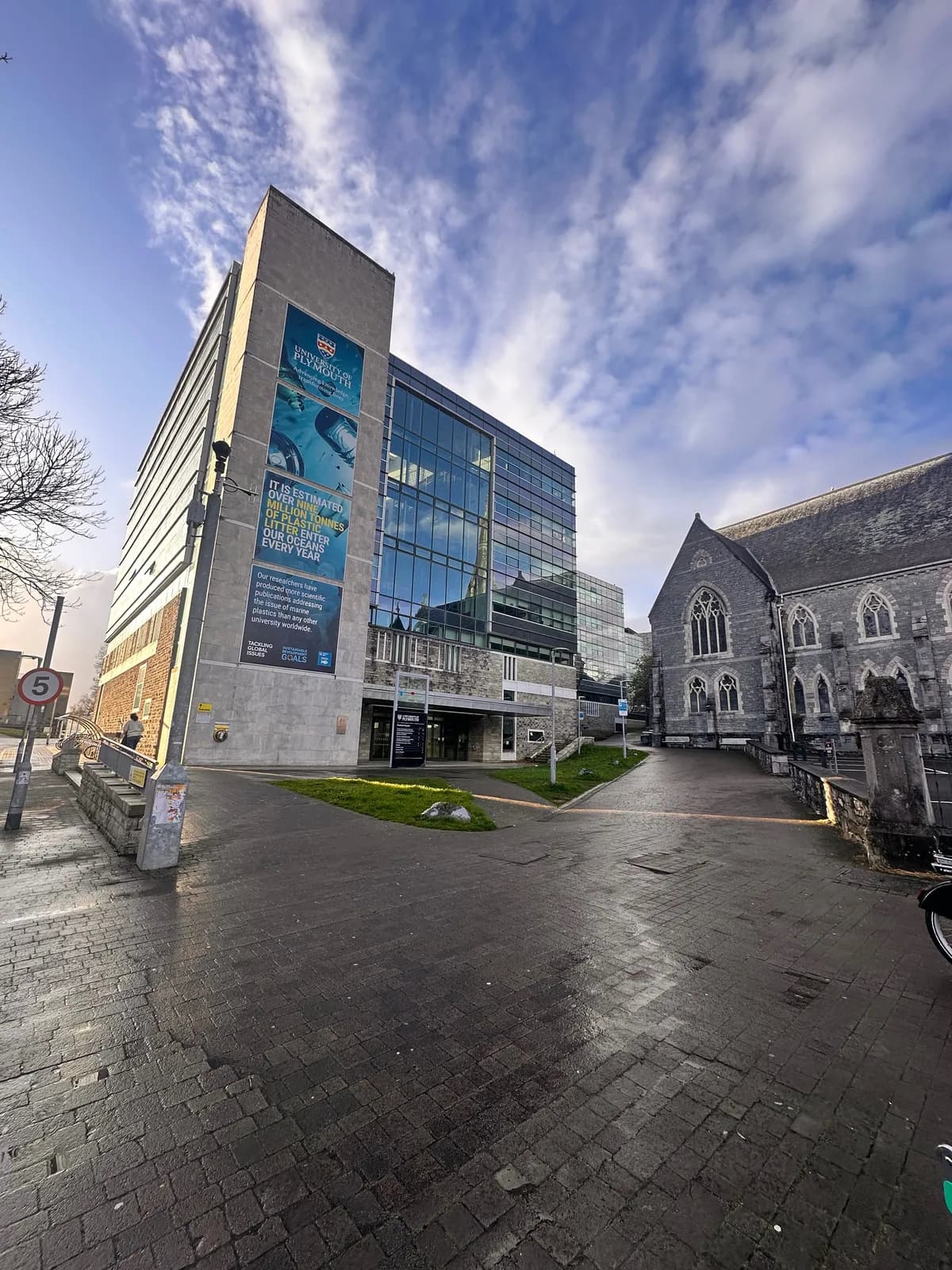
University of Plymouth is a public UK university, tracing its origins to the School of Navigation founded in 1862 and gaining full university status in 1992 under the Further and Higher Education Act. It was rated TEF Gold across the board in 2023.
What language are these programmes taught in?
All programmes covered here are taught in English. International applicants must meet Plymouth's course-specific English-language requirements, typically IELTS Academic 6.0-6.5 overall for undergraduate courses and higher bands for some postgraduate and Medicine routes; exact requirements are set per course.
Can international students apply directly after school-leaving qualifications?
Yes for most undergraduate courses, subject to A-level, IB or equivalent grades listed on each course page. Peninsula Medical School's BMBS sets additional UCAT admissions-test and interview requirements, and a six-year BMBS with Foundation Year route exists for widening-participation applicants who do not meet standard entry criteria.
What is the total cost breakdown for international students?
2026/27 overseas tuition ranges from about GBP 18,150 a year for Accounting and Finance BA to GBP 41,920 a year for the five-year BMBS Medicine; most Engineering, Computer Science, Environmental Science and Psychology BSc/BEng courses list GBP 19,200 a year, and one-year MSc/MBA courses in Business and Psychology range from about GBP 18,700 to GBP 21,000. Halls of residence add roughly GBP 102-200 per week, and students must separately budget for daily living, transport, insurance and visa costs.
How do international students apply?
Undergraduate applicants apply through UCAS using Plymouth's institution code P60 and the course-specific UCAS code. Postgraduate applicants apply directly through the University of Plymouth's own online application portal after checking course-specific requirements and deadlines.
What English test scores are accepted?
Course-specific IELTS Academic bands apply, generally 6.0-6.5 overall for undergraduate courses with no element below 5.5-6.0; Peninsula Medical School and some postgraduate courses set higher requirements. Alternative approved English tests and University of Plymouth International College (UPIC) pathway programmes are available for applicants below the required band.
Does Peninsula Medical School have separate admissions mechanics?
Yes. Applicants sit the UCAT (or GAMSAT for the graduate-entry route) alongside A-levels and GCSEs; UCAT score thresholds used for interview selection vary each year based on the applicant pool, and international applicants must meet the same academic and admissions-test criteria as UK applicants, contacting the Admissions Team before applying through UCAS with overseas qualifications.
Is there a stipend or earn-while-studying option?
Plymouth offers a Welcome to Plymouth Scholarship worth up to GBP 6,000 for eligible undergraduate entrants starting September 2026, plus a GBP 500 discount for tuition paid in full by 4 September 2026; these are scholarships and discounts rather than paid work, and Peninsula Medical School courses are explicitly excluded from tuition scholarships and reduced-fee support.
When do courses start and what intakes are available?
Most undergraduate courses researched here start in September, with a January start also offered on some postgraduate MSc/MBA courses, including MSc Finance and MSc Business and Management. BMBS Medicine has a single September intake with an earlier application deadline than most other courses.
What accreditation and recognition applies to these courses?
Recognition is course-specific: Peninsula Medical School's BMBS is approved by the General Medical Council; MSc Cyber Security is certified by the National Cyber Security Centre; Plymouth Business School holds IACBE accreditation; Civil and Coastal Engineering is ICE-accredited; Robotics, Mechanical and Electrical and Electronic Engineering are IET-accredited; Computer Science is BCS-accredited; and Psychology degrees are BPS-accredited. Home-country recognition of any UK qualification should always be checked separately with the relevant national regulator.
What accommodation options and costs are available?
University-managed halls of residence, prioritised for international students, cost roughly GBP 102-200 per week depending on room type, with bills, Wi-Fi and 24-hour security included; a Halls Team and Residence Life programme support new arrivals. Private-sector renting in Plymouth is also available, particularly for students in later years of study.
Why choose Plymouth over a larger city-centre UK university?
Plymouth combines professionally accredited courses (GMC, NCSC, ICE, IET, BCS, IACBE, BPS) with a waterfront Devon city that has a lower cost of living than London or Manchester, plus direct access to Dartmoor National Park and the south-west coastline; students who want a large-city campus with more extensive marine-biology or naval-architecture course listings should confirm those specific subjects are not yet part of this catalogue for Plymouth.
Applying to University of Plymouth?
Students Traffic verifies seat availability, checks current recognition status, and prepares your complete application for University of Plymouth. The consultation is free.