University of StirlingStirling, United KingdomB.E./B.Tech CSE · Public£23,700/yrAACSB (Association to Advance Collegiate Schools of Business) — Stirling Management School accreditation
B.E./B.Tech CSE at University of Stirling — 13 questions answered
These are the most common questions Indian students and families ask before applying for B.E./B.Tech CSE at University of Stirling, Stirling. Covering admissions, fees, recognition, eligibility, hostel, career outcomes, and the India-return pathway — everything you need before making your decision.
Is the University of Stirling public or private?
The University of Stirling is a public UK research university, established by royal charter in 1967 on the Airthrey Castle estate near Stirling, Scotland. It receives public funding and regulatory oversight like other UK universities, alongside tuition income from home and international students.
What language is teaching delivered in?
All programmes in this catalogue are taught entirely in English, with no transition to a local-language phase at any level. International applicants must meet Stirling's published English-language test requirement (typically IELTS Academic/UKVI 6.0 overall with a minimum of 5.5 in each component, or PTE Academic 60 overall with a minimum of 59 in each component, confirmed on each course's entry-requirements page) unless exempt.
Can international students get direct undergraduate admission straight after school, or is a bridge/foundation year required?
Direct entry depends on meeting Stirling's published Higher/A-level/IB or equivalent-qualification grade profile for the specific course (for example, Computing Science asks for Highers ABBB, A-levels BBB or IB 28 points). Applicants who do not directly meet a course's profile should check whether a foundation or international pathway route exists via Stirling's partner International Study Centre before applying directly.
What is the total cost of studying at Stirling, not just tuition?
International undergraduate tuition for 2026/27 runs on a two-band schedule confirmed via the university's own fees.json data feed: £19,500/year for arts, social-science, business and law programmes, and £23,700/year for Computing Science, Biological and Environmental Sciences, and Nursing/Psychology science routes. Postgraduate taught fees are £21,800 or £24,300 for the full one-year MSc depending on programme. On top of tuition, on-campus accommodation runs roughly £112.65 to £153.18 per week depending on hall and contract length (2026/27, confirmed directly on individual residence pages), plus daily living, books and personal costs.
How do I apply?
Undergraduate applicants apply through UCAS using Stirling's institution code plus the course-specific UCAS code shown on each official course page (for example G400 for Computing Science, M114 for Law). Postgraduate applicants, including every MSc, MPP, MPH and LLM route in this catalogue, apply directly through Stirling's online postgraduate application system rather than UCAS.
What English test score do I need?
Requirements are set per programme and confirmed on each official course page's entry-requirements tab; the standard undergraduate benchmark confirmed on Computing Science is IELTS Academic/UKVI 6.0 overall with a minimum of 5.5 in each component (or PTE Academic 60 overall, minimum 59 each component). Professionally regulated programmes such as Nursing or Law may set a higher or differently structured requirement, which applicants should confirm directly on that course's own page.
Are there programme-specific admission steps beyond grades and English test scores?
Yes for several regulated professions in this catalogue. Nursing (Adult and Mental Health) applicants must clear NMC-relevant occupational health and PVG (Protecting Vulnerable Groups) checks before starting supervised clinical placements. The MSc Psychology (accredited conversion course) is specifically designed for applicants whose first degree is not in Psychology. Law's LLB is a Law Society of Scotland/Faculty of Advocates qualifying degree, which carries its own professional-recognition context for students planning to practise in Scotland.
Is there a stipend or paid-work option while studying?
Stirling does not offer a general study stipend for the programmes in this catalogue, but it auto-applies a Postgraduate Scholarship of up to £7,000 to eligible self-funded international taught-masters students in Year 1, and undergraduate international scholarships worth £10,000-£20,000 over the course are available, both confirmed on the official scholarships pages. Student visa holders can normally work part-time during term and full-time during vacations, subject to current UK Home Office limits.
When do programmes start and when should I apply?
Most undergraduate and postgraduate programmes in this catalogue have a September intake, and several (including Computing Science, Software Engineering, Biology, Psychology, Journalism Studies and most Business School masters) also offer a January start. The Human Rights and Diplomacy LLM/MSc is January-2027-intake only for 2026/27. UCAS undergraduate applications typically close in mid-January for equal consideration; postgraduate applications are reviewed on a rolling basis, but applying well ahead of the intended start date is advisable.
Do I need any special pre-approval certificate to study in the UK?
No APS-equivalent certificate is required for the UK. Once you hold a Confirmation of Acceptance for Studies (CAS) from Stirling, you apply directly for the UK Student visa through GOV.UK, which requires financial evidence and a valid passport; some computing, data-science and AI postgraduate research routes may require ATAS clearance depending on the specific research area, which applicants should confirm with the department.
What accreditation or recognition should I know about?
Stirling Management School holds AACSB accreditation (around 6% of the world's business schools); Psychology (BA/BSc and the MSc conversion course) is British Psychological Society (BPS) accredited; the LLB is a qualifying degree recognised by the Law Society of Scotland and the Faculty of Advocates; and BSc (Hons) Nursing (Adult and Mental Health) is Nursing and Midwifery Council (NMC)-approved, leading to professional registration. The university also holds an overall 5-star QS Stars rating (2024).
What accommodation options are there and what do they cost?
Stirling offers over 2,800 on-campus accommodation rooms across multiple halls within walking distance of teaching buildings, all with heating, electricity, contents insurance, WiFi and housekeeping assistance included in the rent. For 2026/27, official weekly rents confirmed directly on individual residence pages range from about £112.65/week (Pendreich Way, 49-week contract) up to about £153.18/week (Alexander Court standard flats, shorter contract), with a 24/7 security team covering the accommodation.
How does Stirling compare with Scotland's larger city universities?
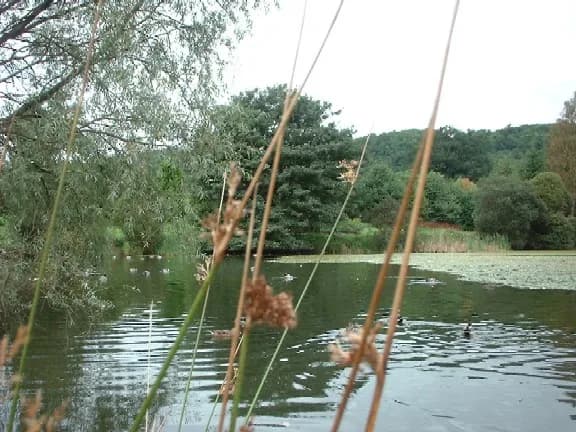
Stirling is a single, self-contained 330-acre campus with its own loch and castle grounds roughly midway between Glasgow and Edinburgh (about 35 and 50 minutes by direct train respectively), rather than a dispersed city-centre institution embedded in a large urban campus like Glasgow or Edinburgh universities. Students choosing Stirling are typically weighing its compact community feel, sport-focused facilities (ranked 1st in the UK, 2nd in the world) and specific strengths in Aquaculture, AACSB-accredited business, Psychology and Journalism against the scale, breadth and city-centre location of Scotland's larger universities.
Applying to University of Stirling?
Students Traffic verifies seat availability, checks current recognition status, and prepares your complete application for University of Stirling. The consultation is free.