B.E./B.Tech AI & ML at University of Sussex — 13 questions answered
These are the most common questions Indian students and families ask before applying for B.E./B.Tech AI & ML at University of Sussex, Brighton. Covering admissions, fees, recognition, eligibility, hostel, career outcomes, and the India-return pathway — everything you need before making your decision.
Is the University of Sussex public or private?
Sussex is a public UK university, founded by Royal Charter in 1961 and regulated by the Office for Students as an England-registered higher education provider.
Where is the University of Sussex located, and what language are courses taught in?
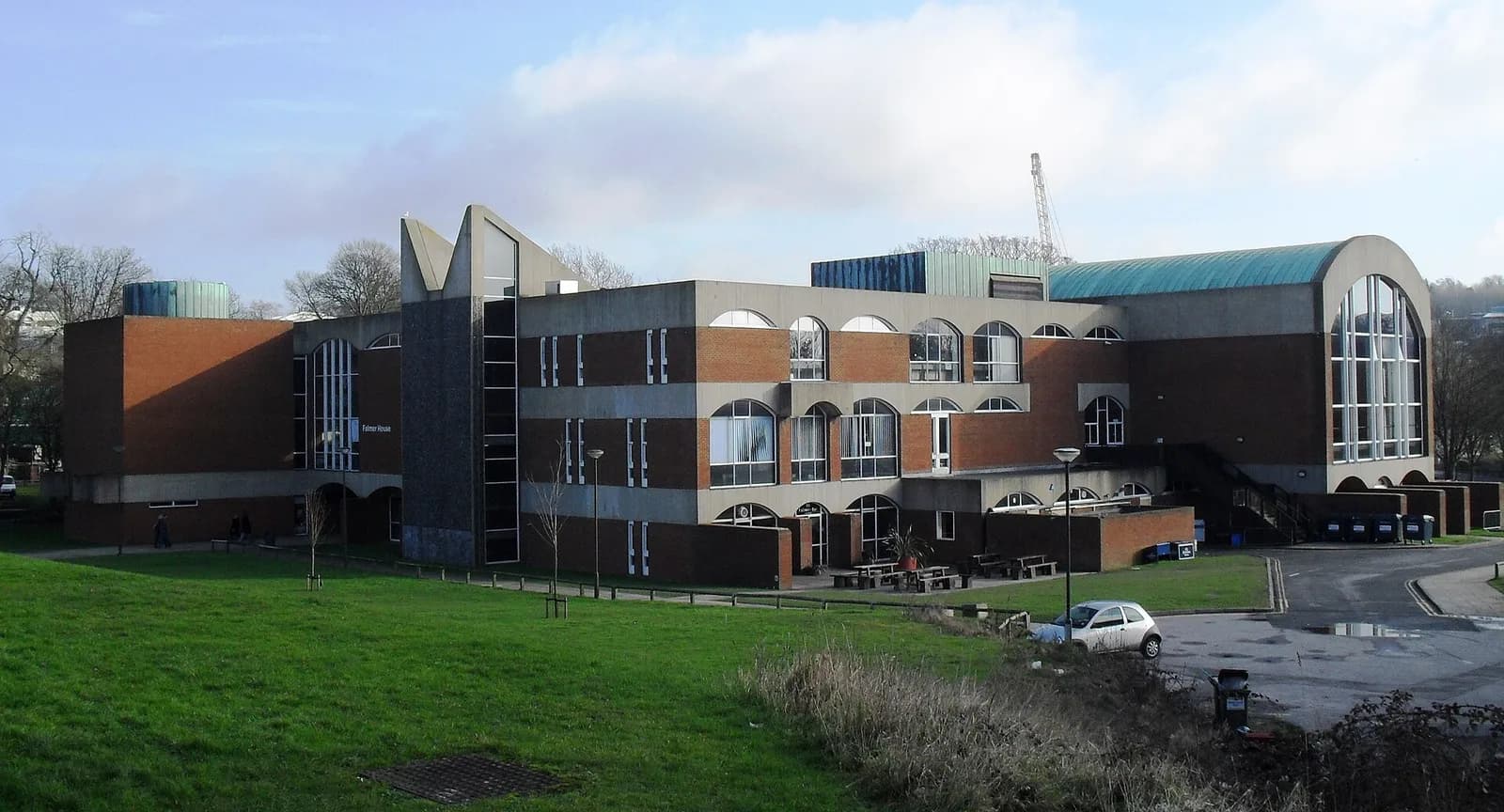
The single campus is at Falmer, in the South Downs National Park, about five miles from Brighton city centre. All programmes researched here are taught in English.
Can international students apply directly after school-leaving qualifications?
Yes for the undergraduate routes listed: typical offers run from BBB (Media Production) up to AAB (Psychology) at A-level, with International Baccalaureate and other equivalents accepted; GCSE-equivalent Mathematics or English is also required for some courses. Applicants without a matching qualification should check Sussex's foundation and pathway options.
What is the total cost of study, not just tuition?
Add Sussex's published accommodation range (about £123-£236/week for self-catered campus rooms in 2026/27) plus roughly £173-£303/month for daily living, transport, books and visa/insurance costs to the course tuition fee. Sussex's living-cost guide estimates £1,086-£1,967/month on campus or £1,509-£2,670/month in private rented housing; each figure should be checked directly before budgeting.
How do international students apply?
Undergraduate applicants apply through UCAS using the course's UCAS code (for example L250 for International Relations BA). Postgraduate taught and research applicants use Sussex's online postgraduate application system, submitting transcripts, references, English evidence and, for research degrees, a research proposal.
What English test scores are required?
Most undergraduate and taught-Masters courses in this listing require IELTS (Academic) 6.0 overall with at least 5.5 in each component. The Psychology (Conversion) MSc and both PhDs (Computer Science and Law) ask for a higher band: 6.5 overall with at least 6.0 in each component.
How are PhD and LLM admissions structured?
Doctoral applicants in Computer Science and Law need a 2.1-equivalent honours degree (plus a Masters for Law), a viable research fit and, ideally, a named supervisor; funded projects are not guaranteed for every PhD. LLM applicants typically need a 2.1-equivalent honours degree, preferably in law or a related subject such as international relations, economics or criminology.
Are placements, internships or paid work options available for international students?
86% of Sussex undergraduates complete work experience by graduation, and most undergraduate degrees in this listing offer an optional professional placement year. Sussex Business School's Masters students can apply for a Guaranteed Internship Scheme (4-10 weeks), and international students can use Student Circus to find Skilled Worker Visa-sponsoring roles.
When do courses start and when should applicants apply?
Undergraduate course pages researched at the time of this listing advertise September 2027 entry; International Management MSc also offers a January 2027 start. PhD Computer Science admits in September, January or April; PhD Law admits in September or January. Confirm the live intake on the specific official course page, since advertised entry years change as application cycles open and close.
Is there a special visa or pre-arrival certificate requirement?
International students needing a UK Student visa must follow current UK Home Office rules alongside Sussex's international admissions and CAS guidance; Sussex's own admission decision is separate from visa approval, and requirements can change without notice.
What recognition or accreditation applies to these programmes?
Sussex holds a TEF 2023 Silver overall rating from the Office for Students. Programme-specific bodies apply on top of this: BCS accredits the Computer Science and Computer Science and Artificial Intelligence BSc degrees, the BPS awards Graduate Basis for Chartered Membership to the Psychology (Conversion) MSc, and Sussex Business School holds EQUIS and AMBA accreditation for its Masters courses, including International Management MSc.
What accommodation options and costs does Sussex offer?
All campus accommodation is self-catered, with 2026/27 weekly rates from about £123 (shared-bathroom, Norwich House) to £236 (ensuite, West Slope); rent includes utilities, cleaning, security and contents insurance. There is no catered-hall option, so daily living is budgeted separately.
How does Sussex's Development Studies strength compare to other UK universities for international relations?
Sussex and its partner Institute of Development Studies (IDS) have been ranked 1st in the world for Development Studies for ten consecutive years in the QS World University Rankings by Subject, ahead of Harvard and Oxford in the 2026 edition; this is a distinct, subject-specific ranking rather than a whole-university comparison, so applicants should still compare Sussex's International Relations BA curriculum directly against other Russell Group and non-Russell-Group options.
Applying to University of Sussex?
Students Traffic verifies seat availability, checks current recognition status, and prepares your complete application for University of Sussex. The consultation is free.