SRM Institute of Science and Technology — FAQs | Students Traffic
SRM Institute of Science and Technology: FAQ
Answers to the most common questions Indian students ask about B.E./B.Tech Aerospace at SRM Institute of Science and Technology.
Written by Students Traffic Research Team·Updated On: 12 Jul 2026
SRM Institute of Science and TechnologyKattankulathur, IndiaB.E./B.Tech Aerospace · Private$10,000/yrUniversity Grants Commission (India) - Deemed to be University under Section 3 of the UGC Act 1956, listed for Kattankulathur with effect from 2 August 2002
B.E./B.Tech Aerospace at SRM Institute of Science and Technology — 13 questions answered
These are the most common questions Indian students and families ask before applying for B.E./B.Tech Aerospace at SRM Institute of Science and Technology, Kattankulathur. Covering admissions, fees, recognition, eligibility, hostel, career outcomes, and the India-return pathway — everything you need before making your decision.
Is SRM Institute of Science and Technology a public or a private university?
It is private. It began in 1985 as SRM Engineering College at Kattankulathur and was declared a deemed to be university under Section 3 of the UGC Act 1956 with effect from 2 August 2002. The University Grants Commission's list of deemed to be universities carries it as entry 112 for Tamil Nadu, with Kattankulathur as the main campus and Ramapuram, Vadapalani and Modinagar as further campuses.
Which campus does this page cover, and does it matter?
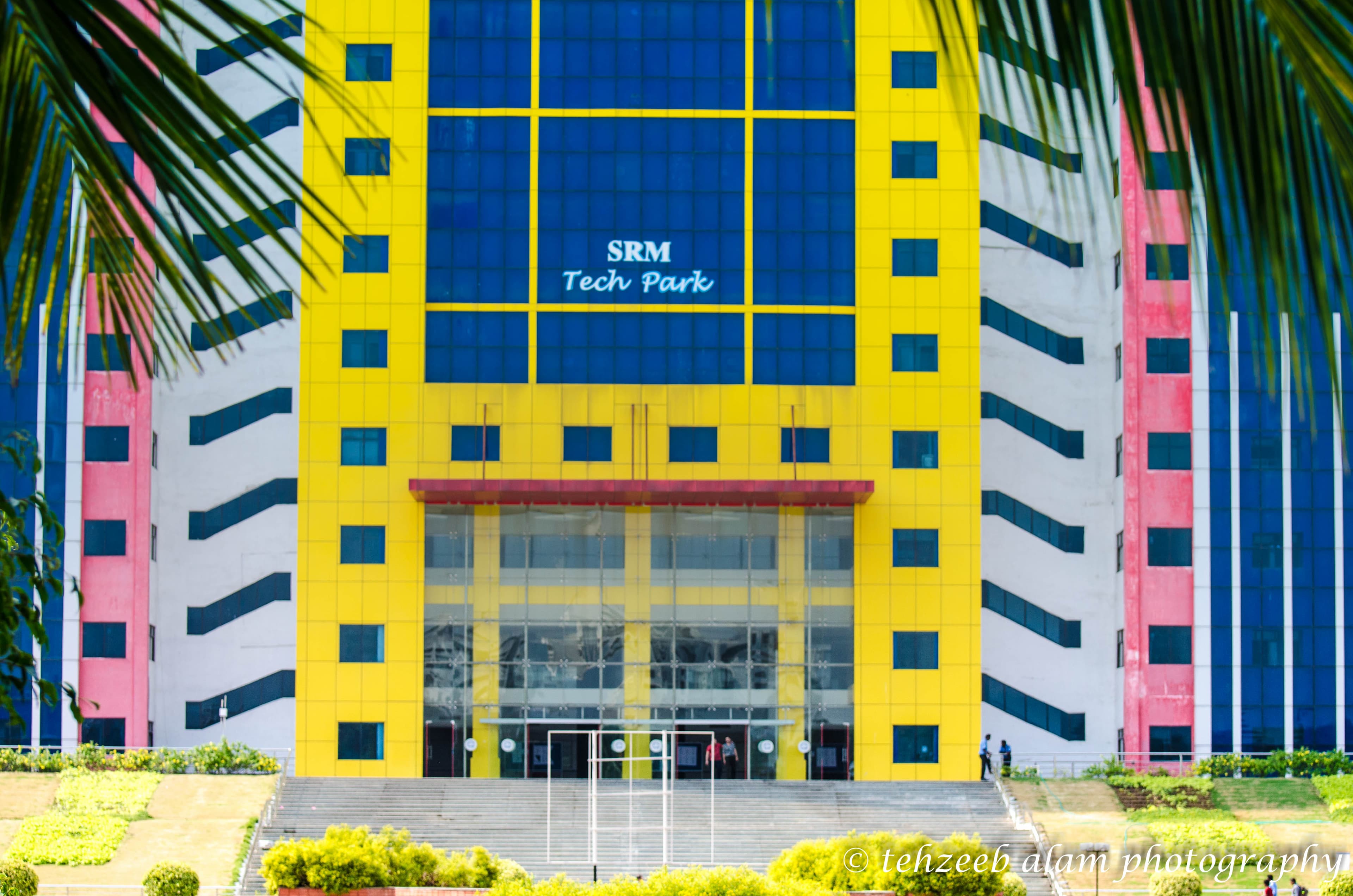
This page covers the Kattankulathur campus in Chengalpattu district only. It matters because SRMIST's own international fee tables mix campuses in one list, marking rows KTR for Kattankulathur, RMP for Ramapuram and VDP for Vadapalani, and because some programmes and accreditations exist at one campus and not another. The Council of Architecture approvals and the ABET listing quoted here are the Kattankulathur ones.
What language are the programmes taught in?
English. SRMIST states that the medium of instruction for all its programmes is English, with no transition to a local language later in the degree. Additional languages are taught as subjects rather than as the medium: the engineering stream offers French, Japanese, German, Chinese, Korean or Spanish, and the Science and Humanities and Management streams offer Tamil, Hindi or French.
Do international applicants have to sit SRMJEEE or another entrance exam?
For most programmes, no. SRMIST states that there is no entrance examination for foreign, NRI, PIO and OCI candidates, and that undergraduate admission is decided on the marks obtained in the qualifying 10+2 or equivalent examination on a first-come, first-served basis, provided the eligibility requirements are met. The exception is B.Arch., which requires a NATA pass or, per SRMIST, a JEE (Main) Paper 2 result.
What does an undergraduate year actually cost, beyond the headline tuition?
Take a 2026 B.Tech. Computer Science and Engineering place at Kattankulathur as the worked example: USD 12,500 annual tuition, a one-time registration fee of USD 300, examination fees as announced each semester, and campus logistics with meal arrangements from about INR 133,000 to INR 273,000 a year depending on block and room type. Books, materials and transport are extra and are paid in Indian rupees. Cheaper programmes exist on the same campus, with most B.Tech. branches at USD 7,000 and the general B.Com. at USD 3,500.
How do I apply, and what does it cost to apply?
Applications go to the SRMIST Directorate of International Relations through the international application form linked from the Admission International pages, not through the domestic admission portal. The application fee is USD 50 or INR 3,000, payable by credit card, debit card or net banking, and is non-refundable. SRMIST states that applications open in the first week of November each year.
Is an English-language test such as IELTS or TOEFL required?
SRMIST does not publish an IELTS or TOEFL requirement on its international admission pages for the programmes covered here, and does not list one among the documents required at application or registration. Because a language-test rule can be added by an individual faculty, an applicant whose schooling was not in English should confirm the position with the Directorate of International Relations before paying the application fee.
What is the difference between the Foreign and the NRI, PIO or OCI route?
They are separate admission categories with separate fee tables. The Foreign table publishes 2026 annual tuition with no scholarship column. The NRI, PIO and OCI table publishes the same annual figures for 2025 plus a scholarship column: a 40 per cent tuition waiver on engineering programmes and 50 per cent on others where the candidate meets the SAT score of 1000 out of 1600 or scores 70 per cent and above in the relevant higher-secondary subjects. SRMIST states no scholarship applies to the NRI Sponsored category, and that a candidate may apply in one category only.
Who counts as a sponsor under the NRI Sponsored category?
SRMIST states that grandparents, parents and direct siblings of a candidate with NRI status are eligible to sponsor. It also states that a candidate who took the Grade 11 and Grade 12 examinations outside India must apply under the NRI category even if the school followed an Indian board, while a candidate who took those examinations inside India may choose either the domestic or the NRI-sponsored category, but not both.
When do classes start and when does the application close?
The 2026 international deadline published for all courses is 30 August 2026, with PhD applications closing 30 April 2026 for the June intake and 30 October 2026 for the January intake. First-year start dates differ by faculty in 2026-27: engineering, architecture and design first-year classes begin on 17 August 2026 after orientation from 10 to 14 August, MBA first-year classes on 12 August 2026, and Science and Humanities first-year classes on 8 July 2026.
What accreditation does the university hold, and what does it mean for a degree taken abroad?
SRMIST holds deemed-to-be-university status from the University Grants Commission and NAAC accreditation at the A++ grade with a CGPA of 3.58 in its fourth cycle, declared in June 2024. It also holds AICTE approval for its technical, management and computer-application programmes and Council of Architecture approval for B.Arch. and M.Arch. at Kattankulathur. Recognition of the resulting degree in another country is decided by that country's own credential-evaluation or licensing body, not by SRMIST, so the relevant authority in the destination country should be approached directly.
What accommodation is available to international students and what does it cost?
Two air-conditioned blocks with a combined capacity of about 400 are set aside for international students: the NRI Premium International campus logistics on campus and the Green Pearl International campus logistics roughly ten minutes' walk away, with shuttle buses. Rooms are allotted on a first-come, first-served basis, and where international blocks are full SRMIST offers domestic campus logistics rooms subject to availability. Published 2026-27 rates run from INR 133,000 to INR 273,000 a year including meal arrangements, or USD 3,500 for the off-campus Green Pearl air-conditioned option.
How does SRM Kattankulathur compare with other large private Indian universities on published outcomes?
The one comparison that rests on a common, government-collected dataset is the National Institutional Ranking Framework. In India Rankings 2025 the Ministry of Education placed S.R.M. Institute of Science and Technology 14th in the Engineering category with a score of 65.83 and 22nd in the Overall category with a score of 62.87. Rankings are a relative position rather than an accreditation, and they cover the institution as a whole rather than any individual programme on this page.
Applying to SRM Institute of Science and Technology?
Students Traffic verifies seat availability, checks current recognition status, and prepares your complete application for SRM Institute of Science and Technology. The consultation is free.