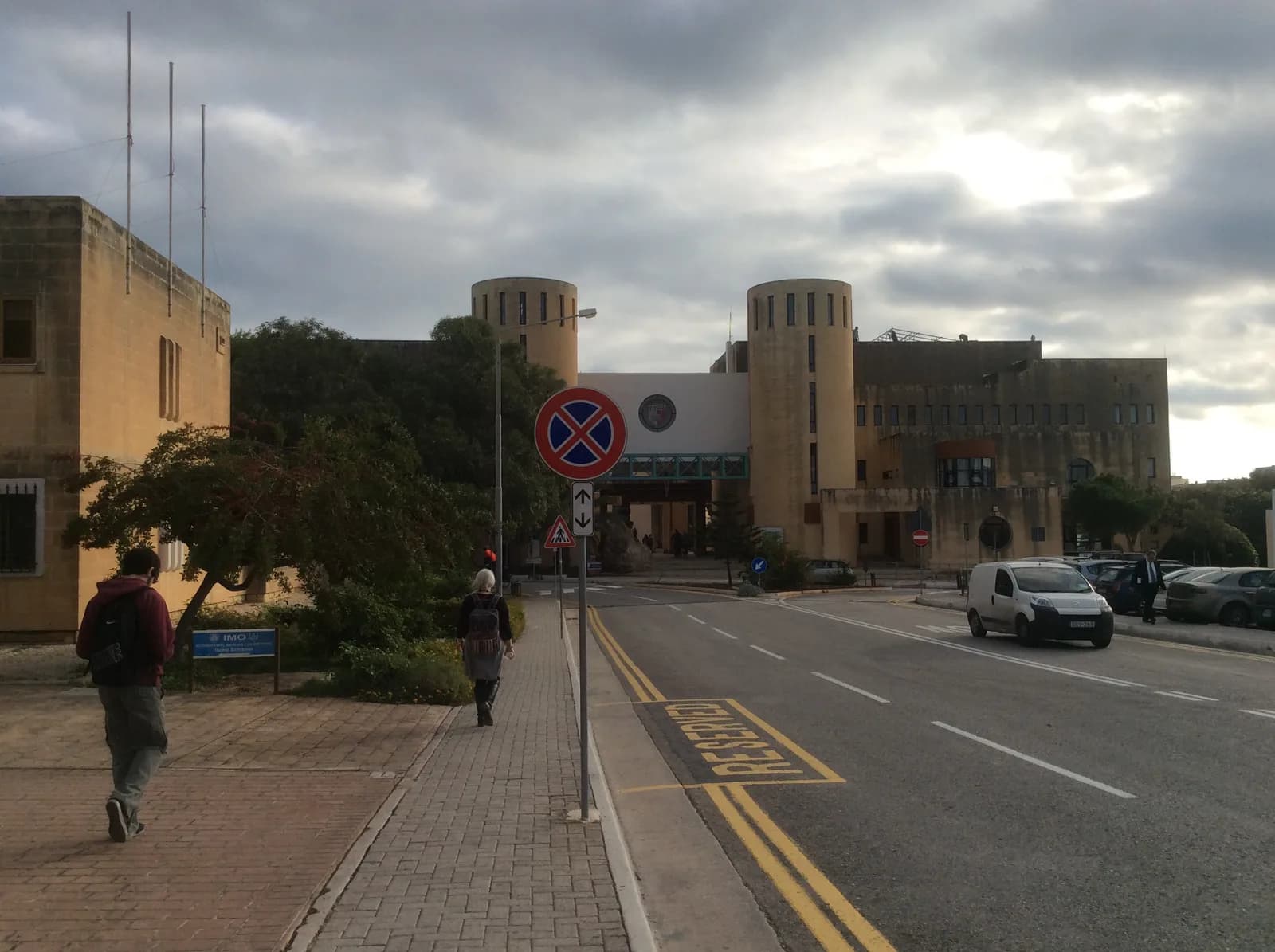
University of MaltaMsida, MaltaB.E./B.Tech CSE · Public€10,800/yrMalta Further and Higher Education Authority (MFHEA) -- Self-Accrediting Institution up to MQF Level 8
B.E./B.Tech CSE at University of Malta — 13 questions answered
These are the most common questions Indian students and families ask before applying for B.E./B.Tech CSE at University of Malta, Msida. Covering admissions, fees, recognition, eligibility, hostel, career outcomes, and the India-return pathway — everything you need before making your decision.
Is the University of Malta public or private?
The University of Malta is Malta's public, national university, tracing its origins to 1592 and self-accrediting up to MQF Level 8 under the Malta Further and Higher Education Authority (MFHEA). It is distinct from Malta's smaller private institutions.
What language are these programmes taught in?
English is the sole language of instruction for the B.Eng.(Hons) Mechanical Engineering, B.Eng.(Hons) Electrical and Electronic Engineering, B.Sc.(Hons) Computing Science and International MBA programmes covered here, with no local-language transition during the degree.
Can international students get direct admission into Engineering or Computing Science straight after high school?
Yes, for applicants with the right subjects. Both B.Eng.(Hons) programmes require two Advanced Level (or equivalent) passes at Grade C or better in Pure Mathematics and Physics; the B.Sc.(Hons) Computing Science requires an Advanced Level pass at Grade C or better in Pure Mathematics plus an Intermediate Level pass. Applicants without this exact profile can join via the one-year Certificate in Engineering Sciences (for Engineering) or Certificate in ICT Foundation Studies (for Computing Science) instead.
What does international tuition actually cost per year?
Non-EU/EEA students pay EUR 10,800 per academic year for the B.Eng.(Hons) Mechanical Engineering, B.Eng.(Hons) Electrical and Electronic Engineering and B.Sc.(Hons) Computing Science programmes (EUR 32,400-43,200 for the full degree). The International MBA charges a EUR 14,000 total programme fee over four semesters (24 months). EU/EEA nationals are not charged tuition. Living costs (accommodation, daily living, transport) add roughly EUR 700-1,200/month on top.
How do I apply to the University of Malta?
International applicants apply online through UM's own application portal, referencing the country-specific qualifications comparability list published by the University. Deadlines vary by intake and course: for the October 2026 intake, non-EU applicants needing a Maltese visa had to apply by 1 July 2026, ahead of the general 22 July 2026 deadline, with late applications (subject to a fee) accepted until 15 September 2026.
What English-test scores are required?
UM's general international requirement is IELTS Academic 6.5 overall (no band specified below that) or an equivalent TOEFL iBT, PTE Academic or Cambridge English score, unless a student is exempt through prior English-medium education. Applicants relying on Advanced/Intermediate Level qualifications taught and examined in English may qualify for an exemption; this should be confirmed directly with UM's International Office.
Are there separate foundation or bridging routes if I don't meet the standard entry requirements?
Yes. The Faculty of Engineering offers a one-year Certificate in Engineering Sciences, and the Faculty of ICT offers a Certificate in ICT Foundation Studies; a pass in the relevant certificate makes an applicant eligible to join the related Bachelor's degree the following year. The Faculty of Medicine and Surgery separately offers Foundation Studies in Medical and Dental Sciences, though that route is not linked to the programmes covered on this page.
Can students earn money while studying?
Engineering, ICT, Science, Architecture and Pharmacy students can apply for paid placements through IAESTE Malta, and the University runs an annual Summer internship sponsors scheme with local employers including roles in ICT and finance. The Faculty of Engineering also runs its own Internship Scheme, and named local employers such as Lufthansa Technik Malta and the Malta Gaming Authority have hosted student placements. These are competitive, applied-for placements rather than a guaranteed work-study income built into the tuition fee.
When do these programmes start, and are there multiple intakes?
The main intake for all four programmes in scope is October. Some other UM courses run a smaller February intake, but Engineering, Computing Science and the International MBA in this payload are October-intake only; applicants should confirm current-year deadlines directly with UM, since non-EU visa-related deadlines fall earlier than the general deadline.
Is a special certificate or pre-approval needed before applying, like Germany's APS?
No APS-style pre-approval certificate is required for the Engineering, Computing Science or MBA programmes covered here. The main formal requirement after an offer is a Maltese visa/residence permit application through the International Office; medical and dental programmes at UM do require a separate Medical Maltese Proficiency Certificate, but that requirement does not apply to the programmes in this payload.
What does the Engineering Council and MFHEA accreditation actually mean for students?
UK Engineering Council accreditation (held by both B.Eng.(Hons) programmes in scope, via IMechE/RINA for Mechanical and the IET for Electrical and Electronic) is what allows graduates to work toward Incorporated Engineer (IEng) or Chartered Engineer (CEng) status, recognised in the UK, much of Europe and most Commonwealth countries. MFHEA self-accreditation confirms that UM's own quality-assurance processes meet Malta's national and MQF/EQF framework standards, distinct from any individual programme's professional accreditation.
What are the accommodation options and costs?
UM does not run traditional dormitories; most students use Campus Hub, a private residence two minutes from the Msida campus, with 2024-25 rates from about EUR 488/month for a shared cluster-apartment room up to about EUR 733/month for a single cluster-apartment room (academic-year rate), utilities included. UM's own living-costs guidance separately estimates EUR 550-700/month for shared off-campus rentals and EUR 800-1,600/month for a single residence or apartment on the open market.
How does the University of Malta compare with Malta's private universities?
UM is Malta's public, national, self-accrediting university with a 400-plus-year history, UK Engineering Council-accredited engineering degrees and MFHEA oversight up to MQF Level 8. Malta's smaller private institutions (such as AUM or GBS Malta) are separately accredited, newer, and typically narrower in faculty breadth; applicants comparing options should check each institution's own accreditation, faculty size and programme portfolio directly rather than assuming equivalence.
Applying to University of Malta?
Students Traffic verifies seat availability, checks current recognition status, and prepares your complete application for University of Malta. The consultation is free.