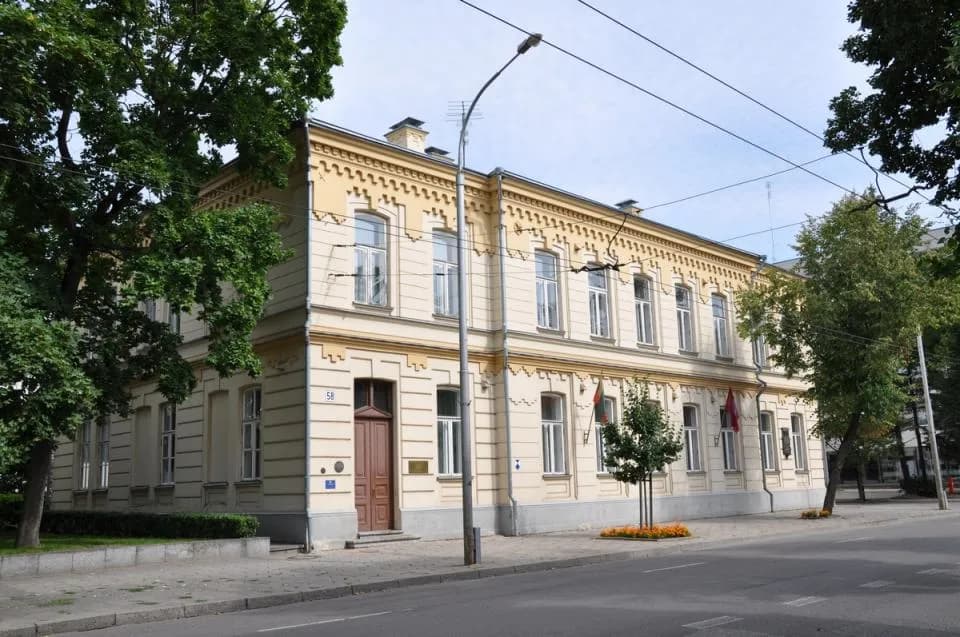
Klaipėda State University of Applied Sciences (KVK) is a public Lithuanian university of applied sciences in the port city of Klaipėda, formed in 2009 through the merger of Klaipėda College and Klaipėda Business and Technology College, with roots reaching back to a teacher-training school founded in 1902.


$3,835
42 months
English
September
Klaipėda, Lithuania
Public
Klaipėda State University of Applied Sciences (KVK) is a public Lithuanian university of applied sciences in the port city of Klaipėda, formed in 2009 through the merger of Klaipėda College and Klaipėda Business and Technology College, with roots reaching back to a teacher-training school founded in 1902. KVK is organised into three faculties — Business, Technologies, and Health Sciences — and is recognised as the third-largest higher education institution in Lithuania. For students exploring healthcare study in the Baltics, KVK's Faculty of Health Sciences runs a 3.5-year General Practice Nursing programme leading to a Professional Bachelor of Health Sciences qualification, with roughly half of study time spent in clinical simulation labs and real hospital or community-care settings. Indian students considering this route should treat it as a nursing-specific option — KVK does not offer MBBS, pharmacy, or dental programmes — and should independently confirm the current language of instruction, tuition fee, and Indian Nursing Council (INC) equivalence process before committing, since foreign nursing qualifications are assessed by INC case-by-case rather than automatically recognised.
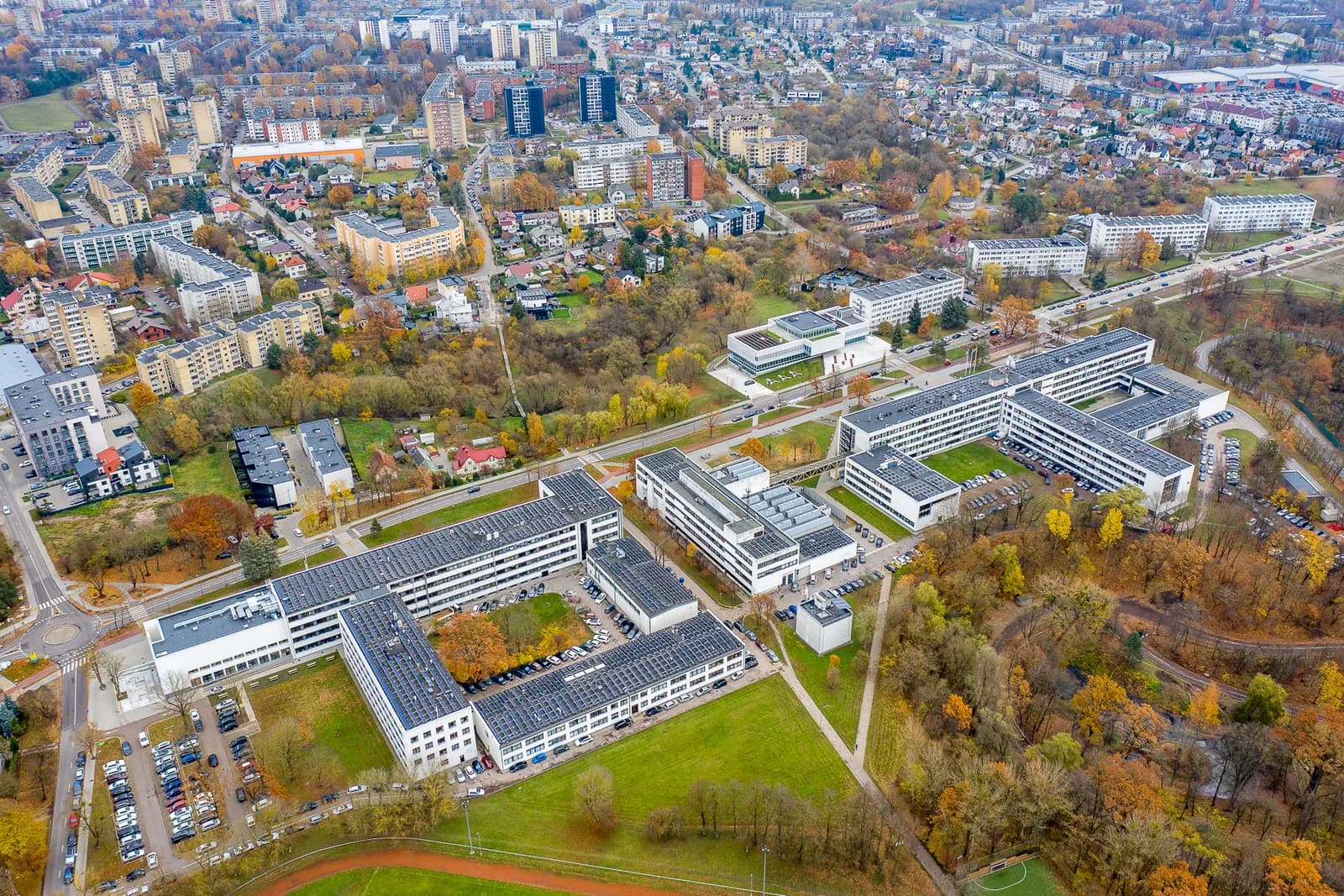
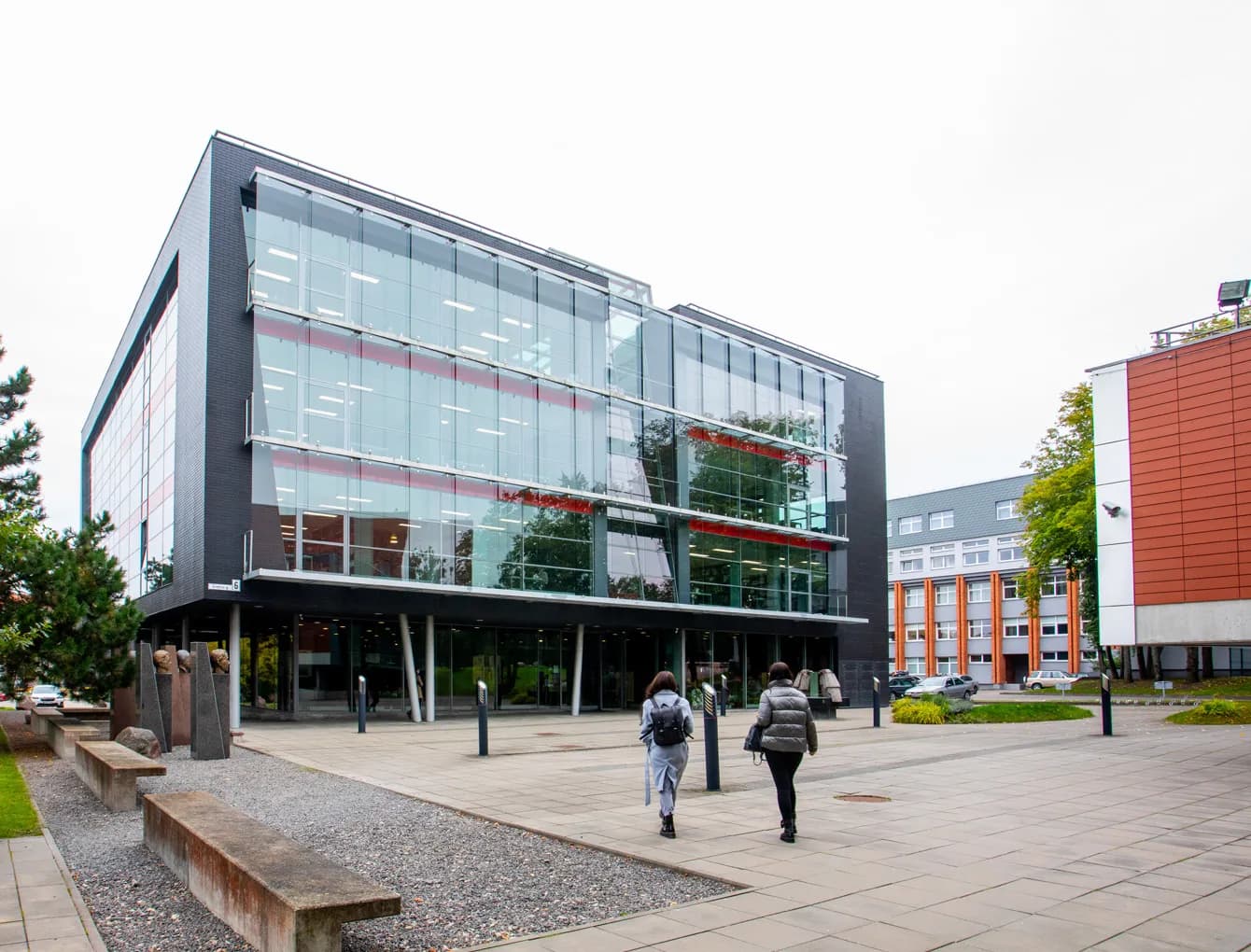
KVK's campus community centres on its three faculties, with Health Sciences students training alongside peers in Physiotherapy, Dental Hygiene, Midwifery, and Social Work. The university emphasises practice-oriented learning: roughly half of the General Practice Nursing curriculum is hands-on, using clinical simulation laboratories with mannequins and practice equipment before students move into real hospital, healthcare-centre, and community placements. KVK holds an Erasmus University Charter and is an active Erasmus+ participant, so students can pursue a paid exchange semester or paid internship abroad as part of their studies. Campus facilities include sports halls at the faculties, a stadium, and student associations for leisure and community life. As a smaller kolegija-style institution rather than a large multi-campus university, class sizes for practical training tend to be small, which KVK positions as a benefit for individual clinical skill-building.
KVK's campus community centres on its three faculties, with Health Sciences students training alongside peers in Physiotherapy, Dental Hygiene, Midwifery, and Social Work. The university emphasises practice-oriented learning: roughly half of the General Practice Nursing curriculum is hands-on, using clinical simulation laboratories with mannequins and practice equipment before students move into real hospital, healthcare-centre, and community placements. KVK holds an Erasmus University Charter and is an active Erasmus+ participant, so students can pursue a paid exchange semester or paid internship abroad as part of their studies. Campus facilities include sports halls at the faculties, a stadium, and student associations for leisure and community life. As a smaller kolegija-style institution rather than a large multi-campus university, class sizes for practical training tend to be small, which KVK positions as a benefit for individual clinical skill-building.
KVK offers international students a limited number of places in its Debreceno Taikos dormitory in the southern part of Klaipėda city. Rooms are arranged in double and triple configurations within shared blocks, each block having its own hallway and toilet, with showers and kitchens shared per floor. The dormitory includes a small gym, recreation areas with table tennis and board games, a self-service laundry with free-to-use washing and drying machines, and secure bicycle storage, plus video surveillance for safety. Listed pricing at the time of research was EUR 80-140 per month depending on room type, though students should confirm current rates and availability directly with KVK's Accommodation Services Department, since dormitory placement for international students is limited and allocated on request rather than guaranteed automatically.
Klaipėda does not have the large, established Indian student or diaspora community found in bigger European university cities, so students should not expect a ready-made Indian grocery or restaurant scene comparable to major Indian-student hubs. Independent supermarkets in the city carry basic spices, rice, lentils, and international-aisle staples that can support home cooking, and dormitory kitchens give students the ability to prepare their own meals. Students who rely heavily on Indian food should plan to stock staple spices from home or from larger cities like Vilnius when travelling, and should connect with any existing Indian or South Asian student groups at KVK or in Klaipėda through university international-office contacts before arrival to get current, first-hand guidance on food access.
Klaipėda is generally regarded as a manageable, walkable city for students, with a calmer pace of daily life than Vilnius. As with any port city, common-sense precautions around the harbour and industrial areas at night are advisable, and students should follow standard personal-safety practices used across Lithuania. KVK's dormitory has video surveillance and on-site administration contacts, which supports day-to-day residential safety. Students should register their arrival and residence status as required by Lithuanian immigration rules and keep in touch with KVK's international office and the Indian Embassy in Vilnius for updated safety and consular guidance specific to their stay.
The Faculty of Health Sciences' Nursing and Social Welfare Department, headed by Dr. Akvilė Virbalienė, is the direct contact point for programme-specific questions on General Practice Nursing. As an Erasmus University Charter holder, KVK also runs an Erasmus+ office supporting incoming and outgoing student mobility. Indian applicants should additionally plan to consult the Embassy of India in Vilnius for visa, residence-permit, and consular support, and should verify Indian Nursing Council (INC) equivalence requirements directly with INC before enrolling, since recognition of any foreign nursing qualification is assessed case-by-case rather than granted automatically.
Admissions support
Get focused help with your application, documents and visa process. We will turn the information on this page into a practical next-step plan.
Talk to a student
These students studied here and can answer your real questions about academics, hostel life, and daily experience.
No student contacts listed yet for this university.
Request a student conversation
Share your details and we'll match you with a registered student who can answer your questions directly.
No reviews yet.
Be the first to share your experience at Klaipėda State University of Applied Sciences.
Mediterranean University of Albania (MUA) offers a 3-year, 180 ECTS BSc Nursing program at €3,500 per year — entirely in English, with free German A1–B2 training embedded across the three years. For Indian students who want a European nursing career in Germany, Italy, or Austria, this program offers one of the most direct and cost-effective pathways available outside of Western Europe. This guide covers everything: accreditation, curriculum, clinical training, costs, career pathways, and the one critical fact most promotional material leaves out.
Mediterranean University of Albania charges €3,500 per year for BSc Nursing — with no application fee, no IELTS costs, and German and Italian language training included in the program. Tuition is only part of the budget. This page breaks down the complete 3-year cost: tuition, Tirana living expenses, insurance, visa fees, and how the total compares to other nursing abroad destinations.
Trent University's Bachelor of Science in Nursing is a CASN-accredited, 4-year program in Peterborough, Ontario that leads directly to CNO Registered Nurse registration, a 3-year Post-Graduation Work Permit, and a documented pathway to Canadian permanent residency through Express Entry healthcare draws. For Indian students serious about a nursing career in Canada, studying the BScN in Canada — rather than studying in India and migrating later as an internationally educated nurse — removes years of uncertainty and dramatically improves the odds of becoming a practising, permanent-resident RN.