Vellore Institute of Technology — Courses, Fees & Admission | Students Traffic
Vellore Institute of Technology
Vellore Institute of Technology is a private deemed-to-be university in Vellore, Tamil Nadu, founded in 1984 and granted university status in 2001.
Written by Students Traffic Research Team·Updated On: 12 Jul 2026
At a glance
Location
Vellore, India
University type
Private
Established
1984
Teaching language
English
Intakes
July
University overview
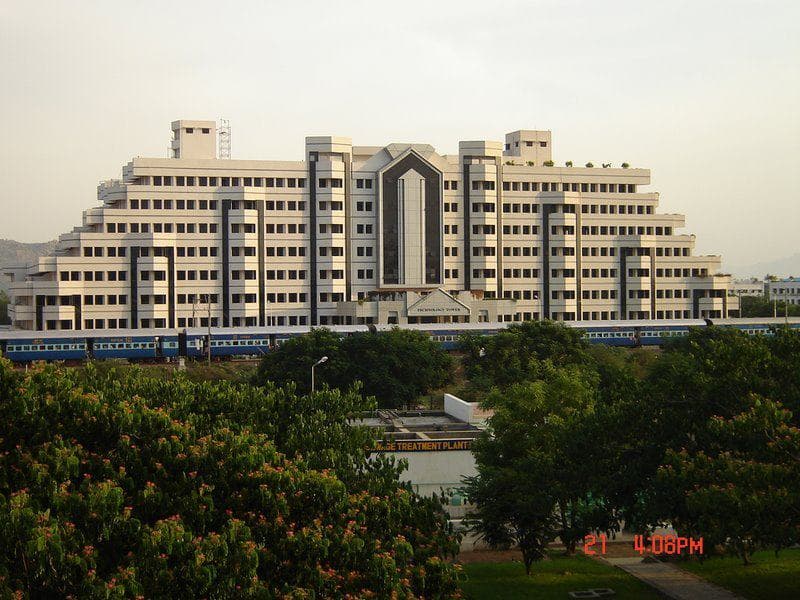
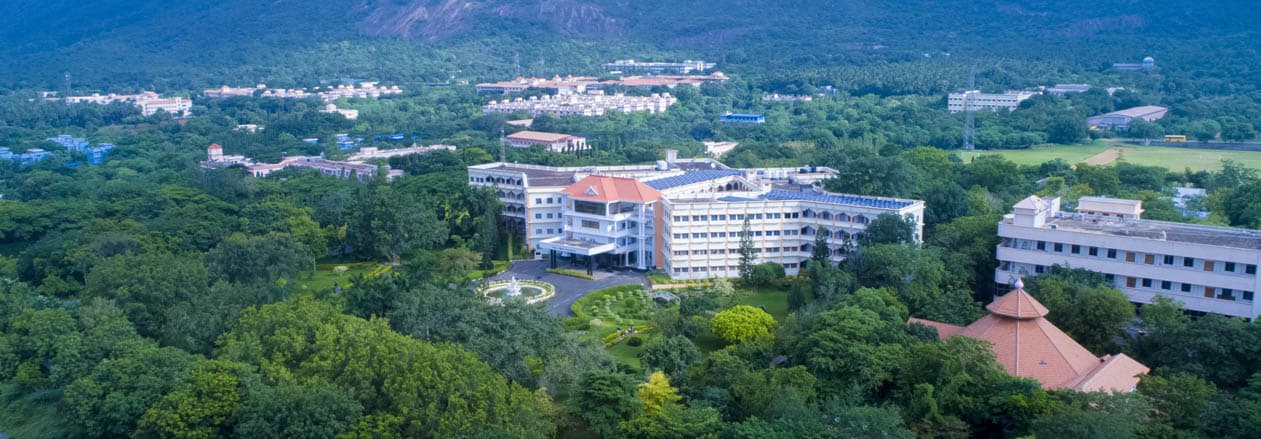
Vellore Institute of Technology is a private deemed-to-be university in Vellore, Tamil Nadu, founded in 1984 and granted university status in 2001. This page covers the Vellore campus only. It teaches engineering, computing, business, sciences, design and commerce in English, and admits foreign nationals and NRI applicants through a direct route that does not require the VITEEE entrance test.
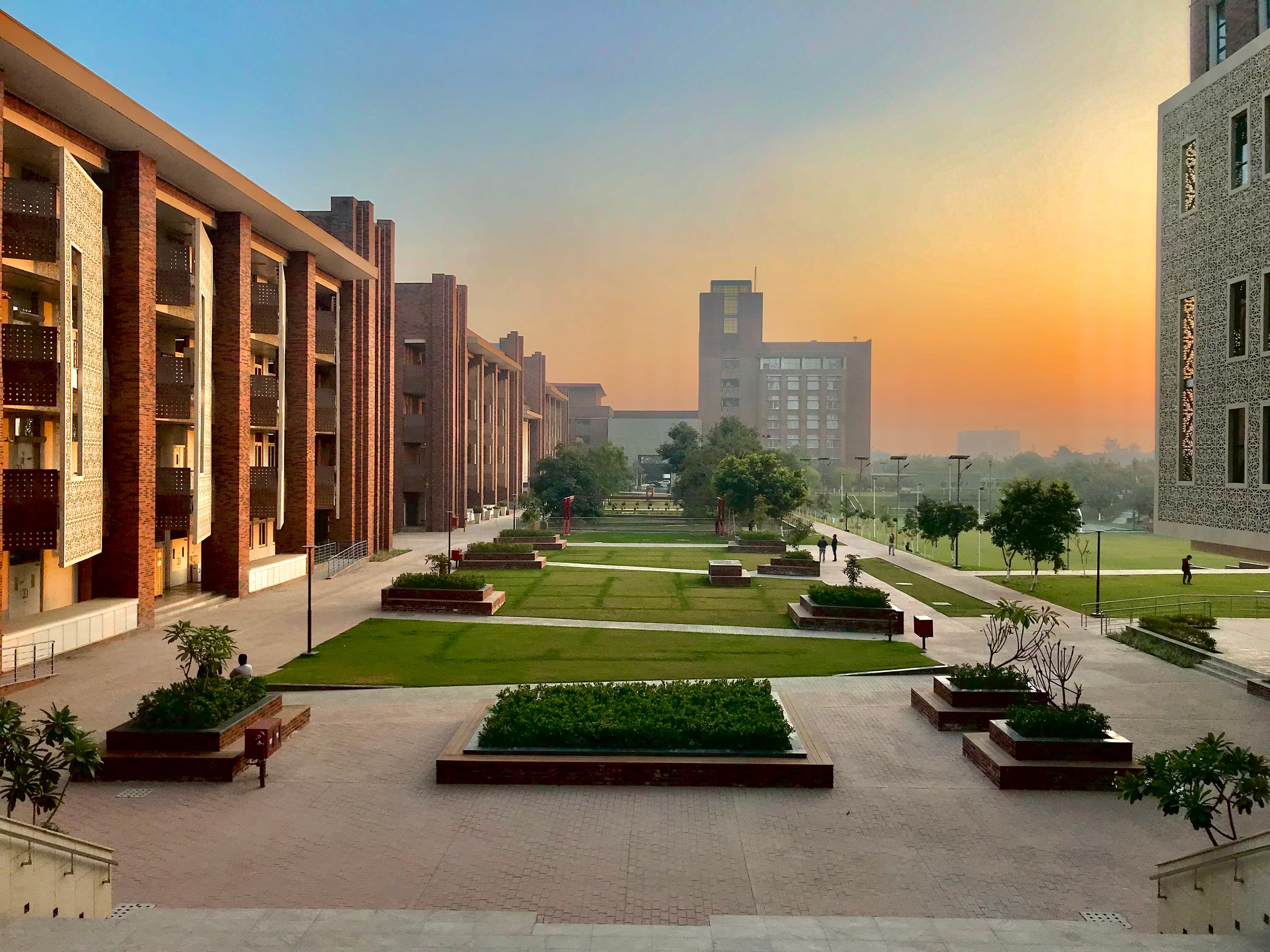
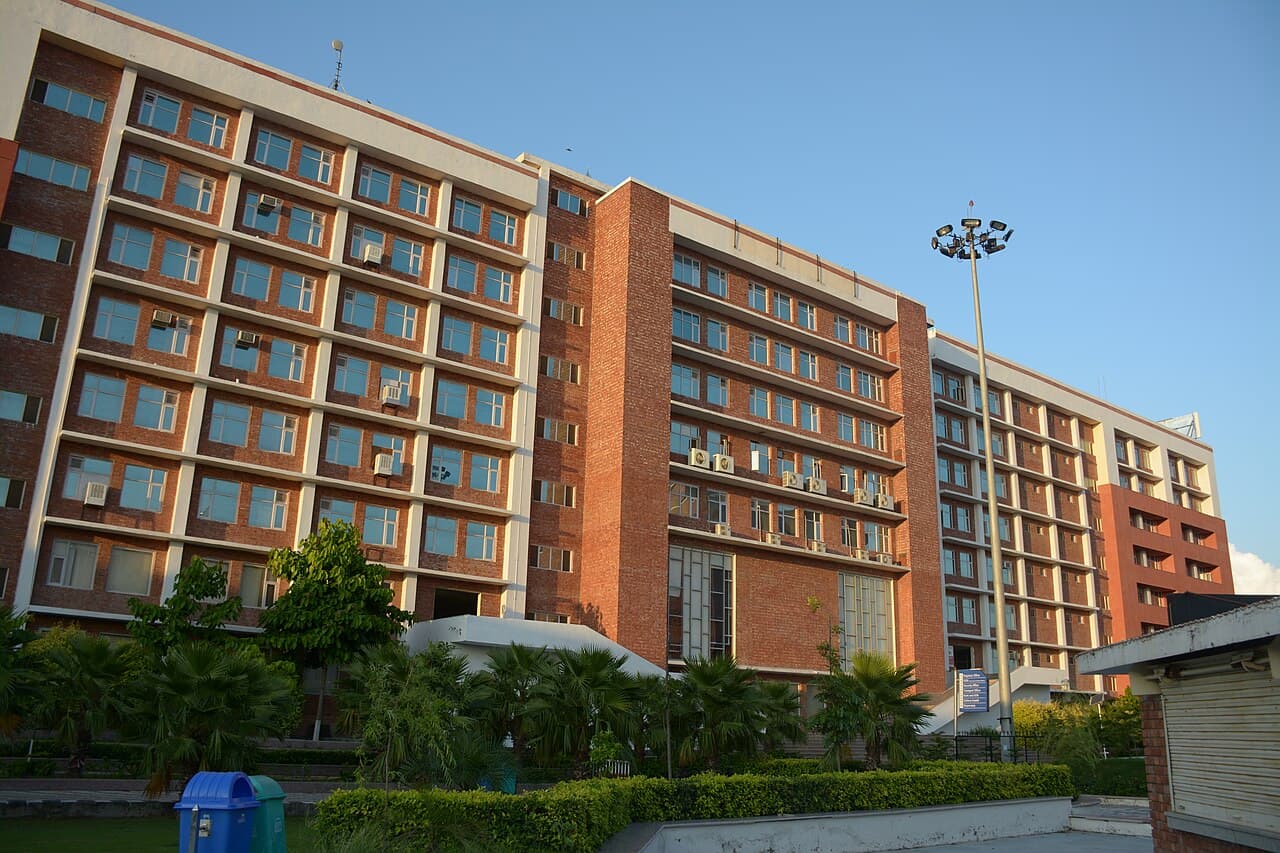
The Vellore campus is VIT's original site and the largest of its four campuses. Its NIRF 2025 engineering submission records 35,957 students on four-year undergraduate programmes, 2,600 on two-year postgraduate programmes and 6,308 on five-year integrated programmes, including 1,408 students from outside India. Facilities include the Periyar E.V.R. Central Library, an air-conditioned gymnasium, indoor and outdoor sports grounds, a swimming pool, campus-wide Wi-Fi, general stores and a pharmacy. Teaching runs on VIT's Fully Flexible Credit System, which lets students choose electives, faculty and slots rather than following a fixed timetable.
Vellore, IndiaEst. 1984Private University
Why students choose it
Foreign nationals and NRI applicants can be admitted to B.Tech. directly on Class 12 or equivalent results, with no requirement to sit VITEEE - a genuinely separate channel from the domestic entrance-test route.
The Vellore campus is VIT's original site and the largest of its four campuses. Its NIRF 2025 engineering submission records 35,957 students on four-year undergraduate programmes, 2,600 on two-year postgraduate programmes and 6,308 on five-year integrated programmes, including 1,408 students from outside India. Facilities include the Periyar E.V.R. Central Library, an air-conditioned gymnasium, indoor and outdoor sports grounds, a swimming pool, campus-wide Wi-Fi, general stores and a pharmacy. Teaching runs on VIT's Fully Flexible Credit System, which lets students choose electives, faculty and slots rather than following a fixed timetable.
Accommodation
The Vellore campus has 32 hostel blocks - 21 for men and the remainder for women - housing over 30,000 residents a year. NRI and foreign students pay in USD on a separate published tariff. For 2026-27 the men's regular blocks range from USD 2,170 for a six-bed non-air-conditioned room with vegetarian mess to USD 3,240 for a two-bed air-conditioned room with special mess, and the women's blocks from USD 2,680 for a four-bed air-conditioned bunker-cot room to USD 3,950 for a three-bed apartment room. Each figure covers room, mess, a non-refundable USD 250 admission fee and a refundable USD 400 caution deposit, and includes laundry up to 44 washes. Rooms are allotted first come, first served and the hostel fee is paid separately from tuition.
Student perspective
Admissions support
Build a clear application plan for Vellore Institute of Technology
Get focused help with your application, documents and visa process. We will turn the information on this page into a practical next-step plan.
Application planning
Document review
Visa support
Frequently asked questions
Is VIT Vellore a public or a private university?
VIT is private. It was founded in 1984 as the self-financing Vellore Engineering College and was conferred deemed-to-be-university status under Section 3 of the University Grants Commission Act 1956 in 2001. On the regulators' own registers, NAAC accredited VIT at A++ with a CGPA of 3.66 in Cycle 4, declared August 2021, and the National Board of Accreditation lists four Vellore B.Tech programmes at Tier I under the Washington Accord to 30 June 2031.
Does this page cover VIT Chennai, VIT-AP or VIT Bhopal?
No. The fees, campus logistics tariffs, placement data and programme availability here are for the Vellore campus in Tamil Nadu. VIT also runs campuses at Chennai, Amaravati in Andhra Pradesh and Bhopal in Madhya Pradesh, which have their own programme lists and their own NIRF submissions. Confirm the campus code on your application before paying.
What language are the programmes taught in?
Two US accreditors recognise VIT's Vellore provision: VIT states that its B.Tech. Computer Science and Engineering is accredited by both the Computing Accreditation Commission and the Engineering Accreditation Commission of ABET, and its B.Tech. Electronics and Communication Engineering by the ABET Engineering Accreditation Commission, while VIT Business School, which teaches the Vellore MBA, appears as an accredited school in the AACSB business school directory.
Tuition for every international programme is published in USD on VIT's own international fee page for 2026-27, including USD 9,000 a year for B.Tech. and USD 6,450 a year for the MBA, so the cost is knowable before applying.
Things to consider
An Indian Student visa prohibits employment or business activity, so there is no part-time work income to offset costs; students must also open an NRO bank account and give the details to the FRRO.
VIT allots the B.Tech. branch after reviewing the application and supporting documents, and states that the branch once allotted will not be changed under any circumstances - so applicants cannot count on switching specialisation after arrival.
Foreign applicants who studied Physics, Chemistry and Biology without Mathematics are restricted to a short named list of bio-related B.Tech. programmes, and at the Vellore campus that means Biotechnology, Computer Science and Engineering (Bioinformatics) or Health Sciences and Technology, with a compulsory bridge course in Mathematics after joining.
Best fit for
Foreign nationals and NRI applicants who want an English-taught Indian engineering or computing degree and prefer a merit-based document route over preparing for an Indian entrance examination.
Applicants who need published, dated tuition in USD before committing, rather than an on-request quotation negotiated after an offer.
Students who want the option to transfer part of the degree to a partner university abroad through a structured 2+2 or 1+1 pathway rather than reapplying independently later.
Hostel fees are quoted as room-plus-mess packages, so meals are prepaid rather than pay-as-you-go. Students choose between vegetarian, non-vegetarian and special mess tiers at the Vellore campus, and VIT states its catering serves vegetarian, non-vegetarian and international palates. Mess selection can be changed monthly, but upgrading in the fall semester requires paying the full differential and there is no refund for downgrading a mess or room.
Safety
Hostel premises have round-the-clock security personnel, and each block is staffed by supervisors, student counsellors and maintenance staff. A hostel review committee meets once a fortnight to take resident queries. VIT runs a primary health centre in the Dr. A.L. Mudaliar Block on campus with a pharmacy, two consultation rooms, an emergency room and 24-hour doctor and nursing cover.
Student support
The International Relations Office in Dr. M.G.R. Block handles NRI and foreign admissions and every international student registers there on the day of admission. VIT also operates an Equal Opportunity Cell, a Student Grievance Redressal Committee, an Internal Complaints Committee, a disability support service and the Centre for VIT Happiness and Well Being.
English throughout, with no local-language transition later in the degree. VIT's foreign-category eligibility rules require applicants to have studied English through higher secondary level or attended an English-medium school, and no separate IELTS or TOEFL score is listed as a requirement on VIT's international admissions pages.
Do international applicants have to take the VITEEE entrance exam?
No, not on the international route. VIT operates a dedicated NRI and Foreign category application where B.Tech. admission is based on merit in the qualifying examination and availability of seats. NRI and OCI candidates may alternatively apply through the general category, where VITEEE is mandatory. For the non-engineering undergraduate programmes VIT states there is no entrance examination at all.
What are the B.Tech. entry requirements for a foreign national?
Twelve years of schooling equivalent to the Indian 10+2 system, with Mathematics and Physics compulsory and a third subject from Chemistry, Computing Sciences, Electronics, Biology or Biotechnology. The minimum is a 55 per cent aggregate in those subjects at Class 12 or equivalent, with not less than 50 per cent in Mathematics. Applicants from Nepal need 55 per cent across Class 11 and Class 12 combined.
How do the NRI and Foreign categories differ?
The Foreign category covers any foreign national with a valid passport or National ID, including OCI holders; Bhutanese candidates may use a birth certificate or National ID instead. The NRI category is for Indian nationals whose parent works abroad, requires a 60 per cent PCM aggregate rather than 55, and requires parent-only sponsorship plus that parent's employer certificate. The USD 50 application fee applies to NRI applicants only.
What does a year at VIT Vellore cost for an international student?
For 2026-27 VIT publishes B.Tech. tuition at USD 9,000 a year plus a one-time refundable USD 100 caution deposit, MBA, M.Tech., MCA, M.Des. and M.Arch. at USD 6,450 plus a USD 50 deposit, and M.Sc., MSW, BCA, B.Com., BBA and B.Sc. Computer Science at USD 3,450 plus a USD 50 deposit. campus logistics and meal arrangements are separate, at roughly USD 2,170 to USD 3,950 for the first year depending on room type.
How do I apply, and what is the exact route?
Register as a new user on VIT's NRI and Foreign online application, log in with the password VIT emails you, complete the form, pay the application fee if you are an NRI applicant, then upload a photograph and PDF documents of up to 1 MB each. B.Tech. applicants use the undergraduate international application at admissions.vit.ac.in; postgraduate applicants use the separate PG NRI and Foreign application. VIT acknowledges receipt within 10 working days and processes complete applications in 15 to 20 working days.
When are the application deadlines and when does teaching start?
VIT lists 31 August 2026 as the tentative last date for B.Tech. NRI and Foreign applications, and 30 June 2026 for the other undergraduate and the postgraduate NRI and Foreign applications, with postgraduate forms issued from 30 January 2026. The 2026 B.Tech. foreign intake is advertised as a July session, and the academic year runs as a Fall and a Winter semester.
What documents are required, and is a UGC equivalence certificate needed?
At application: proof of age and nationality, Class 11 and Class 12 marksheets or the AS and A Level equivalents, and for NRI applicants a parental visa or resident card plus employer certificate. At admission a sponsorship letter is mandatory, and applicants from a board outside VIT's recognised-equivalence list must produce a University Grants Commission equivalence certificate confirming their qualification is equivalent to Class 12.
What visa do I need and do I have to register after arriving?
A student visa, issued by an Indian Mission on the strength of an admission offer to a full-time regular course at a recognised institution plus evidence of financial support. Foreign nationals on a student visa valid for more than 180 days must register with the jurisdictional FRRO or FRO within 14 days of arrival through the e-FRRO portal; the rule differs for some nationalities. The Bureau of Immigration also states that student-visa holders may not take employment in India.
What accommodation is available and what does it cost?
The Vellore campus has 32 campus logistics blocks, 21 for men, housing more than 30,000 residents a year. For 2026-27 the NRI and foreign tariff runs from USD 2,170 for a six-bed non-air-conditioned men's room with vegetarian meal arrangements to USD 3,950 for a three-bed apartment room in the women's campus logistics, each including meal arrangements, a USD 250 non-refundable admission fee and a USD 400 refundable caution deposit. Rooms are allotted first come, first served and campus logistics fees are paid separately from tuition.
What do VIT Vellore's own placement figures show?
VIT's NIRF 2025 submission for the Vellore campus reports that 4,031 of 5,964 four-year undergraduates who graduated in the minimum stipulated time in 2023-24 were placed, at a median salary of INR 899,000, and that 884 of 1,270 two-year postgraduates were placed at a median of INR 915,000. A further 1,255 undergraduates went on to higher studies. Headline figures VIT publishes on its Career Development Centre pages cover all four campuses together.
Talk to a student
These students studied here and can answer your real questions about academics, hostel life, and daily experience.
No student contacts listed yet for this university.
Request a student conversation
Share your details and we'll match you with a registered student who can answer your questions directly.
Other universities in India
Private
India
Amity University, Noida
Private
India
Amrita Vishwa Vidyapeetham
Public
India
Anna University
Private
India
Arul Tharum VPMM College of Engineering and Technology
Private
India
Ashoka University
Private
India
Birla Institute of Technology and Science, Pilani
Private
India
CHRIST (Deemed to be University)
Private
India
Chandigarh University
Private
India
Dhanalakshmi Srinivasan College of Engineering and Technology
Private
India
FLAME University
Private
India
J.P. College of Engineering
Private
India
JSS Academy of Higher Education & Research
Student reviews
No reviews yet.
Be the first to share your experience at Vellore Institute of Technology.
Add a review
Share your perspective on Vellore Institute of Technology with either a written review or a YouTube video review.